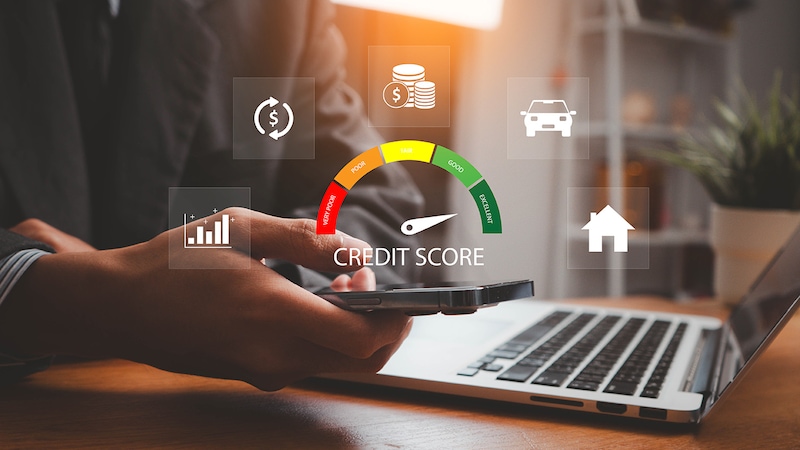
582 credit score: A guide to credit scores

Quick insights
- A 582 credit score is considered fair or subprime, and while many factors influence lending decisions, it may lead to less favorable loan terms or higher interest rates.
- With a 582 credit score, you may still qualify for certain credit products, like secured credit cards or personal loans from alternative lenders.
- To improve a 582 credit score, some strategies include making on-time payments, reducing debt and disputing any errors on your credit report.
A credit score of 582 is considered fair or subprime, depending on the scoring model. This score may make it harder to qualify for some credit products or to receive the most favorable terms, though lenders consider several factors beyond your score.
Fortunately, a 582 credit score isn’t permanent, and there are steps you can take to improve your score. Read on to find out how this score fits into different credit scoring models, your chances of loan approval, some strategies for raising your score and more.
Understanding a 582 credit score
Credit scores typically range from 300 to 850, with higher scores indicating better credit health. A score of 582 falls below the average American credit score of 715, which may impact your ability to secure loans or credit at favorable interest rates.
To compare, here are the scoring ranges for two common credit scoring models.
VantageScore's scoring ranges for VantageScore 3.0 are:
- Superprime: 781 to 850
- Prime: 661 to 780
- Near prime: 601 to 660
- Subprime: 300 to 600
FICO's credit score ranges for FICO Score 8 are:
- Exceptional: 800 to 850
- Very good: 740 to 799
- Good: 670 to 739
- Fair: 580 to 669
- Poor: 300 to 579
Keep in mind that your credit score isn’t the only factor lenders consider when approving a loan. Income and your overall financial situation may also play a role in lending decisions.
What causes a credit score of 582?
Several factors can contribute to a 582 credit score, including a history of late payments, high credit utilization (the percentage of your total available credit you’re using) or a relatively short credit history.
Lenders may view individuals with fair credit scores as higher-risk borrowers, which can result in denials or less favorable loan terms. As a result, having a 582 credit score may limit your financial options and lead to higher interest rates, potentially making it more challenging to achieve your financial goals.
However, you can take steps to improve your credit score.
Approval odds with a 582 credit score
With a 582 credit score, your approval odds for various credit products may vary. While lenders consider multiple factors beyond credit scores—such as income, debt-to-income ratio and credit history—you may be viewed as a higher-risk borrower, which could impact your approval odds.
Lenders typically list eligibility criteria for different credit products or offer pre-approval tools on their website, which may be helpful as you evaluate your options. Some credit products, such as secured credit cards or personal loans from alternative lenders, may be more accessible with a 582 credit score. Note that these options often come with higher interest rates and that Chase does not offer them.
To increase your approval chances, you may want to consider providing additional collateral or applying with a co-signer. You may also want to review the additional requirements or considerations that lenders may have for applicants with fair credit scores.
How to improve a 582 credit score
There are many ways to work on improving a 582 credit score. Here are some steps you may want to consider following:
- Avoid late payments
- Keep credit utilization low
- Be strategic about when you apply for new credit or allow hard credit inquiries
- Monitor your credit report regularly and dispute any errors
Because payment history impacts your credit score, paying bills on time could help raise your score. Reducing debt may also help, as high credit utilization can negatively affect your score.
Disputing errors on your credit report is another step you can take. Inaccuracies on your report can unfairly lower your score, so it may be helpful to review your report carefully and address any errors. One way to monitor your credit is by using a free credit monitoring tool like Chase Credit Journey®.
Maintaining old accounts could also be beneficial, as a longer credit history can positively impact your score.
In summary
A 582 credit score is considered fair or subprime, depending on the scoring model. By understanding credit scoring factors, such as payment history and debt levels, you can take targeted steps to improve your score. And by exploring strategies to improve your credit score, you can work toward accessing better financial opportunities and achieving your long-term financial goals.