4 key questions to ask when choosing a Level 2 charger for your EV

Quick insights
- Some EV drivers install a Level 2 charger and a 240-volt circuit at their home because it charges much faster than the standard Level 1 cord.
- When picking a charger for your EV, consider your full budget including required electrical work and installation, since those can significantly raise the total cost.
- Pay attention to logistics like cord length, indoor/outdoor rating, weather resistance and your regional climate or local code requirements may affect which charger works best for you.
You just bought the perfect electric vehicle (EV). But when you plug in using the standard, Level 1 cord that came with the car, it takes dozens of hours to charge. That's why most EV drivers install a dedicated electrical line and/or a 240-volt circuit (like the one used for a clothes dryer) in their garage or home parking area. This setup allows for Level 2 charging, which is much faster than a standard household outlet.
However, there are a lot of Level 2 chargers to choose from. How do you know which one is right for you? How to choose an EV charger can depend on many factors, but start by asking these key questions.
1. What's my Level 2 charger budget?
Level 2 chargers usually range in price from a few hundred dollars to a few thousand. But when setting a budget, you’ll also need to factor in any necessary electrical services. These can vary greatly for Level 2 EV charger installation.
For example, if there’s an electrical panel in your garage or nearby, installing a 240-volt circuit can be relatively simple and cost between $250 and $400. However, in some cases, an electrician may need to do extensive work to run a line from the panel in your house to your garage or parking area, which can be substantially more expensive.
With that in mind:
- Get an estimate so that you know what to expect — and how much you’ll have left for the EV charger itself.
- Be sure to research incentivesOpens overlay for charger installations in your state or region.
- Ask your dealer about financing options. Chase offers auto financing that allows you to include the cost of a home charging station so that you can space out payments.
2. What logistics do I need to account for?
You don’t want to buy a Level 2 EV charger only to discover that its cord isn’t long enough to reach your vehicle’s port or isn’t tough enough to withstand your region’s extreme temperatures. Important logistics to consider include:
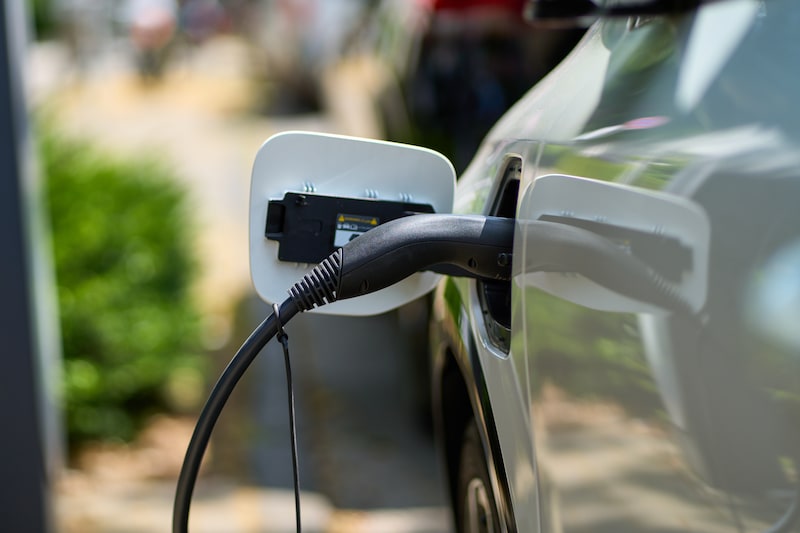
- The distance to the vehicle’s port when parked. While gas tanks are generally located near the back tire on either the passenger or driver side, EVs have all different port locations – front, back, or side. Depending on where it is located, the orientation of your car when you park, and how tight the space is, you may need a longer cord. Most cords are 18-20 feet, but some are as long as 25. Shorter cords usually result in shorter charging times, but that won’t do you much good if it doesn’t reach!
- Regional factors like climate and power grid reliability. Will your EV charging station be indoors or outdoors? What’s the climate like in your town or city? A lot of EV chargers are rated for outdoor use by the National Electrical Manufacturers Association (NEMA). You may want your charger to have a NEMA 4 rating, which means it is generally safe for outdoor charging. NEMA 4X chargers also protect against corrosion. And some EV chargers come with features like fire resistance and surge protection, which may be important if your area is susceptible to dangers like those.
- Safety and local code/compliance regulations. Are there children or animals in your home — or with easy access to where you plan to install the charging station? Does your jurisdiction have regulations in place that you need to consider and/or obtain permits for? Many consumers look for chargers that have been independently certified and tested for safety by the nonprofit Underwriters Laboratory (i.e., are UL-certified). Additionally, check with local authorities about any codes and/or permits that could affect your charger setup.
3. Which Level 2 EV chargers are compatible/optimized with my EV?
It’s critical to familiarize yourself with the energy specs listed in your EV’s manual before bringing home an EV charger. Not all chargers work — or work optimally — with all EVs.
For example, higher amps usually allow faster charging, but your EV’s battery may limit the benefit of a high-amperage charger. If your EV can only handle 15 amps, choosing a charger with a much higher capacity will not make charging any faster because the battery cannot use the extra power.
4. Which Level 2 EV charger features are important to me?
Some EV chargers have multiple amperage settings, allowing you to toggle between them for different vehicles or accommodate a new EV down the road. Others may tempt you with Wi-fi connectivity, a “Made in the U.S.A” label, or greater portability. The options can be overwhelming. Think through and weigh what really matters to you.
For example, if you anticipate moving soon, or have a second home that you frequent, you may want to sacrifice speed for portability. A plug-in Level 2 EV charger — versus one that’s hardwired to your home’s power supply — can’t deliver more than 40 amps, but is easier to relocate. Or perhaps you love the idea of a smart charger that can connect to Wi-fi and allow for convenient tracking and scheduling.
In summary
Most EV drivers install Level 2 home charging stations to speed up charging times. When deciding what EV charger you need, you should consider your budget, logistics, compatibility, and features. Each car, garage, and driver is different, so be sure to walk through these questions before you make your purchase.
To learn more about EVs, visit www.Chase.com/EV.