How to tell if a check is fake

Quick insights
- Misspellings, typos, poor quality paper and missing routing numbers are a few common signs of a fake check.
- If you suspect that a check you receive is fake, you should reach out to your bank for verification.
- Depositing a fake check may result in consequences such as loss of money, bank fees, the closing of your account or sometimes even criminal repercussions.
Even as paper checks become a less common form of payment, their frequent use in scams continues. If you receive a check from someone you don’t know well, it may be a good idea to ensure that the check is real.
Let’s examine what might indicate you received a fake check and some methods for avoiding fake checks in the future.
Common signs of fake checks
Fake checks come in different forms, so it can be important to keep an eye out for certain clues. Here are some common features of fake checks:
Illegitimate bank
Does the check have a verifiable bank name and logo? Many checks may feature real bank brands, but fake checks don’t. If it’s not associated with a real bank, spells the name of a real bank wrong or the bank logo is missing, faded or misprinted, then your check could be fake.
To verify the check, you might want to call the bank in question to ensure they issued the check. Additionally, you may want to verify the bank’s phone number rather than call the number written on the check.
Glossy or slippery texture
Checks have a textured, matte feel. A glossy or slippery check may be more likely to be fake. If the ink on your check rubs off or smears easily, then the check may be counterfeit.
To verify the check, you may also look at the magnetic ink character recognition (MICR) line. The MICR consists of the bank’s routing number, the individual’s account number and the check number. If the MICR line appears raised or shiny, the check may be fake.
Clerical mistakes
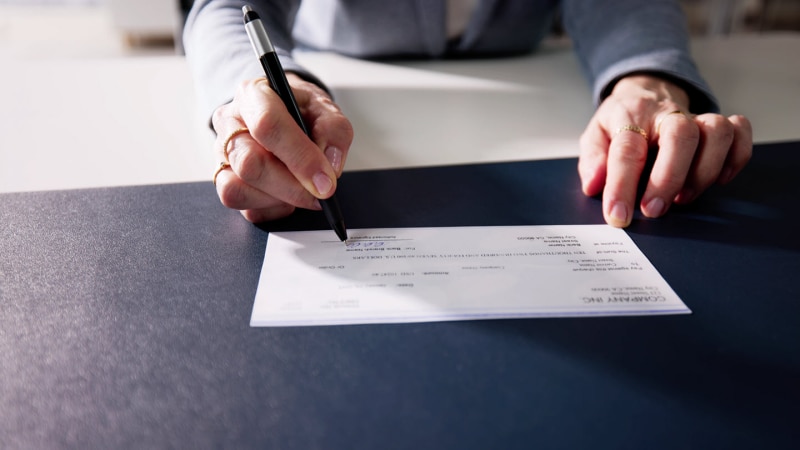
You may want to look for more obvious errors on your check. Is the amount on the check what you were expecting? Is the name of the person written correctly? Is the address on the check real, and does it match the sender’s address? If the details on the check seem incorrect, then the check may be fake.
You may also look at the check number. You can find it printed both on the MICR and in the top right corner. If the check number isn’t the same in both places, then the check may be a fake.
If you’re ever unsure about whether your check is legitimate or not, you can take it to your financial institution and ask an employee there to help you verify it.
What to do if you discover that your check is fake
Don’t attempt to deposit a fake check. Even if you are mostly confident that a check is real, you want to be certain before cashing it.
If someone sends you a fake check, you may want to contact the United States Postal Inspection Service for mail fraud assistance. If you received a fake check through other means, you can report the incident to your local law enforcement and report the scamOpens overlay to the Federal Trade Commission (FTC).
What happens when you deposit a fake check?
Fake checks can initially go unnoticed by both consumers and banks, and it may take weeks for a bank to identify a check as fake. Once your bank determines that you’ve deposited a fake check, they will generally remove the funds from your account.
If you have already spent the funds from the fake check and you don’t have money in your account to cover the difference, your bank may charge an overdraft fee. Some banks may have additional penalties for fake check deposits, and sometimes they may choose to freeze or close your account entirely.
Intentionally depositing a fake check may even result in criminal consequences. To avoid any potential issues, do your due diligence to verify that your check is real.
Common fake check scams
Another way to identify fake checks is to recognize contexts where you might receive them. Some common scams:
- Unexpected lottery or sweepstakes earnings: A scammer may send a fake check informing you that you’ve won a contest or the lottery.
- Overpayment: When someone purchases something from you with a fake check but sends more than you requested, they may be trying to scam you. When you inform them that they paid you too much, they might request that you deposit the fake check and send just the overpayment back to them. The way the scam works is that their fake check generally bounces after you’ve already sent them money.
- Fake employer: You may receive a check or a digital payment as a “starting bonus” from a fake employer for work that you haven’t done yet, or they say they mistakenly overpaid you. Thoroughly research any company that offers you employment that comes with a starting bonus to help you ensure it’s a legitimate business.
Scammers are constantly evolving, so if something feels off, you may want to delay cashing your check until you're sure the payer is trustworthy.
In summary
When verifying a check, your bank can be a helpful resource and assist you with any questions. If you realize that you have already deposited a fake check, it is generally a good idea to act quickly. You can reach out to your financial institution to clarify that you made a mistake, and follow up with local authorities to alert them of the scam.