How do automakers calculate fuel economy and range?

Quick insights
- Manufacturers use controlled laboratory environments to simulate real-world driving conditions and measure energy consumption.
- Understanding the testing process could help you set realistic expectations for your vehicle's performance on the road.
- Various external factors like weather and driving habits may cause your actual results to differ from the official estimates.
You may notice the vehicle’s fuel economy ratings listed on the window sticker of a new car you’re about to buy—but where do these figures come from? Official fuel economy figures come from carefully controlled tests. Let’s go into more detail below.
How manufacturers determine fuel economy
When you browse the shopping marketplace, the numbers on the window sticker might seem like simple math. In reality, the process of determining how mileage is calculated involves highly controlled laboratory conditions. Engineers typically place the vehicle on a dynamometer, which acts like a large treadmill for cars, to simulate various driving scenarios without encountering unpredictable weather or traffic.
During these tests, a professional driver follows a precise computer-generated schedule of accelerating and braking. A specialized hose connects to the tailpipe to capture and analyze all the exhaust emissions produced during the simulation. By measuring the exact amount of carbon released, scientists can determine precisely how much fuel the engine consumed.
This standardized approach helps ensure that every vehicle is evaluated under the exact same conditions. While this method provides a fair comparison between different models, it may not perfectly reflect your specific daily commute.
The specific testing cycles
The evaluation process generally involves several distinct simulations designed to mimic different types of driving environments:
- City driving simulation: This test represents urban commuting with frequent stops and starts in moderate traffic. The vehicle reaches a top speed of 56 mph and idles frequently to simulate waiting at traffic lights.
- Highway driving simulation: Engineers use this cycle to replicate rural and interstate travel with longer stretches of uninterrupted driving. The car maintains higher average speeds and experiences fewer stops to measure efficiency during continuous operation.
- High-speed evaluation: This aggressive test pushes the vehicle to higher speeds with rapid acceleration to mimic merging onto busy freeways. It may help determine how mpg is calculated when the engine is working harder than usual.
- Air conditioning test: Running the climate control system places an extra load on the engine and reduces overall efficiency. This specific simulation measures the impact of cooling the cabin during warm weather conditions.
- Cold temperature operation: Vehicles generally consume more energy when starting and running in freezing temperatures. This test evaluates performance in cold weather to provide a more comprehensive picture of year-round efficiency.
How electric vehicle (EV) range is determined
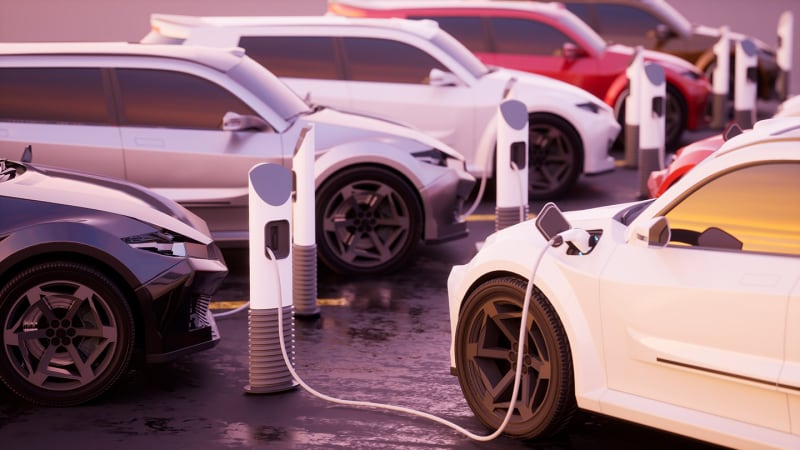
EVs share similarities with traditional testing but focuses on electrical consumption rather than exhaust emissions. Engineers typically fully charge the battery and run the car through the standard city and highway cycles until the power is completely depleted.
Once the battery is empty, technicians recharge it to full capacity while carefully measuring the amount of electricity drawn from the grid. This measurement helps establish the vehicle's efficiency rating, often expressed as mpg equivalent. The total distance traveled during the depletion phase provides the basis for the official range estimate.
Because electric vehicles often perform better in stop-and-go traffic due to regenerative braking, their city ratings might exceed their highway numbers. You can use an online calculator to see how the potential fuel savings might impact your monthly budget.
Factors that affect your fuel economy and range
Your actual experience behind the wheel may differ from the laboratory estimates due to several everyday variables:
- Personal driving habits: Aggressive acceleration and heavy braking could significantly reduce your overall efficiency. Maintaining a steady pace and anticipating traffic flow might help you achieve numbers closer to the official estimates.
- Vehicle maintenance: Driving with underinflated tires or a clogged air filter may force your engine to work harder. Keeping up with routine service could help your car operate at its peak potential.
- Cargo and weight: Carrying heavy items in your trunk or towing a trailer generally requires more energy to move the vehicle. Removing unnecessary weight from your car may improve your daily efficiency.
- Weather conditions: Extreme heat or cold could impact battery performance and engine efficiency. Using the heater or air conditioner heavily may naturally draw more power and lower your range.
- Terrain and topography: Navigating steep hills or mountainous roads typically demands more energy than driving on flat surfaces. Your daily route plays a major role in your actual fuel consumption.
The bottom line
Understanding the laboratory testing process could help you set realistic expectations for your next vehicle. By recognizing the variables that impact efficiency, you may make more informed decisions when comparing models on the auto homepage. Taking these factors into account might help you secure an auto loan that aligns with your long-term transportation budget.