Hidden holdings: Why you may own more shares of certain companies in your portfolio than you realize

Editorial Staff, J.P. Morgan Wealth Management
- SpaceX joined the Nasdaq-100 on July 7, less than one month after the aerospace manufacturing company went public at a valuation of $2 trillion.
- It’s common for new and existing public companies to enter and exit indexes as part of the rebalancing process, which aims to realign an index to its specific criteria and requirements.
- Rebalancing is important, as it may prevent any single company or sector from exerting outsized influence over an index’s performance.
- Index reconstitutions/rebalances and market moves can change your fund’s holdings and weights over time – so your exposure to certain companies may grow even if you don’t add new money.
- Index rebalancing can be a good time for investors to review their portfolio holdings, especially within mutual funds or exchange-traded funds (ETFs), with the aim of remaining diversified and avoiding concentration risk.

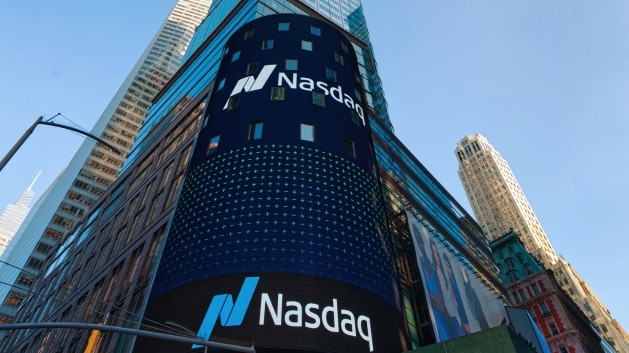
Periodically reviewing your portfolio holdings can be a wise move, as regular stock market index updates and market movements can change what’s inside your funds – and how concentrated your exposure is – over time. SpaceX joined the tech-heavy Nasdaq-100 on July 7, just a few weeks after its initial public offering (IPO) on June 12. So, if you own a fund that tracks the Nasdaq-100, you may now own shares of SpaceX.
The S&P 500 and the Dow Jones Industrial Average (the Dow) have also seen recent constituent changes. Several new companies were added to the S&P 500 on June 22 as part of the benchmark’s quarterly rebalancing – a scheduled update that can include reconstitution (adding and removing constituents) along with other index adjustments under the methodology. The companies added in June were Marvell Technology and Flex, which replaced Pool Corporation and The Campbell’s Company. Mega-cap stock and Google parent Alphabet, meanwhile, was added to the 30-stock Dow, replacing Verizon. And because the Dow is price-weighted, Alphabet immediately became one of the index’s most heavily weighted components.
As markets enter the second half of the year after these recent changes, now may be a good time to revisit your portfolio’s exposure and make sure you are diversified to avoid risk.
How can you ‘own more’ of a company without buying shares?
If you invest through index funds or target-date funds, your exposure to specific companies can change over time due to market moves, index updates and fund rebalancing.
While you can purchase and own shares directly, you can also raise your exposure by investing in pooled investment vehicles like mutual funds and ETFs, which buy a basket of securities. This allows investors to better diversify their portfolio by holding more investments for the same dollar amount.
As a company’s stock price rises over time, its market capitalization increases, which can increase its weight in a market-cap-weighted index (depending on the index’s rules). So, if you invest through an S&P 500 index fund, your exposure to a stock can grow if its price rises faster than the price of other holdings – even if the number of underlying shares held doesn’t change.
How index weighting works (and why the biggest companies can become your biggest holdings)
Many major benchmarks, such as the S&P 500, are capitalization-weighted, which means their components are weighted according to their market value. A company’s value is measured by its market capitalization, or market cap, which is calculated by multiplying its total number of outstanding shares by its stock’s current market price. A company with a market cap of $50 billion, for example, will account for a larger portion of the index than a company with a market cap of $10 billion. As a company’s market value rises relative to others, that can also increase its weight in index-tracking funds.
Think of a stock market index like a pie: Each company within the index makes up a different slice of the whole, and the relative size of each slice can shift based on the ups and downs of the market as well as the index’s weighting methodology. While the S&P 500 is capitalization-weighted, the Dow is price-weighted, meaning stocks with a higher share price have a greater impact on the index’s daily movements, regardless of market value.
What causes your portfolio’s company exposures to change over time?
A portfolio’s company exposures can change over time due to prices moving up or down, which affects a company’s market cap. Companies being added to an index (like SpaceX in the Nasdaq-100) or companies being removed (like Verizon in the Dow) can also change the composition of the index. Corporate actions that affect a company’s valuation, such as mergers or spinoffs, can change an index’s market-cap weighting as well.
When an index has a scheduled rebalance or reconstitution, funds that track it typically trade around the effective date to align with the index’s updated constituents and target weights, subject to implementation and liquidity considerations. For instance, when the S&P 500, which is designed to represent large-cap U.S. equities, adds companies that meet the index’s criteria or removes companies that no longer do, the funds that track the benchmark buy the incoming stocks and sell the outgoing ones.
Inside a mutual fund or ETF, portfolio rebalancing, dividend reinvestment and mandatory corporate actions are handled automatically, and no action is required from an investor. Individual investors are still responsible for purchasing or selling shares, as well as rebalancing between different funds and asset classes.
Get up to $1,000
When you open a J.P. Morgan Self-Directed Investing account, you get a trading experience that puts you in control and up to $1,000 in cash bonus.
Why this matters: Hidden concentration risk and unintended investments
You may be more exposed to a handful of mega-cap companies, or a specific sector, than you realize. Investors should be wary of concentration risk, because having too large a portion of your portfolio in a particular investment, asset class, industry or geographic region can lead to intensified losses.
While mutual funds and ETFs can help provide diversification, owning multiple funds alone doesn’t fully protect from concentration risk. Some funds can have similar holdings that increase overlap in your portfolio. If an investor owns an S&P 500 fund, a total market fund and a large-cap growth fund, for example, they may want to look further under the hood to see if these funds are holding positions in similar companies.
How to check what you actually own (and what to do if you’re overexposed)
There are several steps you can take to manage concentration risk. Start by reviewing your portfolio as a whole: Focus on top holdings and sector breakdowns while looking for any overlap across funds. If concentration is higher than intended, consider further diversifying your portfolio while still paying attention to your own individual risk tolerance and time horizon.
Historically, the best way to avoid concentration risk is to diversify across and within major asset classes such as stocks, bonds, real estate and commodities. Having a diversified portfolio helps lower risk by reducing the volatility of returns, as your money is spread across a variety of investments. Investors may also want to conduct periodic reviews of their holdings and make any adjustments to ensure they still align with their investment goals.
The bottom line
Major stock market indexes periodically update constituents and weights based on their methodology. Depending on the index’s design, a small number of higher-valued companies (or higher-priced stocks, in the Dow’s case) can still have an outsized influence on index performance. For example, SpaceX joined the Nasdaq-100 on July 7, Alphabet joined the Dow on June 29, and Marvell Technology and Flex replaced Pool and Campbell’s in the S&P 500 on June 22.
Rebalancing changes the index, and the implementation of those changes can impact client portfolios through security-level shifts and performance differences – even without any investor-initiated trading.
Index rebalancing can be a good opportunity for investors to review and, if needed, rebalance their own portfolio holdings to ensure proper diversification and avoid potential concentration risk. A trusted financial professional can help provide more guidance on how index rebalancing affects your specific portfolio.
Frequently asked questions about companies you own in your portfolio
Investors can determine which companies they own inside their index funds by pulling a list of complete portfolio holdings, with every asset and its portfolio weight, from the issuer directly. Official shareholder reports and filings with the Securities and Exchange Commission (SEC) also show what companies a fund owns.
No. Because index funds already hold fixed shares in a company, the dollar values and weighting of those shares in the portfolio will naturally rise alongside the increasing stock price.
The S&P 500 is market-cap-weighted, meaning its components are weighted according to their total value, rather than each making up an equal portion of the index. In an equal-weighted index, each company accounts for an equal slice of the pie, rather than being proportionate to its market value.
Yes, investors should remember to be wary of concentration risk. Especially after periods of higher market volatility, taking a close look at your holdings to ensure you know what you own may be advisable.
Index funds must buy and sell stocks when the benchmark index they track changes, whether through rebalancing, removals, additions or corporate actions. Market-cap-weighted indexes like the S&P 500 are typically rebalanced every quarter, while price-weighted indexes like the Dow may rebalance less frequently.
Invest your way
Not working with us yet? Find a J.P. Morgan Advisor or explore ways to invest online.