
J.P. MORGAN SELF-DIRECTED INVESTINGTrade like the professionals
Now you can trade like the big institutions, with your orders routed to J.P. Morgan’s Institutional Trading business.
Enjoy fast, in-house execution, with price improvement on your trades putting more money in your pocket.
Your interests are our primary focus - we do not receive payment for order flow from market makers.
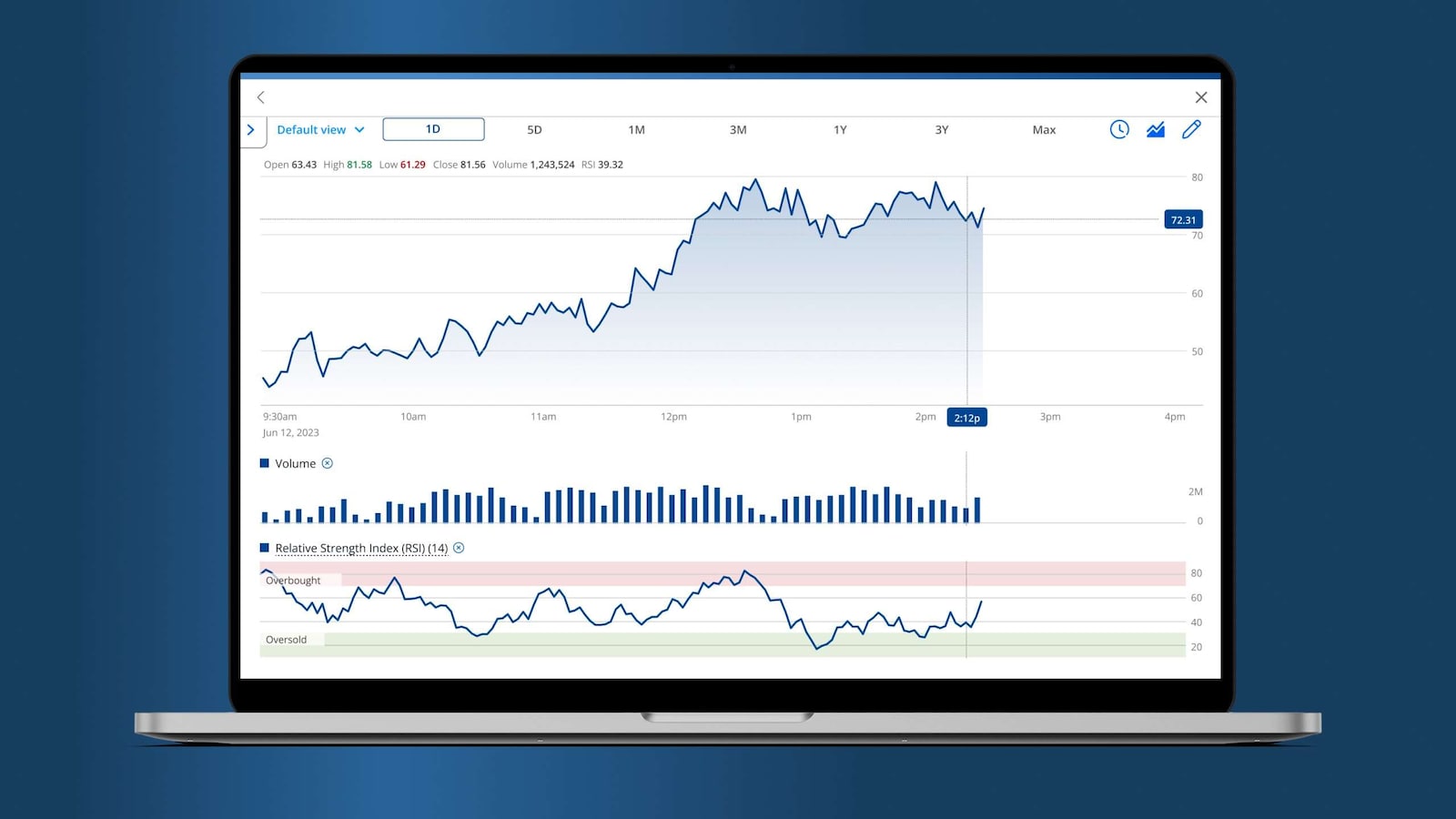
Save money on stock trades
PRICE IMPROVEMENT98.13%
Percentage of shares in S&P 500 market orders under 2,000 shares executed at prices better than the National Best Bid and Offer.
MIDPOINT OR BETTER89%
Percentage of S&P 500 market orders under 2,000 shares executed at the midpoint or better.
AVERAGE SAVINGS PER ORDER$82.90
Average net price improvement per 1,000 shares for S&P 500 market orders under 2,000 shares.
EXECUTION SPEED0.05 seconds
Average execution speed for S&P 500 market orders under 2,000 shares.
Execution quality statistics for Self-Directed Investing order flow across market centers provided by S3 Matching Technologies, which is a third party that analyzes venue performance across multiple factors. The figures include held market orders sized 1 to 1,999 of S&P 500 stocks only as of the third quarter ending September 30, 2026. Statistics are historical and past performance is not indicative of future performance. The performance metrics are specific to the J.P. Morgan Self-Directed Investing order flow.
Learn more about trade execution
What is the National Best Bid and Offer (NBBO)?
The NBBO reflects the best price displayed for a security across all National Securities exchanges. The National Best Bid is the highest price displayed on an exchange at which a party is willing to buy a security, and the National Best Offer is the lowest price displayed on an exchange at which a party is willing to sell a security.
What is price improvement? What is midpoint or better price improvement?
In some cases, parties may trade at prices more favorable than those displayed on an exchange. When this happens, the investor is said to have received “price improvement,” essentially receiving a discount on the purchase of shares or receiving a premium for the sale of shares. A trade at the midpoint or better means you secured an even more favorable price – i.e., a price at or better than the midpoint between the highest bid and the lowest offer.
For example, if a security is bid at $10/share and offered at $11/share, an investor receives price improvement if it sells shares at a price above $10/share or buys shares for a price less than $11/share. The midpoint for this example would be $10.50, so a price at or better than midpoint would mean the investor sold its shares at or above $10.50/share or bought the shares at or less than $10.50/share.
How is the price improvement percentage determined?
Price improvement is the percentage of shares executed at prices better than the best bid or best offer, often referred to as the National Best Bid and Offer (NBBO).
How do you calculate the average savings per order?
The dollar value price improvement is calculated using the average savings in cents per share for eligible trades within the respective order size range multiplied by 1,000.
Earn up to $1,000 when you open and fund an online investing account
Get rewarded when you open and fund a J.P. Morgan Self-Directed Investing account by transferring cash or investments from an eligible external account - including rolling over a 401(k) or other retirement account.
Offer expires 01/21/2027.

Simplify your investing with powerful tools and intuitive features
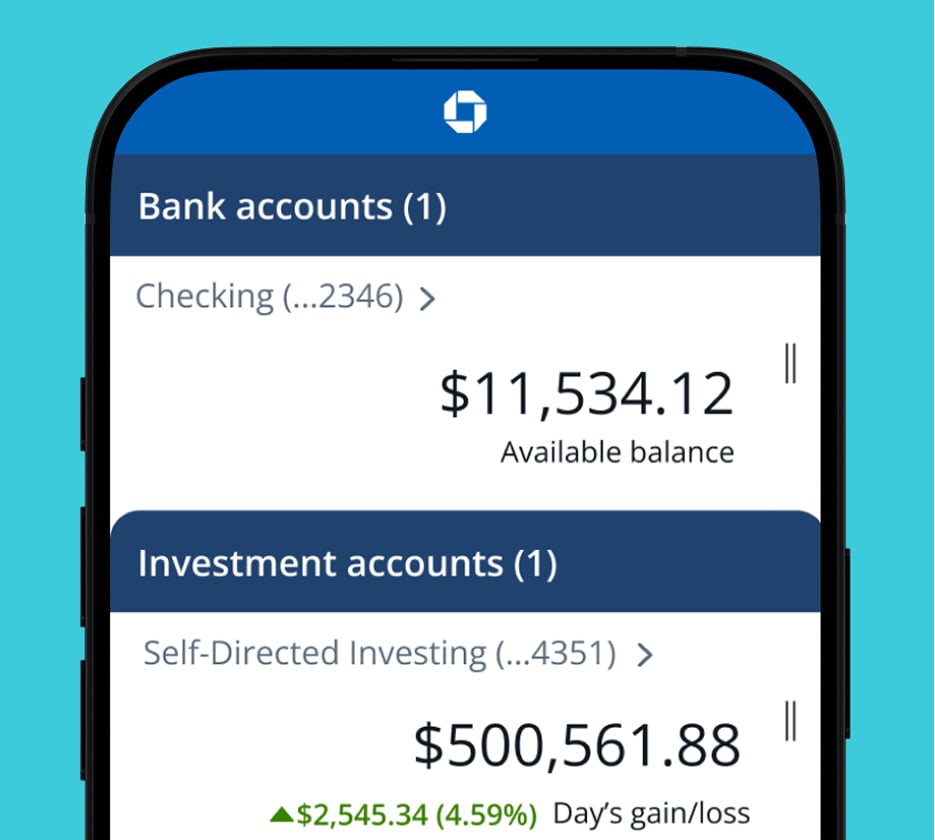
Bank and invest in one convenient place
Manage all of your banking, investing and borrowing in one place for faster, seamless investing with perks like instant money transfers and consolidated tax reporting.
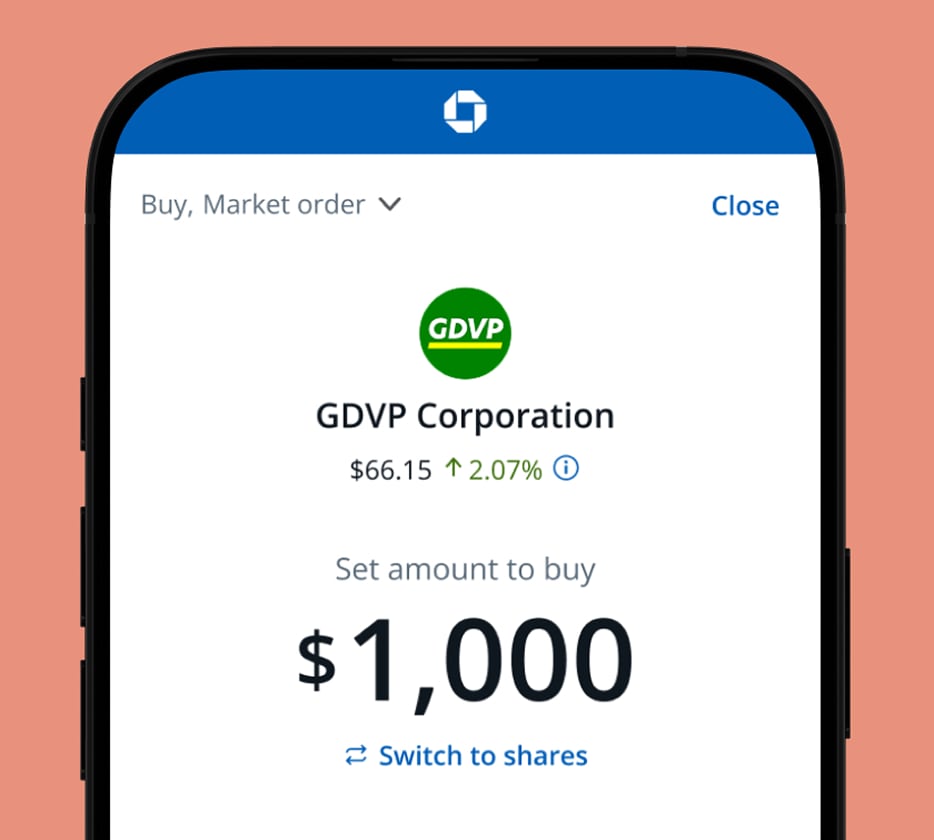
Invest in any amount
You can buy fractional shares in thousands of stocks and ETFs with as little as $5.
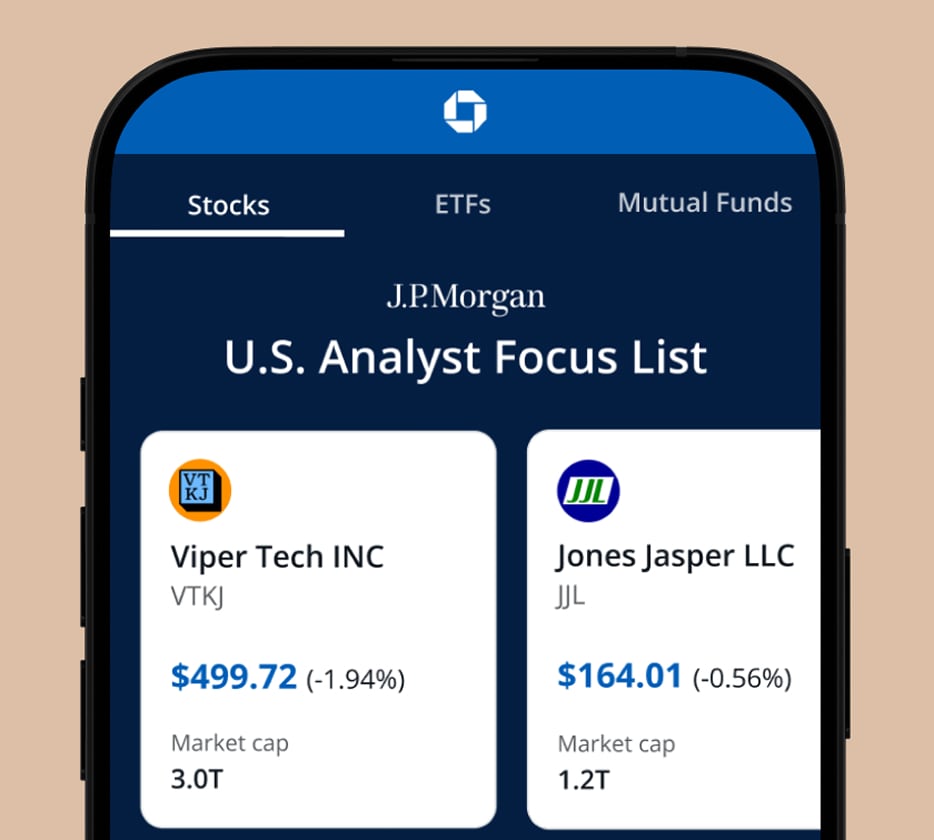
Explore investment ideas
Find your next investment with ideas from our analysts. Easily view the most active stocks and ETFs, mutual funds and highest yielding money market funds, high-growth companies and value stocks.
Investing insights
Tax-Efficient Investing and Planning Strategies for Affluent Individuals

High-income earners and wealthy families often face hefty tax bills, but there are steps that can be taken to help minimize your tax burden. Discover a few key tax-efficient ideas.
How Can I Utilize Strategic Liquidity When Markets Are Changing?

In an ever-evolving market environment, diverse forms of liquidity are crucial for investors when it comes to staying prepared for the unexpected. Read on to learn more.
4 Ways Market Volatility Can Present An Opportunity for Investors

Market volatility can feel scary, but understanding it can help you make smarter decisions and even spot opportunities.