
Current mortgage rates in Washington
Example rates based on a home in
98115 (Seattle, WA)
Example rates based on a home in
6.75%Interest rate 6.966%APR
These example purchase results are based on a $350,000 loan using a 30-year fixed rate conventional loan for ZIP code 98115 with 2.178 discount points.
Rates as of 10:22 AM ET, October 23rd, 2026.

Find more personalized rates in Washington or start your preapproval
Washington mortgage rates may vary depending on location and other factors.

Buying a home in Washington
Washington offers a mix of urban and rural living, from the Pacific Coast to the Cascade Mountains. Seattle is known for its thriving tech industry, vibrant food scene and stunning natural surroundings of Leavenworth, Olympia and Tacoma, and the state offers a range of climates, from the mild, evergreen west side to the drier, more open landscapes of eastern Washington.
Connect with a local Home Lending Advisor to help you every step of the way.
Search for homes in Washington
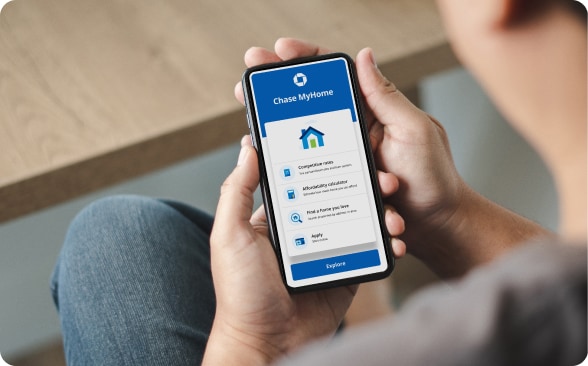
See what's out there with Chase MyHome®, where you can search for homes in your price range — in any ZIP code.
- Sign in with your Chase username and password.
- Select the property search tool to browse homes by either ZIP code or address.
- Have fun exploring homes and save your favorites.
Chase mortgage programs in Washington

Rate discounts up to 1%
With our Relationship Pricing Program, Washington residents may be eligible for a rate discount based on new and existing balances when buying a new home or refinancing. Max rate discounts apply.

Guaranteed on-time closing for new purchases or get $5,000
If you're buying a new home in Washington, you may be eligible for the Chase Closing Guarantee. We promise an on-time closing for eligible products in as soon as three weeks or you’ll get $5,000, if you qualify.

Get up to $5,000 in grants when purchasing a new home
In select areas, the Chase Homebuyer Grant℠ provides up to $5,000 that's first applied to lower your interest rate, if you qualify.
Mortgage rates FAQs
Mortgage rates are based on a combination of your personal financial situation and broader market conditions.
Personal factors include your credit score, loan amount, down payment amount, and the length of the loan. Economic factors also play a role, such as the Federal Reserve rate, the prime rate, the overall economy, and the state of the housing market.
Note: We’re showing our current mortgage rates for demonstration purposes. Your actual mortgage rate can differ from the rates shown.
Yes, your credit score plays a significant role in the interest rates a bank offers you. For example, if you have a higher credit score, you’re more likely to qualify for a lower interest rate.
There are ways to help improve credit before applying for a mortgage, including making on-time payments, avoiding new debt and paying off past-due accounts
Interest rates and annual percentage rates (APR) are two different ways of expressing the fees a borrower takes on when taking out a mortgage:
- Interest rate is the cost of borrowing, shown as a percentage, on the principal amount of the mortgage. This is the rate the borrower's monthly payment is based on.
- APR includes both the interest rate as well as any other costs associated with the loan, such as discount points or lender origination fees. Because APR shows the total cost of a loan, it is usually higher than interest rates. APR can be useful when comparing loans from different lenders because it shows a fuller picture.
Before signing a mortgage, the lender must disclose the loan's APR and interest rate to help the borrower understand what they'll owe.
Mortgage rates can change daily depending on what’s happening in the economy and the housing market. Mortgage rates don’t follow a set schedule. We’ll always show you when the rates were last updated, so you’ll have the most current information.
Your interest rate determines how much interest is added to your loan balance. Because mortgages usually last many years, even small changes in the rate can make a big difference in monthly payments and the total amount paid over time.
A mortgage rate lock occurs when a lender agrees to freeze the borrower s interest rate while the mortgage application is in process. The agreement typically lasts 30 to 90 days to protect the borrower from potential inflation before closing day.
Homebuying resources

A guide to mortgage rates: Definition, types and how they’re calculated

Mortgage rate lock: When should you lock your mortgage rate

We’re here to help guide you home
Get started in minutes with no impact to your credit score.