Powell says 'no choice but to stay' on as Fed governor – here's what to watch for at the next Fed meeting

Editorial staff, J.P. Morgan Wealth Management
- The Federal Reserve (Fed) held its benchmark rate steady for the third consecutive time at a range of 3.50% to 3.75% at its April 2026 meeting, highlighting uncertainty around the economic outlook and the conflict in the Middle East.
- Four of the 12 members of the Federal Open Market Committee (FOMC) dissented against the rate decision or the policy statement – the most divided the committee has been since 1992.
- Our strategists expect the Fed to remain on hold for 2026 as the unemployment rate has been relatively stable and inflation remains elevated.
- While this was very likely his last meeting as Fed chair, Jerome Powell said he has “no choice” but to stay on as a Fed governor after Kevin Warsh presumably assumes the role of chair in May.

The Federal Reserve (Fed) held interest rates steady at its April 28-29 meeting for the third consecutive time, keeping the benchmark federal funds rate at a range of 3.50% to 3.75%.
The Federal Open Market Committee (FOMC) saw its highest level of dissent since October 1992. Governor Stephen Miran, who has dissented in favor of a quarter-percentage-point cut at every meeting since joining the central bank in September 2025, did so again. Regional bank presidents Beth Hammack, Neel Kashkari and Lorie Logan dissented, but notably not on the policy decision. They also voted to hold rates steady, but opposed a specific line in the policy statement that could signal the Fed is maintaining an easing bias.
The interest rate vote tells the story of a committee genuinely split between caution and patience. The majority is holding firm, watching for clearer data before moving. But the committee is divided, and that tension is the clearest signal yet that the path forward for rates is genuinely uncertain – even without acknowledging the upcoming change in leadership.
Jerome Powell confirmed in the April 29 press conference that he plans to remain at the Fed as a governor after his term as chair ends on May 15, with the investigation into the cost of Federal Reserve building renovations being a large driver of his decision.
"The things that have happened really in the last three months have, I think, left me no choice but to stay until I see them through at least that long," Powell said.
With the next Fed meeting not until June 16-17, it may be wise for investors to keep a close eye on the committee’s views and Kevin Warsh’s comments over the next several weeks to understand what could happen with interest rates this year.
Powell says he will stay on as Fed governor
The April meeting was very likely to be Powell’s last as chair, but he said in his post-meeting press conference that he plans to stay on as a Fed governor at least until the investigation into the Fed’s handling of its renovation project is fully over – which is right now an undetermined period of time. Powell could stay on as a governor through the end of his term in January 2028.
"My decisions on these matters will continue to be guided entirely by what I believe is in the best interest of the institution and the people we serve after my term as chair ends on May 15, and will continue to serve as a governor for a period of time to be determined," Powell said in the press conference on April 29.
Hours before the rate decision, the Senate Banking Committee voted 13 to 11 to advance Warsh's nomination to replace Powell as the new chair of the Federal Reserve. Every Republican member voted in favor, and every Democrat voted against. It was the first fully partisan committee vote on a Fed chair nominee in the committee's history. The vote sends Warsh to the full Senate for a confirmation vote, expected the week of May 11. If that timeline holds, Warsh could be confirmed before Powell's term as chair expires on May 15.
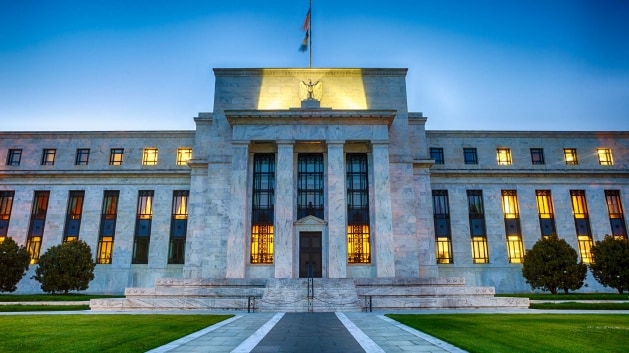
Powell’s decision to stay on as a Fed governor came just days after the U.S. attorney for the District of Columbia closed the criminal investigation into the cost of renovations to the Federal Reserve headquarters in Washington, D.C.
"I have said that I will not leave the board until this investigation is well and truly over, with transparency and finality, and I stand by that," Powell said during the press conference. "I am encouraged by recent developments, and I am watching the remaining steps in this process carefully."
Historically, most former Fed chairs have stepped down from the board once their chairmanship concluded. The last one to stay was Marriner Eccles, who ended his chairmanship in 1948 and remained on the board until 1951.
Powell said that he had planned on retiring, but he said he will stay on and his plan is to "keep a low profile as a governor."
"There’s only ever one chair," Powell said. "When Kevin Warsh is confirmed and sworn in, he will be that chair."
If Warsh becomes chair, will the Fed cut interest rates?
President Donald Trump has been clear about his desire for lower interest rates. In March, he called Powell "grossly incompetent" and said the Fed "should be lowering rates immediately." Trump’s selection of Warsh could be a signal that he expects lower rates under new leadership.
However, when pressed during his Senate hearing on the influence from the White House on Fed policy, Warsh said that the "president never asked me to predetermine, commit, fix, decide on any interest rate decision, in any of our discussions, nor would I ever agree."
Warsh has said publicly that rates can come down. He told Fox Business in October 2025, "We can lower rates a lot and, in so doing, get 30-year fixed-rate mortgages so they're affordable. Lower interest rates with the kind of technology revolution the president's policies have permitted ... this is the seed corn for our productivity revolution." However, Warsh also wrote in a November 2025 Wall Street Journal op-ed that "Inflation is caused when government spends too much and prints too much," signaling he won't cut at the expense of price stability.
Interested in working with an advisor?
Work 1:1 with our advisors to help build a personalized financial strategy that’s built around you.
Factors impacting the Fed’s interest rate policy decisions
The Fed's April meeting statement described the challenge plainly: Economic activity is expanding at a solid pace, job gains have remained low, on average, and inflation is elevated.
Inflation and the job market
Inflation, as measured by the Consumer Price Index (CPI), rose 3.3% over the 12 months ending in March, up sharply from February's 2.4%. Energy drove nearly the entire increase. The gasoline index surged 21.2% in a single month, the largest monthly increase since the series was first published in 1967, and energy costs overall rose 10.9% for the month.
Strip out food and energy, and the underlying picture is steadier. Core CPI rose 2.6% over the past year, only slightly above February's 2.5%. Core CPI provides useful insight into inflation trends, but it’s important to note the Fed’s policy decisions are generally more so guided by the core Personal Consumption Expenditures (PCE) price index, which typically runs lower than CPI.
On the job market, March offered some encouragement. Employers added 178,000 new jobs that month, a solid rebound from the revised loss of 133,000 in February. The unemployment rate held at 4.3%, roughly in the same range as the past year. The healthcare industry continues to drive the core of the hiring, and federal government employment continues to shrink. Average hourly earnings grew 3.5% over the past year, keeping paychecks roughly in line with prices.
Rising energy costs
The uncertainty stemming from the Middle East conflict is a key factor in the Fed's policy decisions right now. The FOMC statement cited it explicitly as a source of elevated inflation and economic uncertainty. Higher oil prices move through the economy quickly. Lower-income families may feel it hardest, since energy can make up a larger share of their budgets than for higher-earning households. Powell acknowledged in the press conference that the full effects of the higher oil prices haven’t fully hit the economy.
Powell stressed the continued uncertainty surrounding the trajectory of the Iran conflict and its economic impact.
"In the near term, higher energy prices will push up overall inflation," Powell said. "Beyond that, the scope and duration of potential effects on the economy remain unclear, as does the future course of the conflict itself."
AI as an increasing factor
AI is beginning to appear in inflation data in a modest way. The surge in data center construction has pushed electricity demand higher. U.S. electricity production grew 3.0% year over year in March 2026, and consumer electricity prices rose 4.6% over the past year. In the near term, the AI buildout could be adding slightly to inflation as the investment cost hits the economy before the productivity payoff arrives. Over the longer term, AI could act as a disinflationary force as it helps accelerate productivity across the economy. That longer-term picture doesn't justify near-term rate policy adjustments on its own, as any meaningful disinflationary benefit from AI is likely years away from showing up in price data.
The bottom line
The Fed held rates steady in April for the third straight meeting, keeping the benchmark federal funds rate at a range of 3.50% to 3.75% as the energy price shock from the conflict in Iran kept any cut off the table. The meeting was very likely Powell’s last in the chair seat, and Warsh could be confirmed by the full Senate the week of May 11, just days before the expiration of Powell's term as chair on May 15. And the next FOMC meeting in June will likely be the first under new leadership.
Our strategists' base case is that the Fed will remain on hold through the end of the year. Consider talking with a J.P. Morgan financial professional about how to position your portfolio through this transition and in this rate environment.
Invest your way
Not working with us yet? Find a J.P. Morgan Advisor or explore ways to invest online.