Kevin Warsh named next Federal Reserve chair: What investors should watch for

Editorial staff, J.P. Morgan Wealth Management
- Kevin Warsh is set to become the next chair of the Federal Reserve (Fed) after current Chair Jerome Powell’s term ends in May.
- Warsh’s policy views, prior experience at the Fed and openness to reform could lead to changes at the U.S. central bank, though the specifics remain uncertain.
- Investors may want to consider policy signals, Federal Open Market Committee (FOMC) voting patterns and market reactions as the Fed’s leadership transition unfolds.

Kevin Warsh has been named the next chair of the Federal Reserve, with the official leadership transition scheduled for May when Jerome Powell’s term ends.
In a post on Truth Social, President Donald Trump said of the selection, “I have known Kevin for a long period of time, and have no doubt that he will go down as one of the GREAT Fed Chairmen, maybe the best. On top of everything else, he is ‘central casting,’ and he will never let you down.”
This change comes at a time when investors may be assessing how the U.S. central bank will adjust to changing economic conditions in the coming months.
Investor expectations around interest rates, inflation and the Fed’s day-to-day operations continue to influence market conditions. As a result, attention may be focused not only on policy decisions themselves but also on the Fed’s leadership during this critical changeover.
Who is the new Fed Chair Kevin Warsh?
Kevin Warsh is a Harvard-educated economist who served as a member of the Federal Reserve Board of Governors from 2006 to 2011. At 35, he was the youngest person to be appointed Fed governor.
Warsh’s tenure as Fed governor coincided with the Great Recession, one of the worst financial crises in modern history. Because of this, he was directly involved in emergency policy decisions aimed at stabilizing the U.S. banking system and preventing broader economic collapse.
During this time, Warsh delivered several public speeches reflecting on the causes of the financial crisis and the Fed’s response to it. His remarks addressed the challenges of policymaking amid extreme economic stress and the limits of conventional monetary tools.
Before his tenure at the Fed, Warsh held senior advisory roles in the White House, including as a top economic advisor for the George W. Bush administration. Warsh’s background also includes work in finance and academia, giving him direct exposure to both market dynamics and policy design. Most recently he was a partner at Stanley Druckenmiller’s Duquesne Family Office LLC and served as the Shepard Family Distinguished Visiting Fellow in Economics at the Hoover Institution at Stanford University.
Get up to $1,000
When you open a J.P. Morgan Self-Directed Investing account, you get a trading experience that puts you in control and up to $1,000 in cash bonus.
The role of the Fed chair, explained
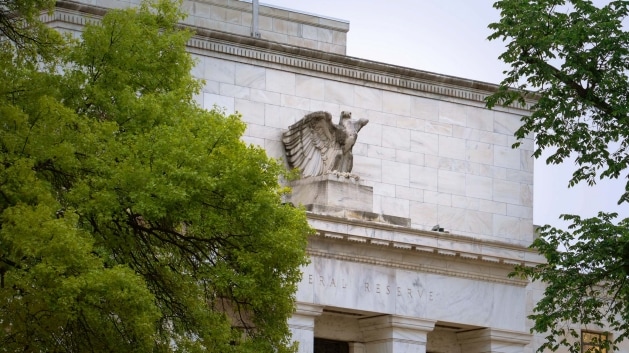
As chair, Warsh will oversee the three-pronged Federal Reserve, which is mandated by Congress to maintain price stability and maximum employment in the United States. At its center is the Board of Governors, an independent government agency headquartered in Washington, D.C., whose members are appointed by the president and confirmed by the Senate.
The other Fed “arms” are the 12 Federal Reserve Banks and the Federal Open Market Committee (FOMC). The FOMC has 12 members who are responsible for monetary policy decisions. These include the seven governors, the president of the Federal Reserve Bank of New York and four of the remaining 11 regional Fed bank presidents, the latter of whom serve one-year terms on a rotating basis. All policy outcomes are determined by committee vote, not by the chair acting alone.
Within that structure, the Fed chair serves as a coordinator, shaping the FOMC meeting agenda, steering discussion among members with differing views and communicating the committee’s conclusions. The chair is also the central bank’s most visible spokesperson, explaining policy decisions through press conferences, congressional testimony and public remarks.
The Fed chair transition process
President Trump named Warsh the new Fed chair in January, which kicked off the official transition process. This process tends to follow a relatively predictable sequence:
- Nominee announcement: The process begins once the president selects and announces their candidate.
- Senate confirmation hearings: Lawmakers question the candidate on issues such as inflation, employment and financial stability.
- End of current chair’s term: The end of the current Fed chair’s term triggers a formal leadership change.
- FOMC meetings: During the transition, policy decisions continue to be made under the existing committee.
During this period, investors often focus less on immediate policy shifts and more on signals about continuity and communication. Statements from both Powell and Warsh, voting patterns and dissents within the FOMC, and market reactions to policy announcements can all offer insight into how the transition is proceeding.
Of note, while Powell’s term as chair ends in May, his term as board governor runs through January 2028. It’s possible he’ll choose to step down early, as some previous chairs have done. If he stays, his experience and perspective may continue to influence policy decisions during Warsh’s tenure.
How might Warsh shape U.S. economic and monetary policy as Fed chair?
Warsh’s past public remarks and commentary may offer a glimpse into his agenda as the new Fed chair. For example, Warsh has been vocal about controlling inflation and reassessing the scope of the FOMC’s monetary policy actions, especially in times of stability.
Economic policy
In terms of policy views, Warsh is often associated with a strong focus on inflation control and financial stability. Warsh has said several times that “inflation is a choice” – that is, it’s the result of central bank decision-making. And if inflation is a result of certain monetary policy choices, then different policy choices can keep it in check.
In a November op-ed for The Wall Street Journal, Warsh said, “The Fed should re-examine its great mistakes that led to the great inflation. It should abandon the dogma that inflation is caused when the economy grows too much and workers get paid too much. Inflation is caused when government spends too much and prints too much."
Interest rates in the current moment
Simultaneously, Warsh has said that he thinks interest rates could be lower. He told Fox Business in October 2025, “We can lower rates a lot and, in so doing, get 30-year fixed-rate mortgages so they’re affordable ... Lower interest rates with the kind of technology revolution the president’s policies have permitted, the massive investment that’s happening in the economy domestically and from foreigners, this is the seed corn for our productivity revolution."
The future of the Fed
While Warsh has said he believes aggressive Fed interventions are sometimes necessary during acute crises – as in the wake of the COVID-19 pandemic – he feels strongly that the central bank’s day-to-day moves should be more restrained. In a Hoover Institution interview aired in July 2025, Warsh addressed the Fed’s handling of the Great Recession, making clear that the FOMC felt its “first-responder” role would eventually wane after the emergency ended:
"My view is the central bank was created to respond to panics. We had one, we recognized it belatedly, but then we showed overwhelming force. And the word you used, I think is the right word. It was an emergency.
So you’re prepared to cross more lines than you would in benign times. You’re prepared in some sense, as Paul Volcker famously said, [to] go to the very edge of your authority. But there was an implicit promise we made to each other around the table that we made to the Treasury Department, the Congress, and I would broadly say, to the rest of the U.S. government … When the crisis ends, we’ll get out of this. We will go back to being a rather boring central bank."
What could this new era at the Fed mean for investors and portfolios?
For investors, a change in Fed leadership could affect how monetary priorities are framed and communicated over time. For example, leadership style can influence how clearly the Fed disseminates its objectives, how disagreements are addressed within the FOMC and how markets interpret policy signals.
Policy priorities and rate outlook
Although interest rate decisions are made by the FOMC as a group, the chair plays a central role in steering the policy conversation. Warsh is often characterized as an inflation hawk while simultaneously advocating for lower interest rates, so investors may watch to see how interest rates, financial stability and broader economic conditions are discussed and weighed when he assumes the role as chair.
Differences of opinion within the FOMC remain an important factor. Some members may focus on inflation, while others highlight employment or growth. How Warsh manages these debates and communicates the committee’s views can shape market expectations with regard to future rate decisions.
Portfolio considerations
Rather than trying to anticipate short-term policy moves during a leadership transition, investors may benefit from taking the following steps:
- Reassess portfolio structure: Ensure your asset allocations align with your long-term objectives and risk tolerance.
- Watch rate-sensitive areas: Monitor your exposure to assets like bonds, housing-related investments and growth-oriented equities, which tend to respond to changes in rate expectations.
- Maintain diversification: Maintaining diversification across different asset classes and regions may help reduce market volatility.
The bottom line
While leadership changes don’t alter the Fed’s dual mandate, they can affect how policy debates are framed and decisions are conveyed to investors during periods of economic uncertainty. Thus, a new Fed chair can ultimately impact how markets view the central bank’s priorities around inflation and financial stability.
For investors, though, a new Fed chair is just one of many variables shaping market conditions over time. Rather than trying to adjust your portfolio to respond to short-term developments, it may be more productive to focus on your long-term strategy and risk management. If you have questions about how changes in monetary policy could affect your plans, you may benefit from talking with a financial professional.
Frequently asked questions about Kevin Warsh and the role of Fed chair
Kevin Warsh is expected to assume the role of Federal Reserve chair in May when Jerome Powell’s term ends. Until the transition is complete, Powell will continue to preside over FOMC meetings and guide monetary policy discussions.
Before formally taking office, the incoming chair does not participate in FOMC votes or direct policy actions. That said, investors often pay close attention to public remarks, testimony and interviews during the transition period, as these can offer insight into how the next chair may frame their policy priorities.
No, any changes to interest rates are decided by the FOMC as a group. While the chair leads discussions and communicates the committee’s decisions, policy outcomes are determined by a formal vote of all participating members rather than by the chair alone.
Invest your way
Not working with us yet? Find a J.P. Morgan Advisor or explore ways to invest online.