Consumer Price Index (CPI): What is it and how does it work?

Editorial staff, J.P. Morgan Wealth Management
- The Consumer Price Index (CPI) is a monthly U.S. government report measuring the prices urban consumers pay for a basket of goods and services. It changes from month-to-month and year-to-year and is a principal gauge of inflation.
- Government agencies refer to the CPI in guiding monetary policy, adjusting Social Security payments and setting income eligibility limits for assistance programs.
- Monitoring the CPI can be important as you seek to stay ahead of inflation and on the path toward your financial goals.

Inflation, which describes the decline in your purchasing power relative to your income, can have a big impact on your finances.
You may not need any type of indicator to grasp inflation, as we can often feel the effects of rising prices from the gas pump to the grocery store and beyond. However, the inflation rate may have repercussions beyond your budget, affecting things like monetary policy, real estate and the financial markets.
The Consumer Price Index (CPI) is a monthly report released by the U.S. Bureau of Labor Statistics (BLS) that calculates the variation in prices that consumers in urban areas pay for a basket of goods and services. This article covers the essentials of the CPI, including what it measures, how it’s used and its potential impact on your finances.
What the CPI measures
The CPI illustrates the changes in price for a sample basket of goods and services in 200 consumer spending categories. The BLS organizes these categories into eight major groups: food and beverage, housing, apparel, transportation, medical care, recreation, education and communication, and other goods and services.
In addition to this breakdown, the CPI report distinguishes between the costs of food, energy and all items less food and energy. Since food and energy prices are especially volatile – subject to fluctuations that may be unrelated to broader economic factors – observers look to the figure that excludes food and energy as a measure of “core” inflation.
How is the CPI calculated?
The CPI is calculated by measuring the change in prices of popular consumer goods and services throughout the U.S. economy. The BLS collects data from nearly 23,000 retail and service establishments to track price changes. It also gathers data from about 50,000 landlords and tenants to evaluate rent price fluctuations.
To calculate the CPI, the BLS compares the cost of the “basket” of items to the previous year’s cost and then multiplies this figure by 100 to yield the percentage. Then, the inflation rate can be calculated with these comparison figures.
- Annual CPI = (value of basket in current year ÷ value of basket in prior year) × 100
- Inflation Rate = (CPI new − CPI old) ÷ CPI old × 100
How does the BLS categorize data?
The BLS provides data for two sets of consumers. The Consumer Price Index for All Urban Consumers (CPI-U) is the broader group of those living in urban areas, including more than 90% of the U.S. population. The Consumer Price Index for Urban Wage Earners and Clerical Workers (CPI-W) represents a subset that earns at least half their household income from hourly wage jobs. Both these groups exclude people living in rural areas, in the armed forces and in institutions such as prisons and mental health facilities.
The CPI also breaks down the data into four regions (Northeast, Midwest, South and West), nine smaller divisions defined by the Census Bureau and 23 specific metropolitan regions, providing insight into price movements in specific parts of the country.
Get up to $1,000
When you open a J.P. Morgan Self-Directed Investing account, you get a trading experience that puts you in control and up to $1,000 in cash bonus.
How the CPI is used
You might be most familiar with the CPI from its appearance in headlines about inflation. Sure enough, one of the index’s primary uses is as an economic indicator, quantifying the level of inflation in the economy and monitoring how well the government’s economic policies are working.
Although the CPI may not tell you everything you need to know about the economy at large, businesses and individuals rely on the index to optimize their decisions for the current economic environment.
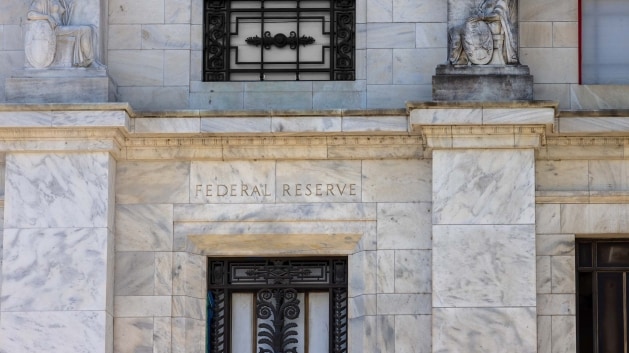
The CPI also has concrete impacts beyond headlines and individual business strategies. The Federal Reserve (or “the Fed”) may use the CPI and other inflation gauges to guide monetary policy and set interest rates.
The Federal Reserve Bank, the central bank of the U.S., aims to keep inflation below its target of 2%. To fight inflation, the Fed may choose to raise the interest rate it charges banks, which then raises borrowing rates throughout the banking system. Higher interest rates may decrease consumer spending, which may reduce inflationary pressure on prices over time.
Other government agencies use CPI data to adjust programs to reflect the current cost of living. This includes calibrating Social Security benefits and federal pension payouts, as well as determining eligibility limits for the Supplemental Nutrition Assistance Program (SNAP) and subsidized school lunches.
The index even influences tax brackets, protecting you from inflation-driven tax increases.
Given its role, the CPI may end up impacting the income of more than 108 million people in the U.S.
The CPI also plays a key role in “deflating” other sets of economic data – calculating the equivalent in inflation-free dollars to enable more consistent comparisons between figures. This process is also referred to as “adjusting for inflation.”
What’s the CPI’s potential impact on your finances and investments?
Beyond monitoring the direct implications for your wallet, keeping an eye on the CPI can be important as you set financial goals and strategize on how to reach them. That’s because the CPI may directly impact your spending power and investments.
CPI’s impact on consumer spending
Inflation, as measured by increases in the CPI, has an impact on everyone’s budget, but studies show that it has a disproportionate effect on lower-income households. People with lower incomes spend a greater percentage of their budget on necessities such as food, gas and rent – categories that tend to experience outsized price increases. When these prices jump, families with higher incomes may be able to switch to generic brands or cheaper goods, whereas lower-income households may have fewer options to cut costs.
CPI’s impact on investment strategies
When it comes to a person’s investment strategy, the CPI may have implications. Because the CPI is a key indicator of inflation, CPI data may impact investor decisions, monetary policy and economic expectations, which can impact the financial markets.
On an individual investor level, CPI data that indicates an inflationary environment may lead investors to want to make certain decisions in regard to their investment strategy.
Certain types of assets may help you hedge against inflation, for instance. Investors may turn to assets like real estate and commodities for this purpose, which historically have been considered a hedge against inflation.
The bottom line
The CPI is an important measure of inflation, which can affect the economy and your financial life. If you want to be sure you’re staying on track with your financial strategy, you may want to speak to a financial advisor who can help you interpret and adjust to the CPI and other economic data.
Frequently asked questions about the Consumer Price Index (CPI)
The CPI is an economic measure used to track the change in prices of consumer goods and services in the U.S., and it’s used as a primary tool for measuring inflation. It includes food, rent, housing, medical care, education and other goods and services. The CPI also includes taxes associated with these prices, such as sales and excise taxes.
When the CPI is high, this indicates that the cost of living has increased and that inflation has grown. A higher CPI can impact the population in a variety of ways, including individual purchasing power, the Fed deciding to raise interest rates, adjusted eligibility requirements for government benefits and a rise in wages as companies adjust to an inflationary environment.
No, the CPI and inflation are not the same. Inflation refers to the broad increase in prices in an economic sector over time, while CPI measures inflation.
Invest your way
Not working with us yet? Find a J.P. Morgan Advisor or explore ways to invest online.