Kevin Warsh is the new chair of the Federal Reserve: Here’s what that could mean for markets and investors in 2026
Editorial staff, J.P. Morgan Wealth Management
- Kevin Warsh was confirmed on May 13 as the 17th chair of the Federal Reserve (Fed), with his term officially beginning when Jerome Powell's term expires on May 15.
- Warsh’s public statements point to tighter inflation discipline, streamlined Fed communication and a more narrowly focused central bank.
- Our strategists expect the Fed to keep interest rates steady through the rest of 2026 as rising prices and volatile energy costs fuel ongoing economic uncertainty.

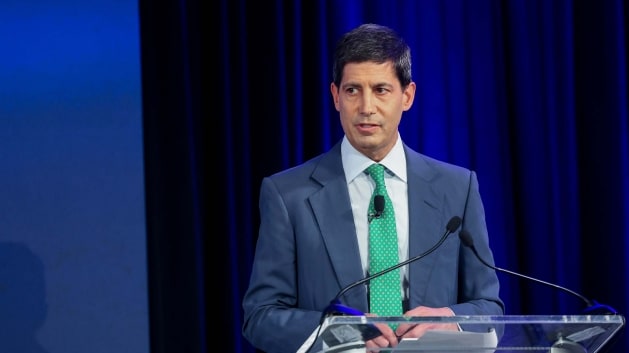
Kevin Warsh is the new chair of the Federal Reserve (Fed). The Senate narrowly confirmed him on May 13, 2026, in a 54-45 vote – the most divisive in Fed history. Warsh’s term as chair is set to officially begin when Jerome Powell’s term expires on May 15. The Senate voted on May 12 for Warsh to replace Stephen Miran on the Board of Governors – a key step in becoming the next Fed chair.
Though there is a new Fed chair, there isn’t likely to be a new strategy when it comes to monetary policy. Our strategists expect near-term continuity in monetary policy, with Warsh likely to be dovish in his role as chair, like Powell.
Warsh is becoming chair during a time of higher inflation and geopolitical uncertainty. Inflation reached a three-year high in April and has been running well above the Fed’s 2% target for months – even before the Middle East conflict drove fuel costs higher this spring. Hiring has been slowing for months, even as layoffs have stayed relatively low. Faced with these mixed signals, the Federal Open Market Committee (FOMC) has held the federal funds rate steady at a range of 3.50% to 3.75% for its past three meetings. Notably, April’s meeting brought the most policy disagreement among committee members in decades.
With his first meeting as Fed chair set for June 16-17, Warsh’s shared views and comments over the next few weeks may give investors a preview for how he plans to lead the Fed amid stubborn inflation, a low-hire, low-fire job market and geopolitical uncertainty.
Who is Kevin Warsh?
In 2006, Kevin Warsh was the youngest person ever appointed to the Federal Reserve Board of Governors. He was nominated to be a governor at just 35 years old. He served as governor through the 2008 financial crisis, sitting alongside then-Chair Ben Bernanke as the Fed made emergency decisions to stabilize the U.S. banking system.
After leaving the board in 2011, Warsh became a partner at Duquesne Family Office and later a visiting fellow in economics at Stanford University’s Hoover Institution. President Donald Trump nominated Warsh as the 17th chair of the Federal Reserve in January 2026, and the Senate confirmed him in May 2026.
Warsh has a degree in public policy from Stanford and a law degree from Harvard University. Early in his career, he worked at Morgan Stanley in the mergers and acquisitions department before leaving in 2002 to serve as a special assistant to the president for economic policy under the administration of President George W. Bush, as well as executive secretary of the National Economic Council, where he worked until joining the Fed in 2006.
Interested in working with an advisor?
Work 1:1 with our advisors to help build a personalized financial strategy that’s built around you.
What could change under Warsh’s leadership?
Several themes stood out from Warsh’s nomination process and April 21 confirmation hearing.
Holding the line on inflation
“Inflation is a choice, and the Fed must take responsibility for it,” Warsh said on April 21 in his hearing with the Senate Banking Committee. He’s also called the post-pandemic price surge the “biggest policy error in 40 or 50 years.” A chair with such views may want to keep borrowing costs elevated if inflation isn’t under control.
A new way to measure inflation
While Warsh is likely to be tough on inflation, he may not measure it the same way as past chairs. He has been critical of core Personal Consumption Expenditures (PCE), the Fed’s preferred inflation gauge. Core PCE measures the prices of goods and services purchased by U.S. households – minus food and energy, which can be especially volatile.
Instead, Warsh prefers trimmed averages, a method that involves dropping the most extreme price changes from the inflation calculation – such as this spring’s oil price shocks brought on by the conflict in Iran – to get a more accurate read on whether prices are broadly rising or falling. Under that framework, recent inflation might look somewhat lower than headline PCE would suggest, which could either speed up or complicate the case for rate cuts.
Streamlined Fed communications
Warsh has hinted at potential changes to Fed communications, including reducing forward guidance through fewer post-meeting press conferences and retiring tools such as the dot plots.
A leaner balance sheet and a shifting Fed role
Warsh has long favored reducing the Fed’s balance sheet, which ballooned due to crisis-era purchases of government and mortgage-backed securities that the Fed carried out with the goal of injecting money into the economy. Any actual change needs a committee vote, so a slimmed-down balance sheet won’t happen fast. But selling those bonds could reduce liquidity and push longer-term interest rates upward.
On rates and independence
Warsh has publicly called for lower interest rates several times in the past year, but he will not promise a timeline based on political pressure. When senators asked whether President Trump had pressed him to cut rates, Warsh was unequivocal in his response: “The president never asked me to predetermine, commit, fix, decide on any interest rate decision in any of our discussions, nor would I ever agree to do so.”
Market reactions and investor implications
The Fed leadership transition arrives amid a market environment already shaped by high inflation, energy price volatility and a divided FOMC. At its April meeting, four of the 12 FOMC voting members dissented against the rate decision or the policy statement – the most divided the committee has been since 1992. That kind of split doesn’t simply resolve when a new chair takes over. Indeed, Warsh will need to build consensus among committee members who disagree on the path forward for rates and inflation.
As of 9 a.m. on May 14, investors predicted that rates would largely remain steady through the end of 2026, with less than 3% believing there will be a rate cut at any of the remaining FOMC meetings this year. In fact, the CME FedWatch tool showed that an increased number of investors think there could even be a rate hike by year’s end, starting with the September Fed meeting.
Our J.P. Morgan strategists’ base case is for the Fed to keep interest rates steady through the end of 2026, with the unemployment rate relatively stable and inflation still elevated. Even before this spring’s shocks to energy prices, U.S. inflation was running near 3%. The April Consumer Price Index (CPI) rose 3.8% year over year – a three-year high and a continued climb from 3.3% in March. The gap between yields on cash and the inflation rate continues to narrow, and the erosion of purchasing power will likely worsen as the effects of energy supply shocks continue to ripple through the economy this year.
Under Warsh, some of the Fed signals worth tracking could include how the FOMC’s policy statement language evolves, whether committee dissent rises or falls, and how Warsh communicates after meetings.
Managing your portfolio in a changing Fed environment
A leadership change at the Fed isn’t a reason to overhaul your investments. Rather, it’s an opportunity to check whether your portfolio can handle a stretch of stubborn inflation and expensive borrowing.
Prices across the United States have climbed more than 25% since the start of the decade, while broad bond holdings returned only about 6% in that same time frame. When inflation stays volatile, stocks and bonds can fall at the same time. Consequently, a classic portfolio comprising 60% stocks and 40% bonds may not absorb risk the way it once did.
In our 2026 Mid-Year Outlook, our strategists identify several areas worth considering:
- Real assets: Commodities, natural resource equities, infrastructure and global real estate have historically shown a positive correlation to inflation while offering lower volatility than broad equity markets.
- Emerging markets: Emerging market corporate earnings are expected to grow 46% in calendar year 2026, price-to-earnings multiples have corrected to cheaper levels and emerging market sovereign bond yields are above 6.5%.
- Gold: Investors may consider allocating to gold as a hedge against inflation volatility and currency dispersion.
Money sitting in high-yield savings accounts and short-term cash vehicles is earning a little less than inflation after taxes, meaning it’s quietly losing real value. Accounts and bonds tied to longer-term interest rates will be particularly sensitive to any shifts in the Fed’s policy decisions.
The bottom line
Warsh knows the Fed from the inside: He was there during the worst financial crisis in a generation and has spent more than a decade arguing for a leaner, more disciplined central bank. As Fed chair, his priorities of fighting inflation first, talking less and narrowing the Fed’s focus may be different from how Powell led the Fed. But in the short term, a large shift in monetary policy is unlikely, and it’s a good reminder that every vote still requires a committee majority.
For investors, the playbook hasn’t changed: Stay diversified, invest for the long-term, watch how inflation and the job market evolve, and avoid portfolio moves driven by headlines. A J.P. Morgan financial professional can help you think through how a new era at the Fed might affect your overall plan.
Invest your way
Not working with us yet? Find a J.P. Morgan Advisor or explore ways to invest online.