Oil prices and shifting Fed policy dominated March headlines – what investors should do next

Global Investment Strategist

The Iran war caused oil to experience its highest monthly surge (+45%) since May 2020, which helped propel the Bloomberg Commodity Index to rally (+11%) in March. The spike in oil prices ignited uncertainty around growth, inflation and the Federal Reserve’s (Fed) policy path, sending global equities (MSCI World -6.3%), gold (-11.1%) and fixed income (Bloomberg U.S. Aggregate Bond Index -1.8%) to deliver negative total returns in March.
Commodities outperformed in March as oil prices surged
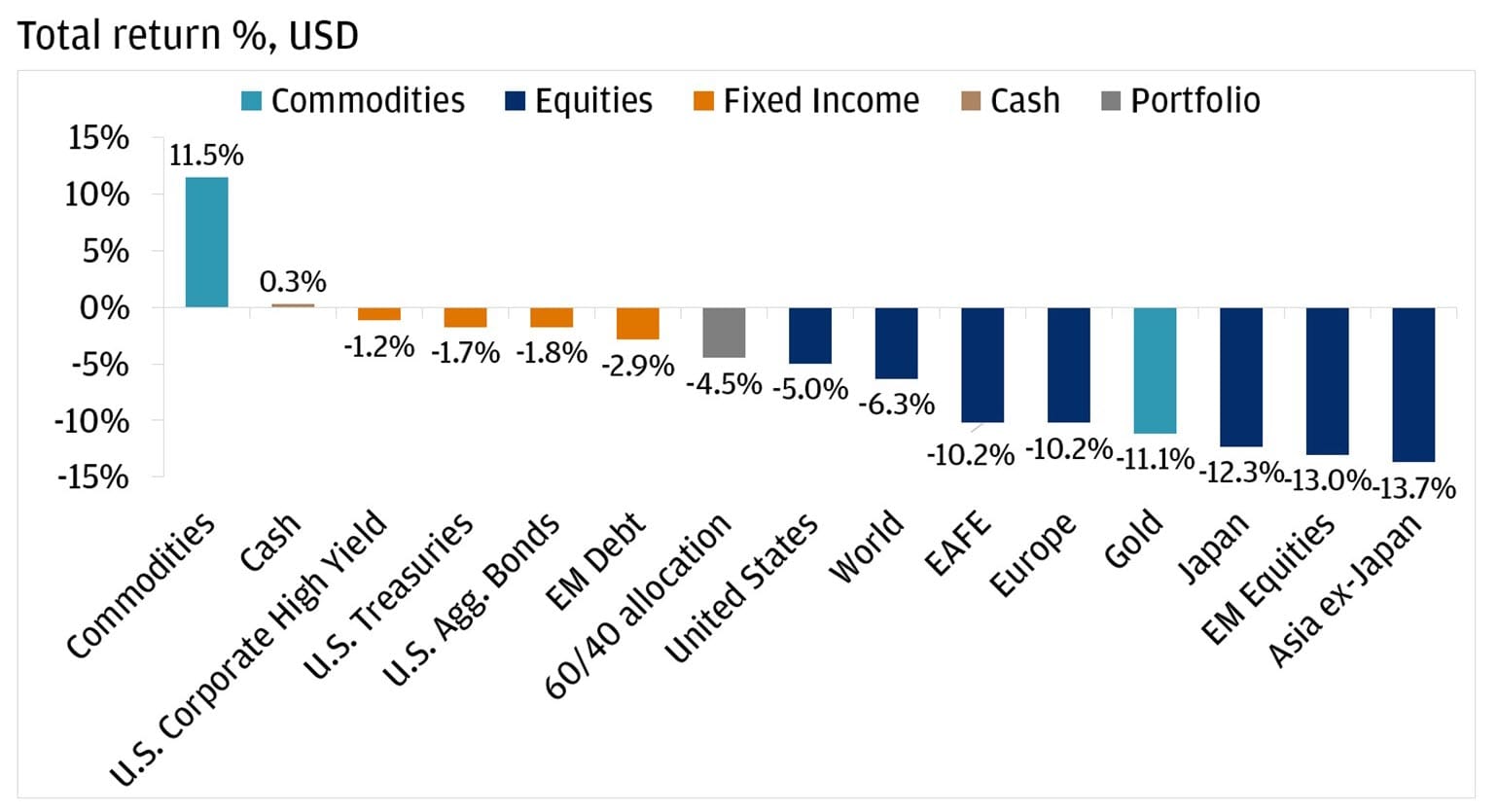
Below, we recap how an energy-driven inflation shock and shifting Fed policy expectations impacted portfolios in March.
Energy shocks drove global market volatility in March
Even with the S&P 500 rallying nearly 3% on the final day of March and posting its best single-day performance since May 2025, the index ended March down -5%. It wasn’t just U.S. equities that had a sluggish month, however: International equities sold off as well.
The heightened volatility investors experienced in March was largely driven by the continued escalation of the conflict in Iran, which resulted in shipping through the Strait of Hormuz – a chokepoint for roughly 20% of the world’s oil and liquefied natural gas (LNG) trade – effectively coming to a halt. This supply shock drove oil prices significantly higher, and they ended the month above $100 per barrel.
Number of vessels passing through the Strait of Hormuz collapsed in March
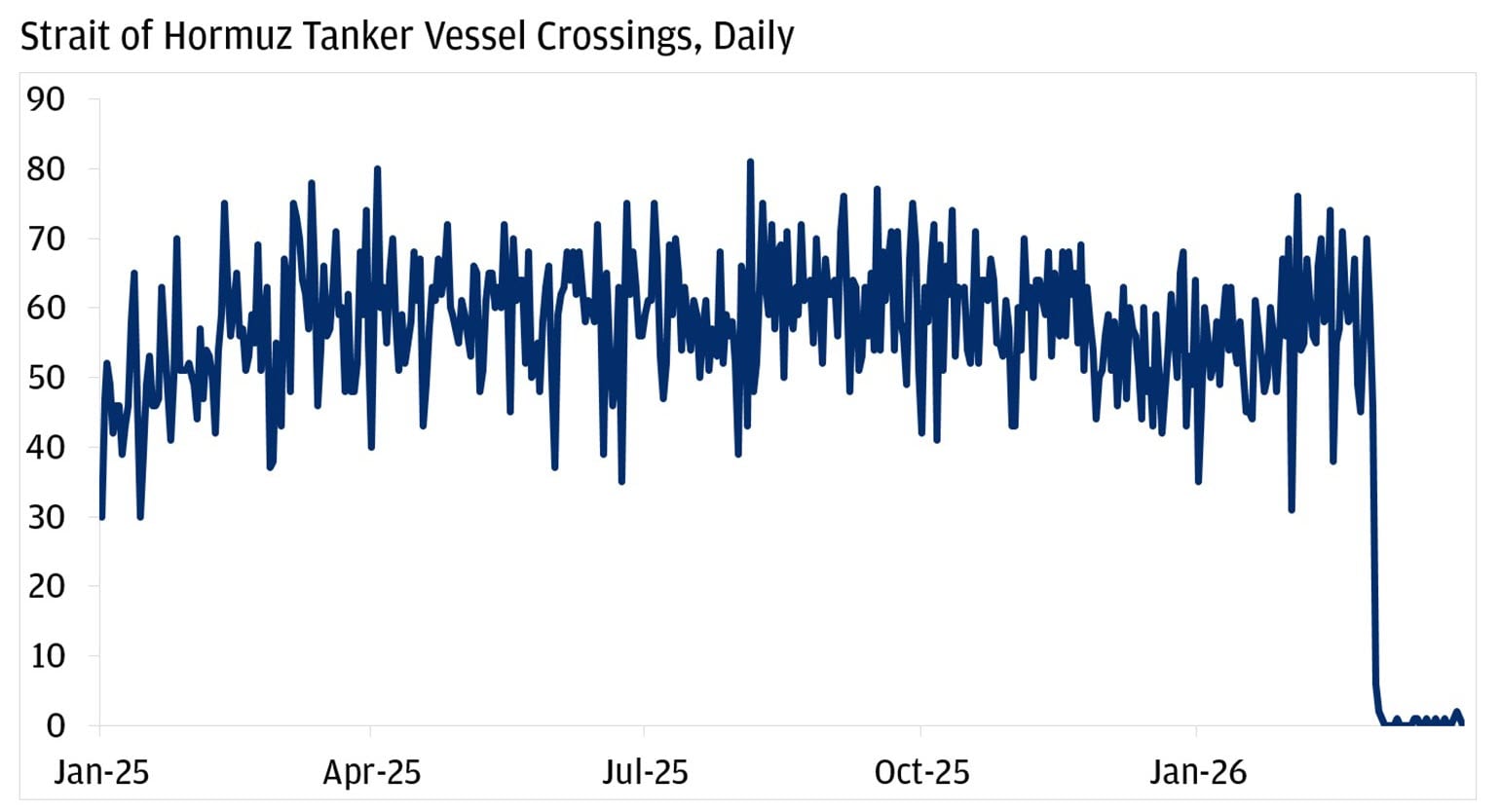
Oil shocks can fuel investor anxiety, general uncertainty and market volatility. If elevated oil prices are sustained for an extended period, this can increase the cost of goods and services that rely on oil. The fear is that the price increases may be long-lasting due to a drawn-out supply shock that compresses profit margins and impacts consumer spending, as households need to allocate more of their income to essentials like gasoline.
Countries that rely more on imported oil, including developing countries and some Asian nations (EM Equities -13%), saw larger drawdowns in March due to fears that higher oil prices could more negatively impact their economies in comparison to net exporters like the United States.
Given the rapidly evolving nature of the Iran war, it remains difficult to pin down a single base case with confidence. Throughout the conflict, our view has been that price spikes will be short-lived, oil supply can return to pre-war levels by year-end and the S&P 500 can deliver double-digit returns from current levels.
Ready to take the next step in investing?
We offer $0 commission online trades, intuitive investing tools and a range of advisor services, so you can take control of your financial future.
Shifting Fed policy expectations amid uncertainty
With oil prices surging and inflation fears mounting as a result of the Iran war, investors and policymakers were forced to reassess the outlook for interest rates. Before the conflict broke out, markets were pricing in about 50 basis points of Fed cuts in 2026. Investors received a weaker-than-expected February jobs report that showed nonfarm payrolls declining by 92,000 (compared to expected gains of 60,000). Given the continued weakening of the labor market, some investors believed the Fed would maintain its easing bias in 2026, as year-over-year inflation remained steady at 2.4% in February.
However, with the escalation of the conflict in Iran, Fed policy expectations whipsawed. Indeed, as the aforementioned inflation concerns came to the fore – and the economic impact of the war remains unclear – markets are now pricing in a potential hike before year-end.
Market expectations for Fed policy this year shifted throughout March
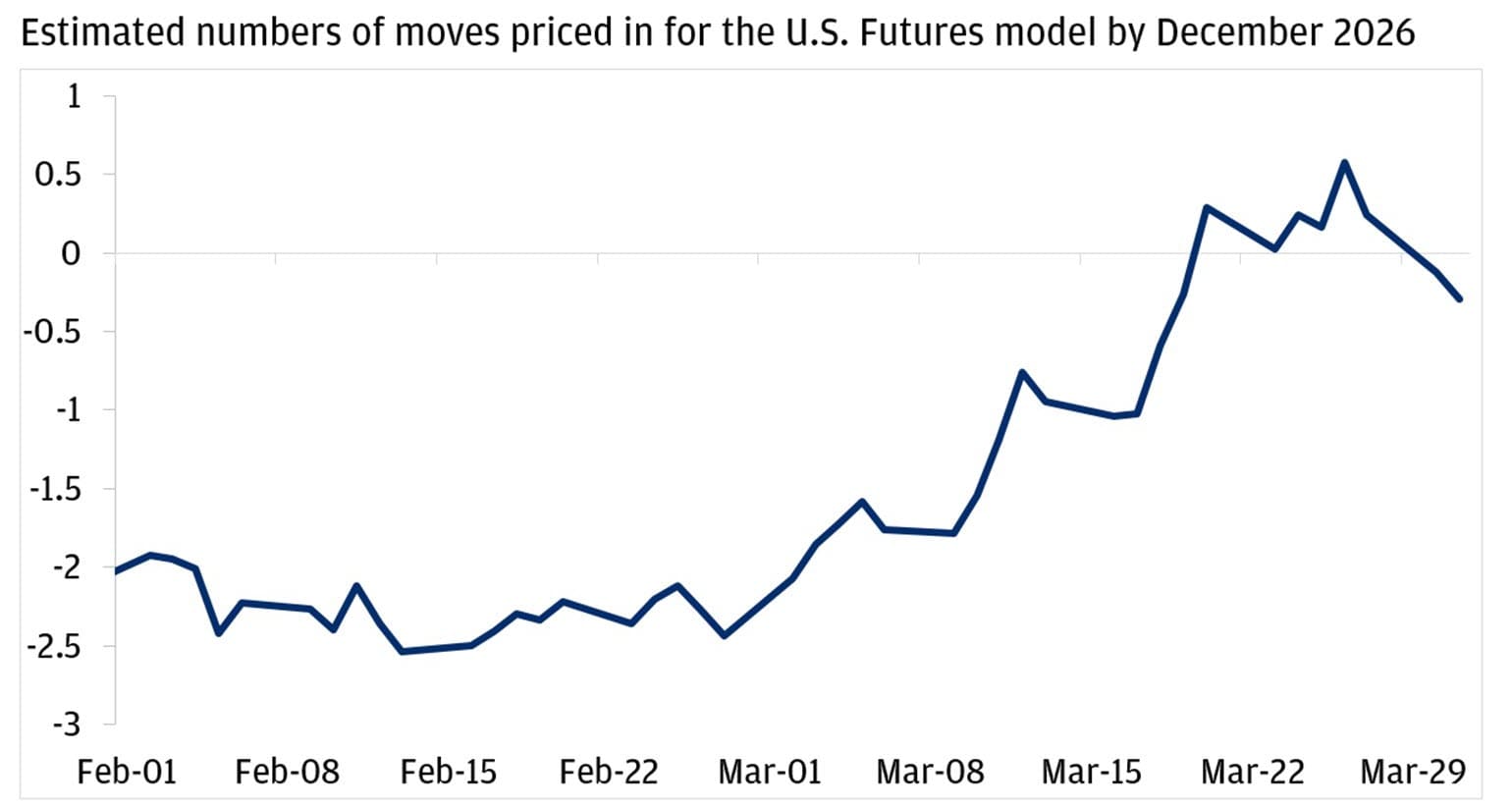
The shift in market expectations from potential rate cuts to potential rate hikes helped drive gold to its worst monthly performance in over a decade. The 10-year Treasury yield, which often acts as a benchmark for real interest rates (i.e., interest rates that are adjusted for inflation), rose in response to concerns about inflation and anticipated rate hikes. Higher real yields can increase the opportunity cost of holding a nonyielding asset like gold, which can be a headwind for prices as investors focus on adding other assets to their portfolios that might help maintain purchasing power more effectively.
Expectations surrounding rate hikes also impacted fixed income, since bond prices move inversely to yields. In other words, rising yields – or expectations of rising yields – cause prices of existing bonds to fall because those bonds are less attractive than newly issued ones offering higher rates. However, bonds still managed to offer some diversification benefit for investors as they experienced a lesser drawdown than equities last month, providing a buffer to portfolios.
Ultimately, the Fed kept rates on hold at its March meeting, with Fed Chair Jerome Powell emphasizing the importance of maintaining a data-dependent approach. He also highlighted the need to monitor both inflation and the broader impact of geopolitical events. As reports surfaced at the end of the month that the war could be ending soon, market expectations for Fed policy reversed and began repricing potential cuts this year. Our view is that the Fed likely will stay on hold in 2026 as it evaluates how fallout from the conflict ripples through the economy.
Looking ahead to April: What investors should do next
While it is unclear when the conflict will end as of early April, the United States has signaled openness to finding an off-ramp. Even if the conflict were to conclude, however, the macro-picture wouldn't necessarily be free of related headwinds. The economy will still feel the effects of higher oil prices; and the longer those drag on, the more severe the impacts could be.
While the path forward may be bumpy and volatility is likely to persist in the near term, history shows that markets are resilient over the long run – and that disciplined investors are often rewarded for staying the course.
You're invited to subscribe to our newsletters
We'll send you the latest market news, investing insights and more when you subscribe to our newsletters.