Gold, earnings and global markets: 3 themes driving markets in August

Global Investment Strategist
- Gold led major asset classes in August, supported by a weaker U.S. dollar and plans for Treasury bond buybacks.
- Another exceptionally strong earnings season helped reinforce the fundamental backdrop for U.S. equities.
- Market gains extended beyond the U.S., highlighting the benefits of maintaining global diversification.

Nearly every major asset class produced positive total returns in August. Gold led the way (+9.4%), delivering its strongest monthly gain in over six months. Supported by a modest softening of the U.S. dollar and Treasury bond buyback plans, the precious metal significantly outperformed stocks, bonds and cash. Meanwhile, global equities posted modest gains as another strong earnings season helped reinforce the fundamental backdrop for markets.
Gold and global equities deliver positive returns in August
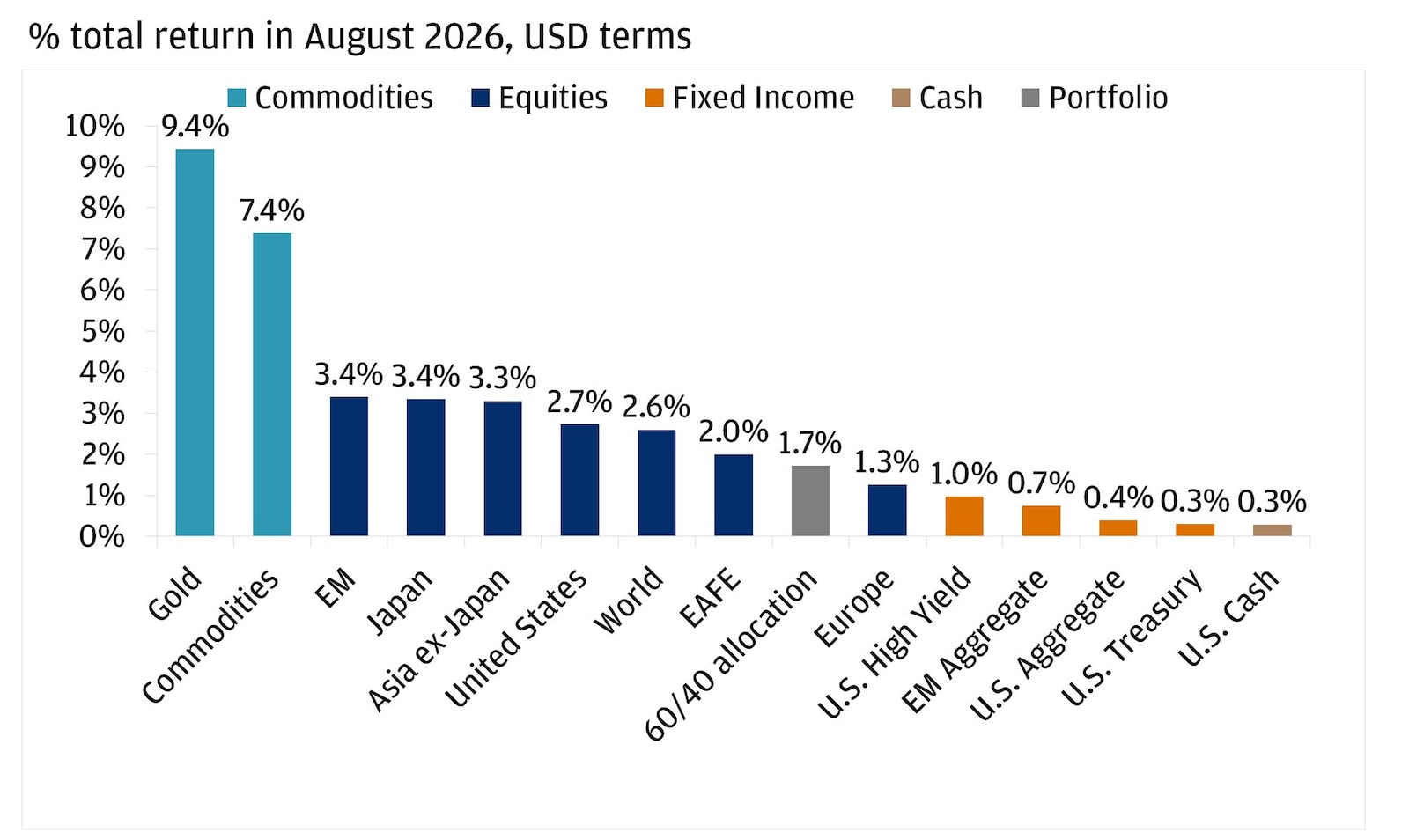
Source: Factset. Indices shown are represented by EM Equities, MSCI EM Index; Europe: Stoxx Europe 600 index; Asia ex-Japan: MSCI AC Asia ex-Japan index; EAFE: MSCI EAFE Index; World: MSCI World Index; Gold: NYMEX Near Term USD ($ozt); U.S.: S&P 500 Index; Japan: MSCI Japan; U.S. Corporate HY: Bloomberg U.S. High Yield - Corporate Index; U.S. Agg Bonds: Bloomberg U.S. Aggregate Bond Index; EM Debt: Bloomberg EM Aggregate Bond USD Index; U.S. Treasury: Bloomberg Global U.S. Treasury Index; 60/40 allocation: 60% MSCI World, 40% Bloomberg U.S. Aggregate Bond Index; and Commodities: Bloomberg Commodity Index. U.S. Cash represented by the Bloomberg U.S. 1-3 Month Treasury Bills Index. Represents total returns from July 31, 2026 through August 31, 2026. Outlooks and past performance are no guarantee of future results. It is not possible to invest directly in an index.
Below, we recap developments that stood out during the month: Treasury buybacks and the rally in gold, continued strength in corporate earnings, and broad participation across global equity markets. Together, they help explain why stocks, bonds and commodities all finished August higher.
Treasury buybacks helped stabilize yields and fuel gold rally
Toward the end of the month, Treasury Secretary Scott Bessent announced plans to double the size of Treasury liquidity-support buyback operations for securities maturing between 10 and 30 years. By repurchasing older bonds, the Treasury can potentially improve liquidity and support demand in longer-dated securities. The announcement helped yields retreat from their highs.
Gold was one of the biggest beneficiaries. Supported by a weaker U.S. dollar and lower real yields, the precious metal delivered an impressive August rally.
A modest decline in real yields helped drive gold prices higher in August
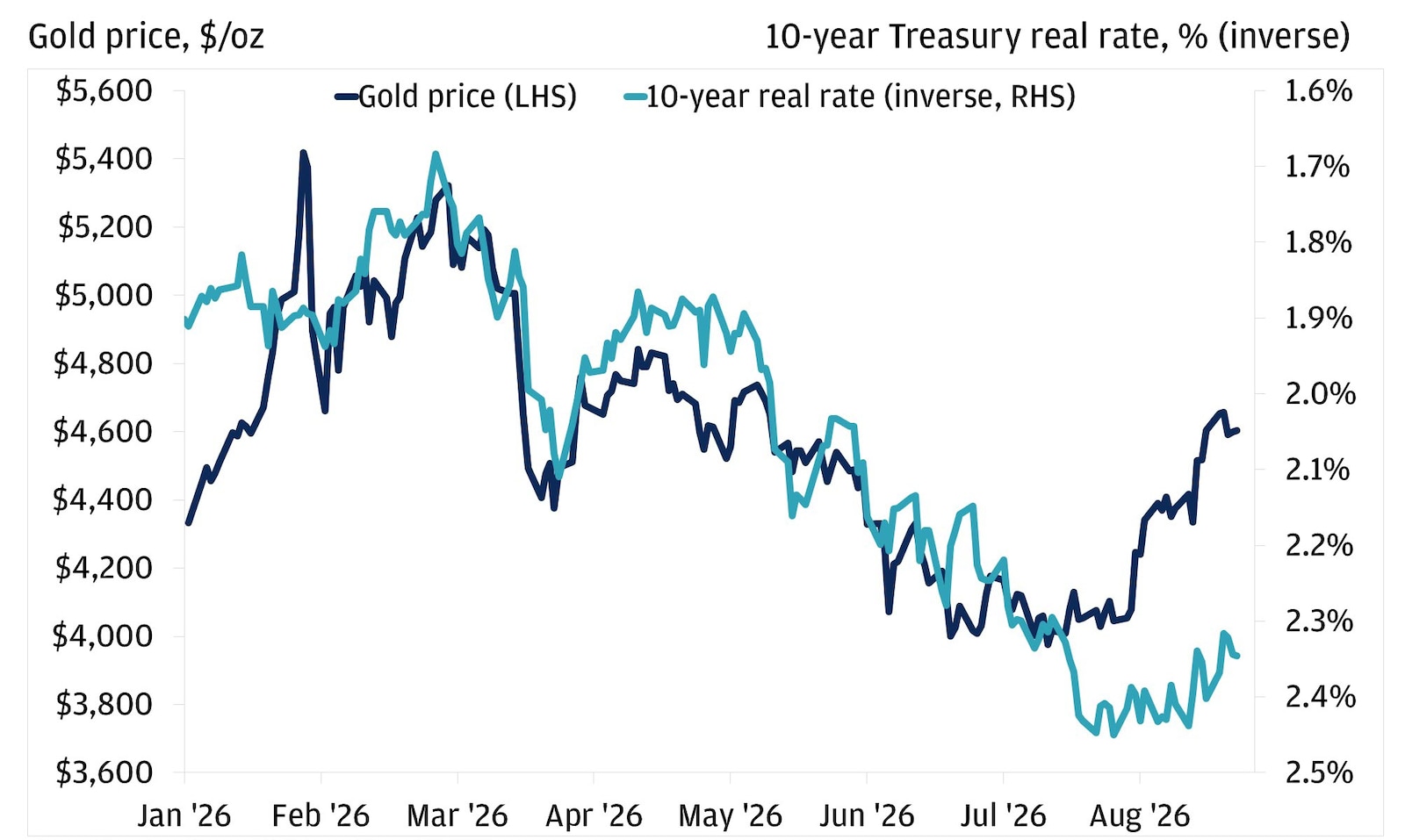
Source: Bloomberg Finance L.P. Data as of August 28, 2026.
The increase was likely driven by more than just yields. Central banks continued purchasing gold at a strong pace throughout the year, providing an important source of demand. Investors also became more confident that additional policy tightening was becoming less likely following signs that yields were stabilizing. At the same time, concerns surrounding rising government debt and persistent fiscal deficits helped revive interest in gold as a store of value. Unlike paper currencies, gold's supply is limited, making it a popular asset when investors are concerned about long-term purchasing power.
Taken together, Treasury buybacks, central bank demand and renewed focus on fiscal sustainability helped fuel one of the strongest months for gold investors since the Middle East conflict began.
Interested in working with an advisor?
Work 1:1 with our advisors to help build a personalized financial strategy that’s built around you.
Earnings continue to support US equity markets
While developments in the Treasury market helped drive gold's rally, corporate earnings remained one of the biggest reasons equities continued moving higher in August.
It has been an exceptional earnings season. Revenue across the S&P 500 has grown roughly 16% from a year ago, while earnings growth is approaching 52%. Even after adjusting for one-time gains at several large companies, earnings growth remains near 32%. Perhaps most impressively, 86% of companies exceeded analysts' earnings expectations. All 11 sectors of the S&P 500 reported positive revenue growth.
Earnings growth of this magnitude is historically rare. The current stretch represents the seventh consecutive quarter of double-digit earnings growth, something investors have not witnessed since the recovery following the global financial crisis.
Artificial intelligence (AI) remains a major driver. Spending on semiconductors, cloud infrastructure and data centers continues to rise as technology companies invest aggressively in expanding capacity. Expectations now call for the largest technology firms – hyperscalers – to spend nearly $800 billion in 2026 and more than $1 trillion in 2027, underscoring the scale of the current investment cycle.
The earnings supercycle continues to accelerate
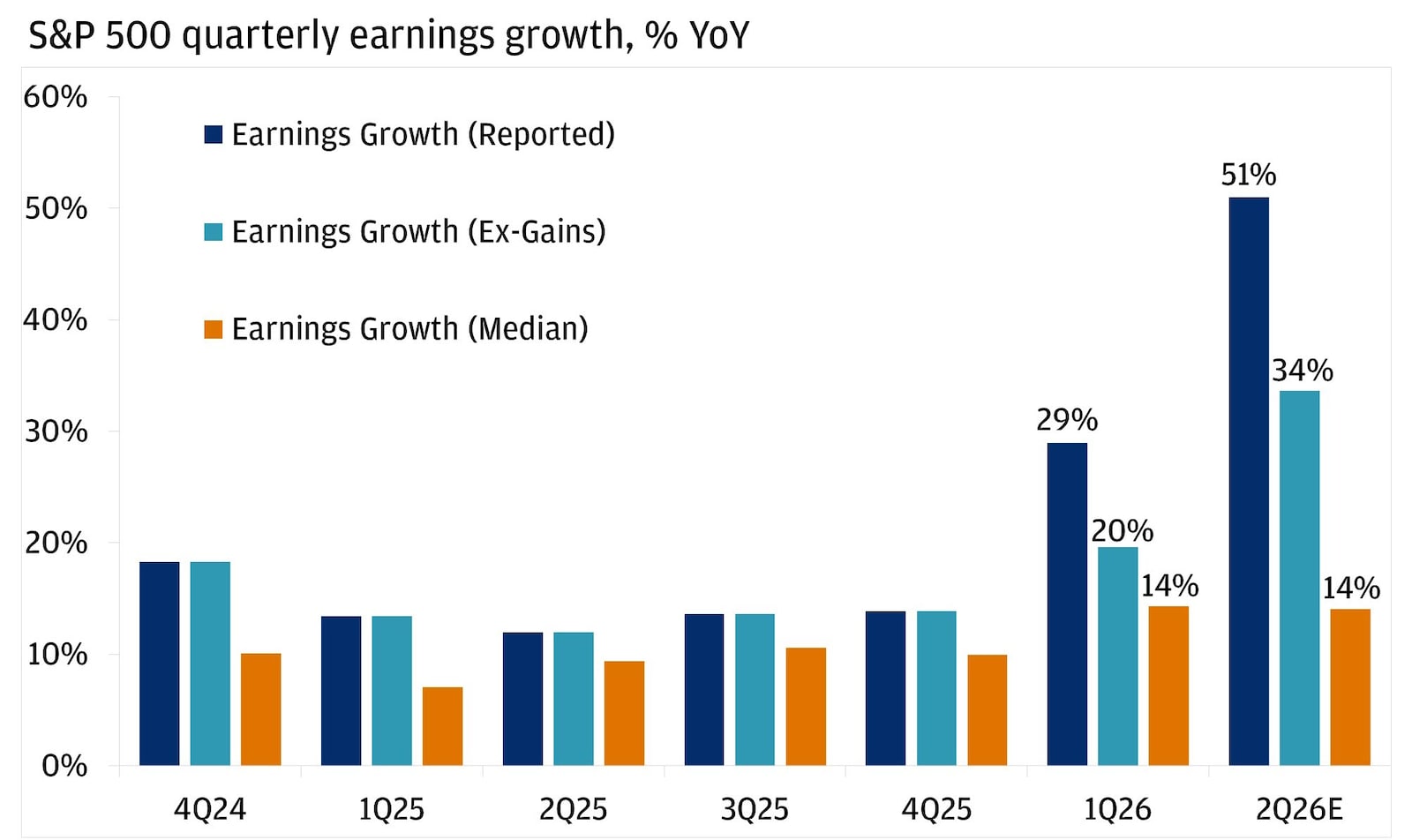
Source: FactSet. Data as of August 27, 2026. Note: Ex-Gains are one-time gains to net income from AMZN, GOOGL, and MSFT.
The breadth of the earnings story is becoming increasingly evident. Earnings growth for the median S&P 500 company accelerated to 14% in the first quarter and the second quarter, well above the long-term average (8.4%). In other words, earnings growth is no longer being driven solely by a handful of mega-cap companies.
For investors, this matters because earnings tend to be one of the more important drivers of stock returns over time. Despite concerns surrounding interest rates and government debt levels, we believe corporate fundamentals continue to provide support for equities moving forward.
Equity gains extended beyond the US
Another notable feature of August was the breadth of positive returns across global markets. World equities gained roughly 2.6%, emerging markets rose approximately 3.4%, U.S. stocks returned around 2.7%, European equities advanced 1.3% and emerging market stocks also posted gains. Japan and broader Asia ex-Japan markets finished higher as well.
That broad participation matters because some U.S. investors naturally focus on the S&P 500. While U.S. stocks remain an important part of portfolios, opportunities frequently emerge across multiple regions at the same time. From a diversification perspective, August was a useful reminder that positive returns don’t necessarily come from a single source. Stocks, bonds and commodities all contributed. Similarly, gains were not limited to one country or one narrow group of companies.
Such participation can be encouraging because it suggests investors are responding to a range of improving fundamentals rather than solely chasing a handful of market leaders. A globally diversified portfolio can help position investors to maintain exposure if leadership shifts.
The bottom line: All about balance
August's market story was ultimately about balance. Investors grappled with long-term Treasury yields touching multi-decade highs, gold delivered an impressive monthly return and, still, corporate earnings remained resilient and equity markets moved higher across much of the world.
While uncertainty is likely to persist, August demonstrated that opportunities can emerge in many different parts of the market at the same time. For investors, staying focused on long-term fundamentals rather than short-term headlines remains one of the most reliable ways to navigate uncertain market conditions.
Invest your way
Not working with us yet? Find a J.P. Morgan Advisor or explore ways to invest online.