AI’s next act doesn’t have to choose

Executive Director, Global Investment Strategist, J.P. Morgan Private Bank

By: Kriti Gupta and Nick Roberts
For most of the past year, betting on artificial intelligence (AI) was an either-or trade. Either own the chipmakers crucial to the infrastructure buildout or own the hyperscalers funding and trying to monetize it. When investors worried about exorbitant spending and the return on investment, they bought semiconductors. After all, chipmakers collect revenue as the infrastructure gets built. When investors gained confidence that AI products could be commercialized, they shifted toward the hyperscalers that owned the platforms, users and distribution networks. If semiconductor stocks rallied, hyperscalers lagged. If hyperscalers surged, chipmakers paused. Rarely did both parts of the AI trade rally together. That may be changing.
The two halves of the AI trade are out of sync
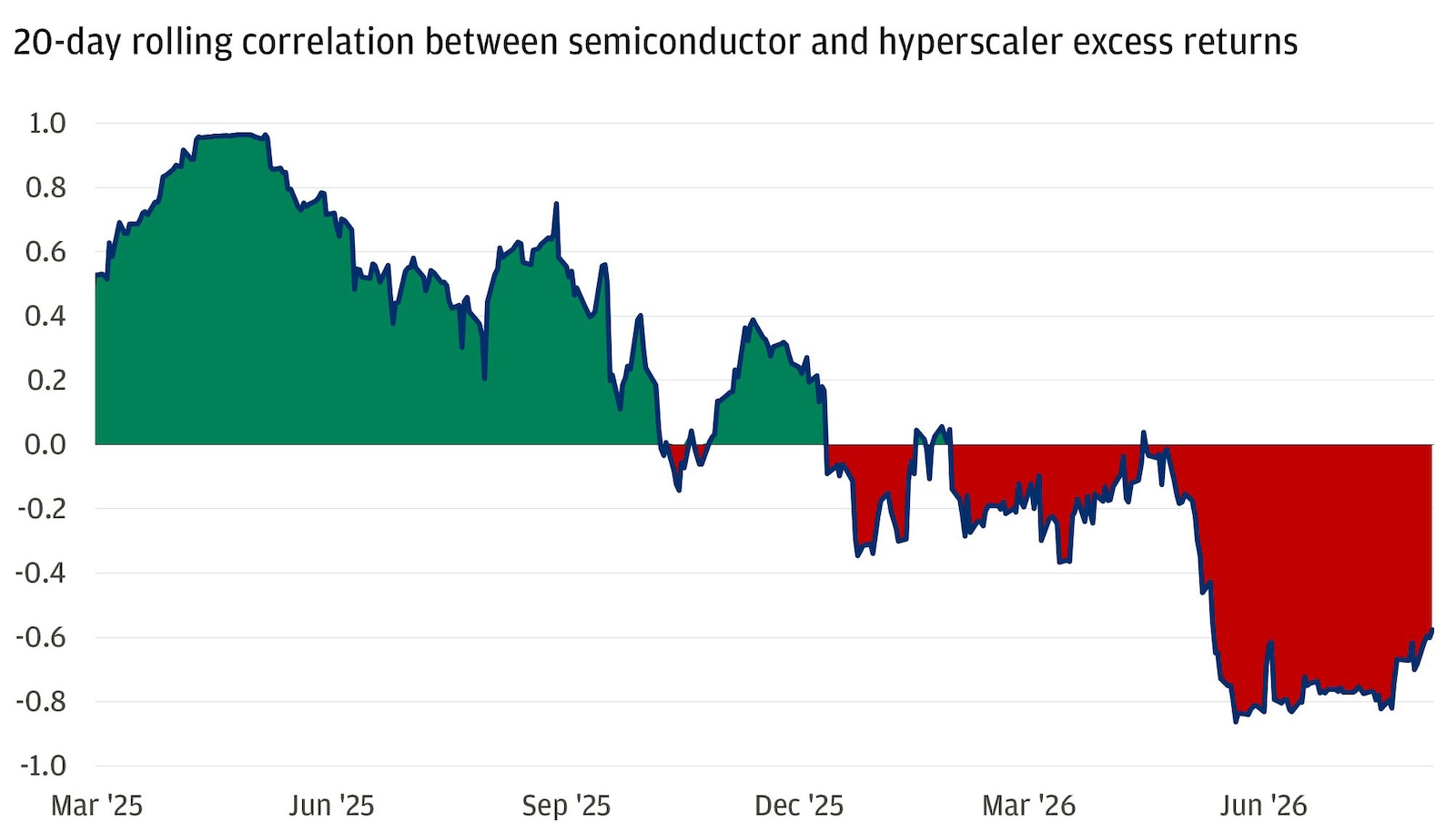
Rather than rotating between infrastructure beneficiaries and application-layer winners, investors have increasingly rewarded both in early August – something that stands in stark contrast to the dynamic that has defined most of the AI cycle. Semiconductor stocks remain supported while hyperscalers have regained leadership. Investors rarely reward both sides of a value chain simultaneously unless they believe the ecosystem itself is becoming even more valuable.
That means the debate around whether AI-related spending is worth it is shifting toward a phase focused more squarely on the scale of adoption – and with it, a broadening of the trade that’s powering the next leg of stock market gains.
Ready to take the next step in investing?
We offer $0 commission online trades, intuitive investing tools and a range of advisor services, so you can take control of your financial future.
It’s all about payback
Since ChatGPT's launch in late 2022, investors have largely agreed on one thing: AI requires investment at unprecedented scale. The hyperscalers have obliged with nearly $791 billion of capital expenditures in 2026 alone, with annual spending expected to exceed $1 trillion next year and beyond. That’s four times the level seen before the AI boom.
AI hyperscalers continue to boost capex plans
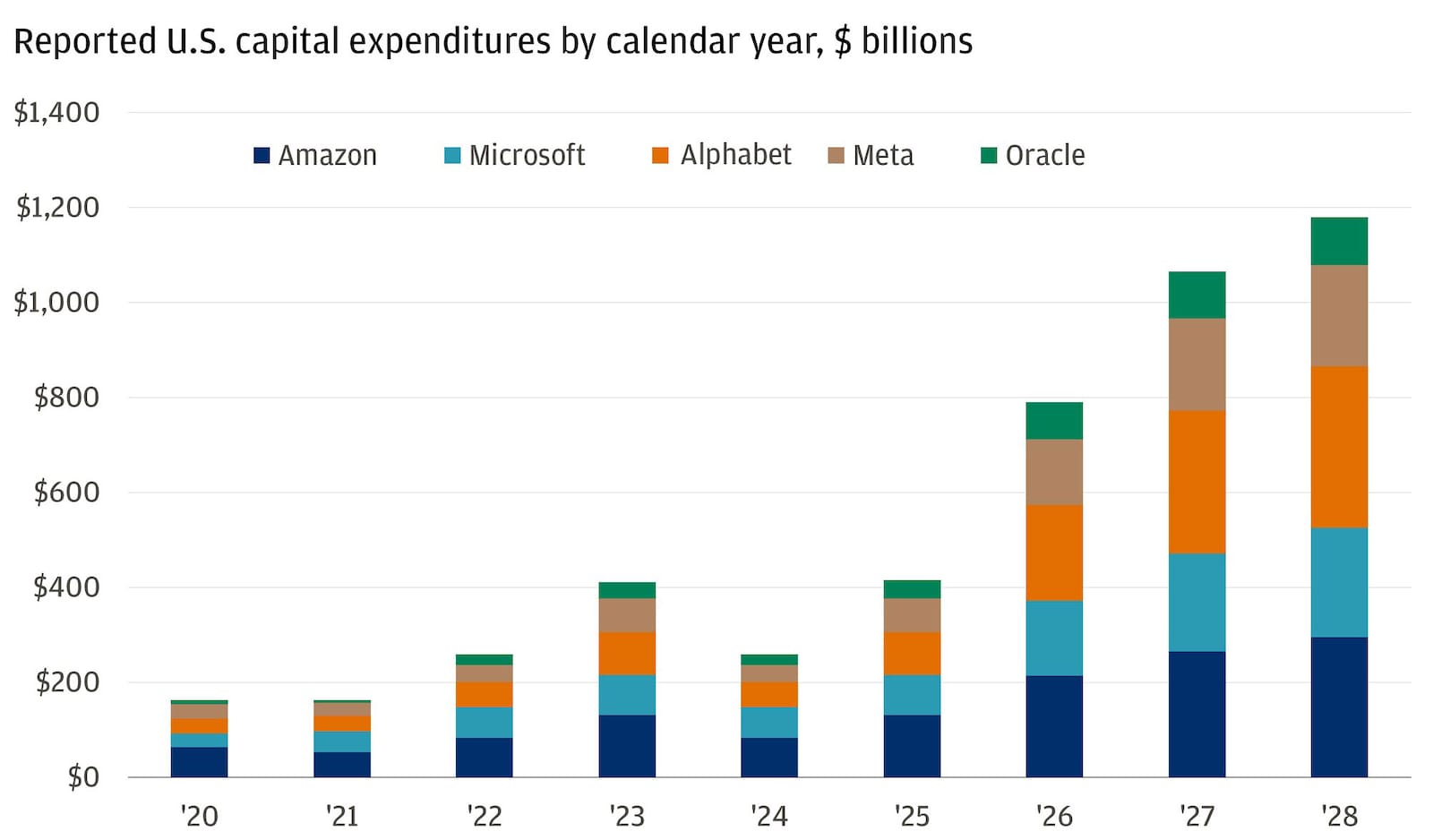
Skeptics worried that hundreds of billions of dollars were flowing into data centers, networking equipment, cooling infrastructure and AI chips long before evidence of meaningful revenue generation. What if AI became technologically impressive but commercially disappointing – and ultimately a balance sheet drain? Hundreds of billions of dollars would have been committed without a revenue stream to justify it, especially as the hyperscalers look to issue $150 billion to $200 billion of debt in 2026 alone.
Now add on increased memory chip supply, and pricing pressure suddenly became a headwind. And skeptics once again asked whether the AI buildout was becoming too large, too fast.
When AI starts paying for AI
The strongest argument against hyperscaler spending was always financial. Their stock prices traded lower every time they announced additional spending plans. How long could companies continue to spend extraordinary amounts of capital before investors demanded higher returns?
Maybe longer than investors initially expected.
Evidence of AI-driven monetization suddenly became easier to find as second-quarter earnings results revealed year-over-year cloud revenue growth at 48% for the top three cloud providers. Add in remaining obligations and backlogs near $1.7 trillion, and it’s clear that demand can continue to exceed available capacity and this may be a multiyear trend.
As older contracts roll off and reprice higher, operating cash flow rises alongside revenue. Future AI investment can become increasingly financed by AI-generated cash flow rather than incremental debt or equity fundraising. That shift in internal funding is perhaps the most underappreciated result at a time of elevated scrutiny and rising cost of capital.
It means hyperscalers may no longer be punished by investors for their capital outlays – as long as they can prove sustained return on investment, enabling them to continue to spend, drive greater AI capacity, and ultimately adopt the technology. The fact that both semiconductors and hyperscalers are trading in sync suggests investors increasingly believe that cycle is already underway.
All market and economic data as of 08/07/2026 are sourced from Bloomberg Finance L.P. and FactSet unless otherwise stated.
You're invited to subscribe to our newsletters
We'll send you the latest market news, investing insights and more when you subscribe to our newsletters.