A calm index, a restless market

For the past few decades, the logic of portfolio diversification was straightforward: When stocks struggled, bonds could help cushion the blow. That’s thanks to a negative stock-bond correlation that became the bedrock of investing as global central banks earned inflation-fighting credibility. It means that even in growth scares or recessions, bond market rallies can provide returns.
But in a world where uncertainty around inflation and the prospect of stronger-than-anticipated economic growth – today, powered by the buildout of artificial intelligence (AI) – persist, that relationship has turned positive. That means stocks and bonds can rise and fall together. In that environment, investors may seek diversification in other places – perhaps within the equity market itself.
Under the hood
As 10-year Treasury yields have risen nearly 80 basis points since the end of June, the stock market hasn’t felt the pain at the index level. Whereas the bond market has taken its cue first from hawkish monetary policy, global fiscal debt fears, higher energy prices and now the prospect of rapid economic growth, equities have been more focused on seven straight quarters of corporate earnings growth. In some ways, that has created a buffer on the index level to yields inching higher.
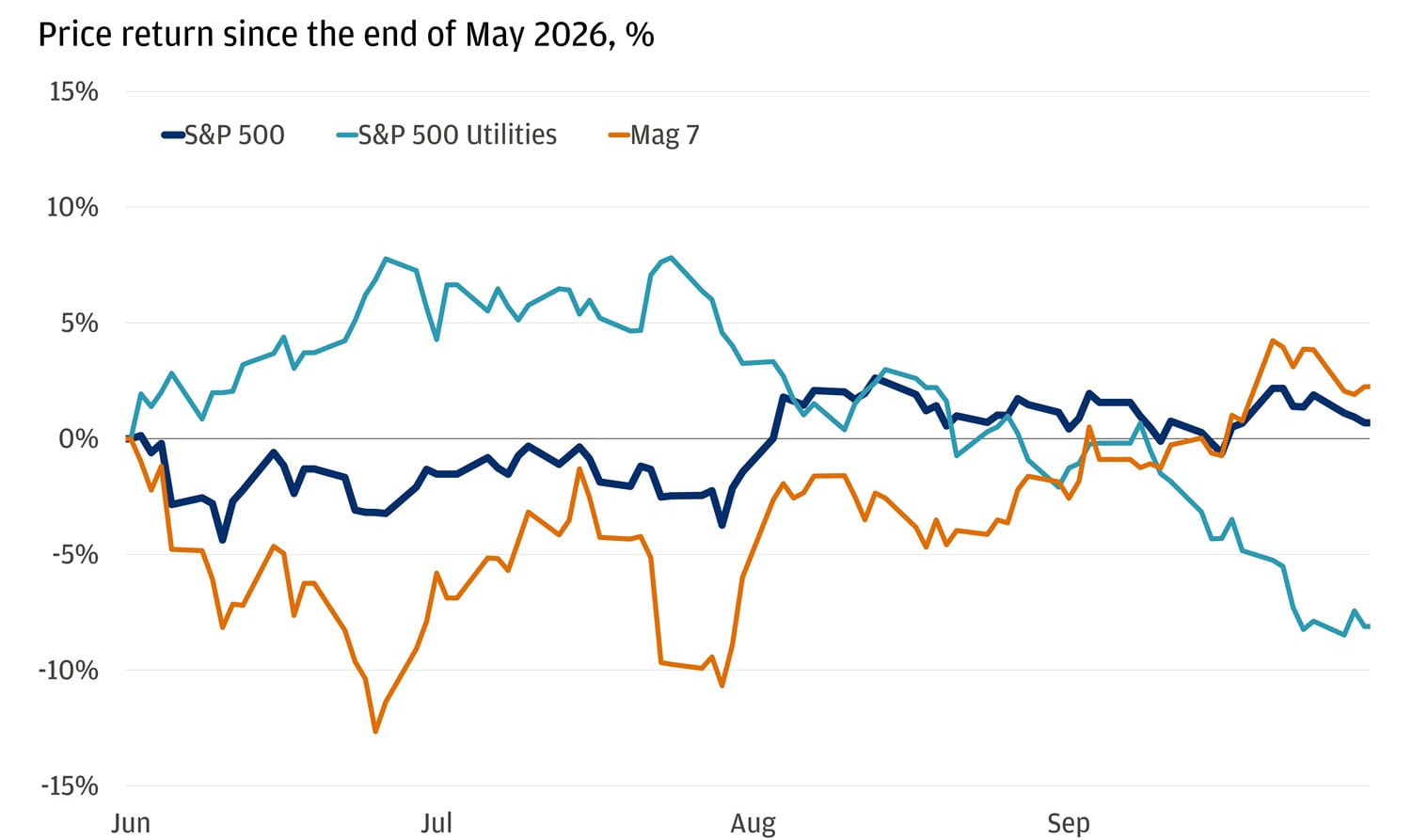
But beneath a calm index, the rates impact and consequent repricing are more visible. The S&P 500 sits ~6% above its 200-day moving average and within about 2% of its record high, yet only ~43% of stocks in the benchmark are trading above their 200-day average. That figure is down from 75% in mid-August.
Whereas the majority of gains in the S&P 500 are driven by the heavyweight technology companies investing heavily in the AI buildout, other sectors that are less resilient are feeling the impact of higher rates. That even applies to sectors like utilities that are exposed to the AI trade but don’t necessarily boast the same cash cushions or size as the hyperscalers.
Move in yields prompts narrow stock breadth
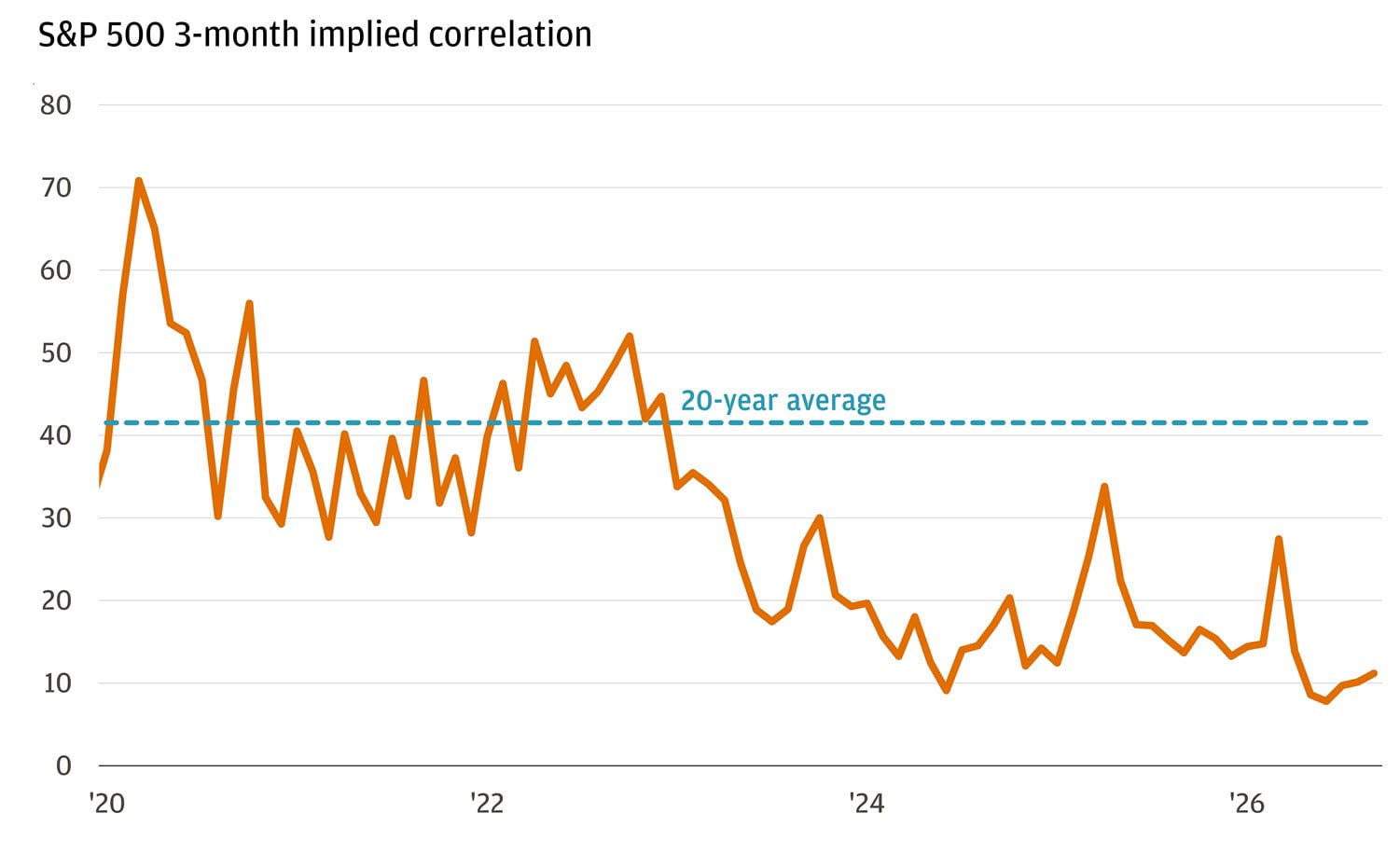
It’s not unusual to see a wide dispersion between individual stocks and sectors. However, today, stocks are moving more independently than normal. At a time when bonds are providing little diversification to equities, this dynamic can be particularly useful when constructing a portfolio. This is best displayed in the Cboe 3-Month Implied Correlation Index, which measures how closely options traders expect large U.S. stocks to move in sync. The measure currently sits at 11.2, well below the long-run average of 41. This means traders expect that gap between individual stocks and the index level to continue. It offers an opportunity to diversify risk exposure within the equities market itself at both a sector and a thematic level.
Dispersion within the index is not unusual
Ready to take the next step in investing?
We offer $0 commission online trades, intuitive investing tools and a range of advisor services, so you can take control of your financial future.
A microcosm of the moment
Utilities have long been thought of as a defensive sector of the stock market. Offering consumer necessities like electricity, predictable earnings and attractive dividends, investors have classified the sector as relatively stable. In a recessionary scenario, these have proven to be attractive attributes alongside lower economic sensitivity. But in the past few months, they’ve played a very different role.
- Powering AI: The data center buildout sits at the center of the capacity expansion for AI, but it requires electricity. There are few power sources that can handle a buildout of that size, which has made utilities providers key enablers of AI.
- Midterms overhang: The increasing dependence on utilities as a function of the AI trade has had consequences for the price of electricity for everyday consumers. In a midterm election cycle with affordability as a key voting issue, it’s no wonder that public backlash has focused on reliance on utilities. In response, state governments have put moratoriums on that buildout – something that has weighed on the sector.
- A higher rates environment: At the same time, rising bond yields have also weighed on the sector. Because utilities are often valued for their dividends, higher yields in the Treasury market can compete with this aspect of what the sector has to offer.
Data center restrictions fed underperformance in Utilities
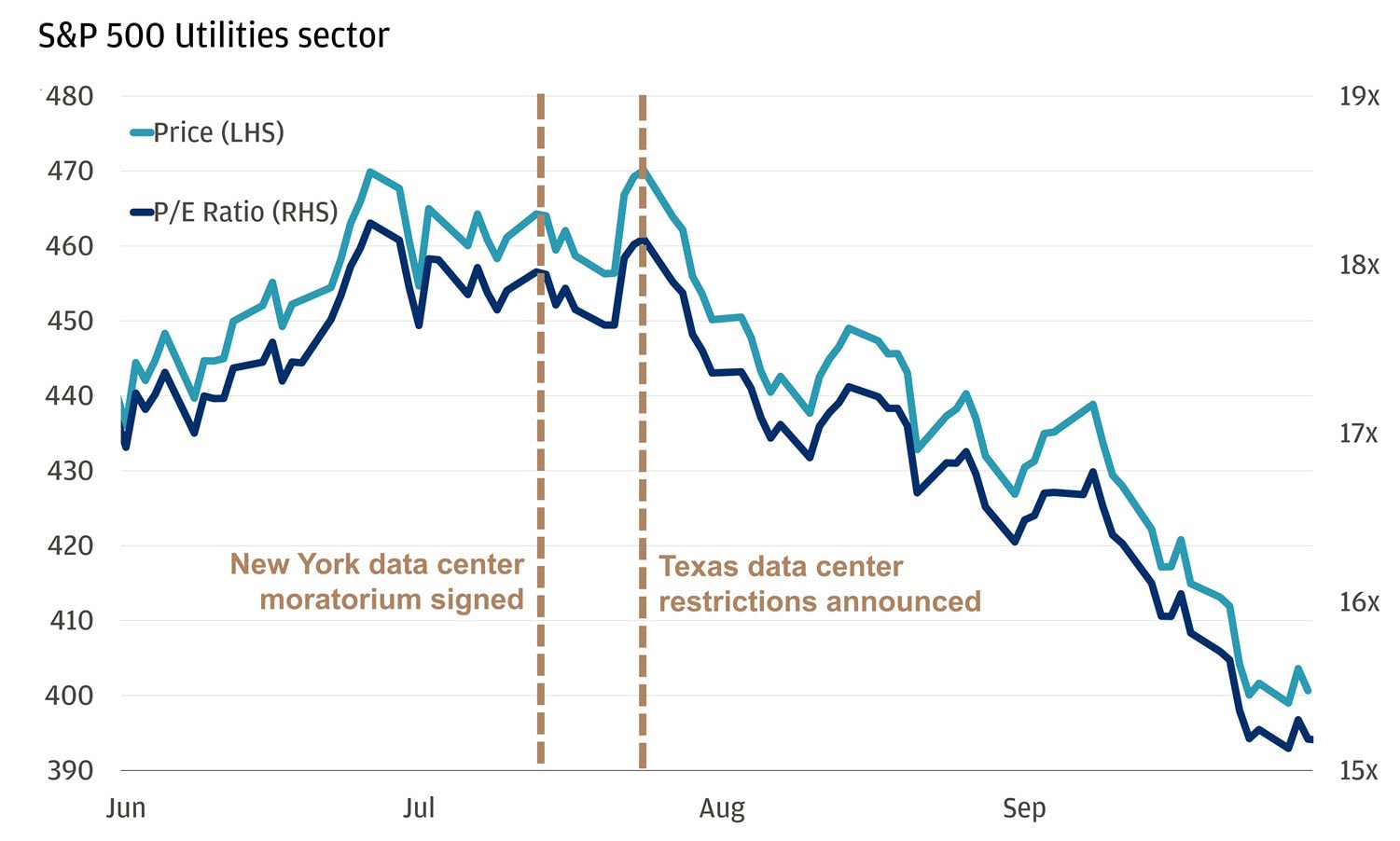
Utilities may seem like an unlikely place to look for answers about today's market. But the sector encapsulates many of the forces driving asset prices globally: the economic promise of AI, the political consequences of that investment boom and the reality of higher interest rates.
That helps explain why the story beneath the surface of markets is increasingly different from the one told by headline indexes. While a handful of companies continue to power benchmark gains, individual sectors and stocks are responding very differently to the same set of macroeconomic forces. In a world where bonds provide less diversification than they once did, that dispersion itself may become one of investors' most valuable tools.
All market and economic data as of 10/01/2026 are sourced from Bloomberg Finance L.P. and FactSet unless otherwise stated.
You're invited to subscribe to our newsletters
We'll send you the latest market news, investing insights and more when you subscribe to our newsletters.