Historic market volatility events and strategies to help hedge investment risks

J.P. Morgan Wealth Management

Market volatility is an inevitable feature of financial markets. It measures the degree of variation or fluctuation in the price of securities (i.e. stocks and bonds) over a specific period of time. Sometimes, volatility is low for extended stretches – and sometimes, the prices of securities shift from high to low and back again. This is considered normal.
Sharp price drops can sometimes cause investors to panic, but history shows that investing for the long term has smoothed out volatile market moves and kept investors on track for long-term growth.
Eight market volatility events through history
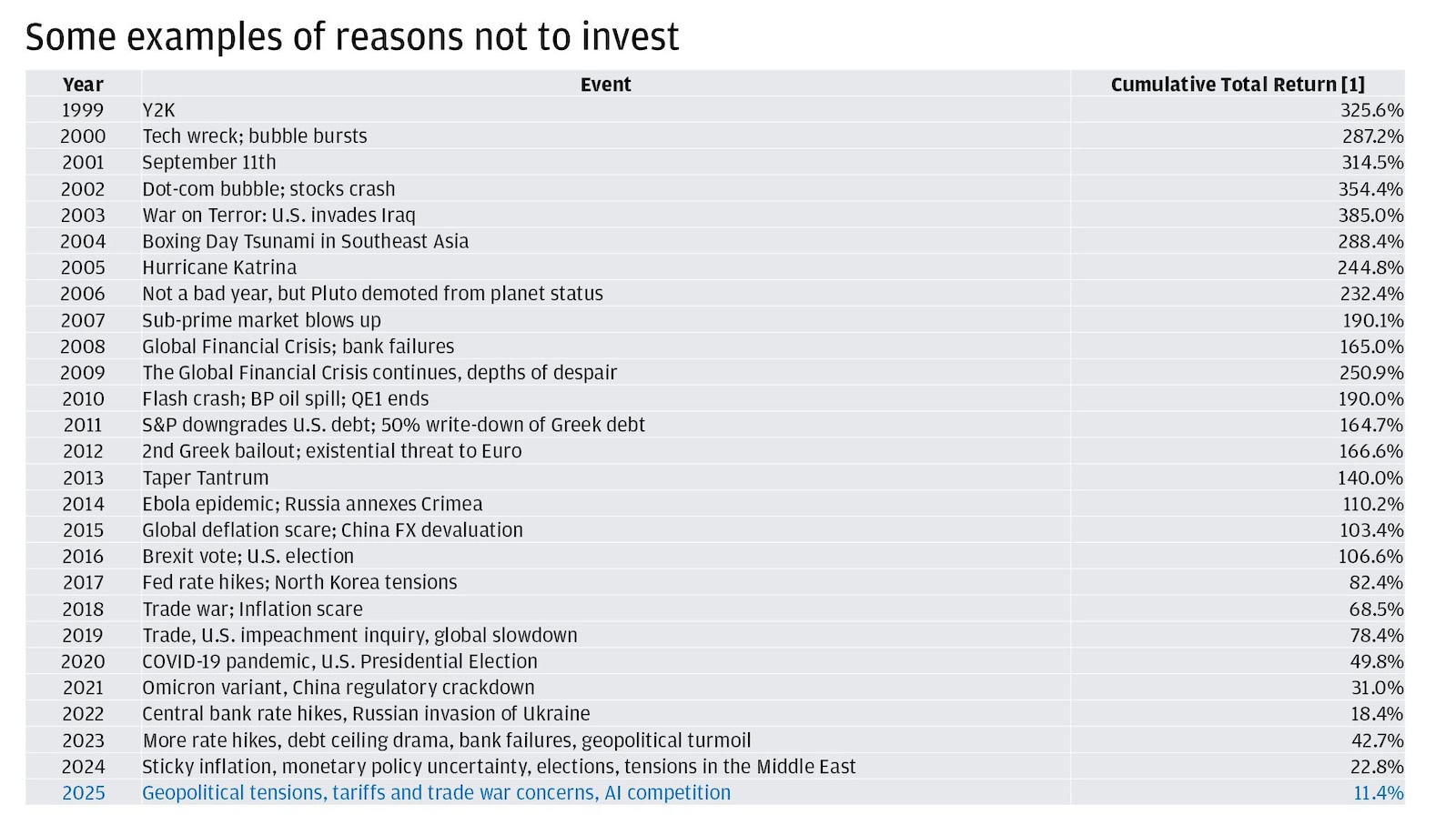
Let’s take a glance back in time at eight events that notably spiked market volatility. After each anxiety-inducing event, markets gradually bounced back even stronger.
There’s always something to worry about
Stock market crash of 1929: A historic collapse followed by long-term gains
The stock market crash of 1929 that led into the Great Depression of the 1930s remains one of the most significant periods of volatility in financial history. Many investors saw their portfolios devastated, with stocks losing nearly 90% of their value by 1932. Yet, those who stayed invested through the Depression eventually saw their portfolios recover, as the market rebounded in the 1940s and 50s.
Get up to $1,000
When you open a J.P. Morgan Self-Directed Investing account, you get a trading experience that puts you in control and up to $1,000 in cash bonus.
The post-WWII boom: Recovery from war
Immediately after World War II, the U.S. entered a recession as war spending ended and domestic production struggled to fill the gap. Once the domestic economy regained its footing, the stock market entered a period of rapid growth and low volatility from 1945 into the 1950s. Investors who stayed the course during these volatile years were rewarded with strong returns.
The 1970s: Energy shocks, currency woes and inflation
After two decades of strong growth, the 1970s and early 80s brought significant market volatility and a bear stock market – this downturn was fueled by the end of the gold standard, the OPEC oil embargo in 1973 and skyrocketing inflation until 1982. Many investors who retained their holdings through the 1980s saw considerable gains as inflation was brought under control and interest rates came down.
Black Monday 1987: A one-day crash with a quick recovery
On October 19, 1987, the stock market suffered its largest single-day percentage loss, with the Dow dropping 22.6%. Panic ensued as investors rushed for the exits – but those who resisted the urge to sell saw the market bounce back within months. Markets recouped most of their losses by 1989. Black Monday serves as a reminder that dramatic downturns can be followed by swift recoveries, rewarding patient investors who stay the course.
The dot-com bubble burst: Tech's rise and fall
The late 1990s saw explosive growth in technology stocks, leading to the infamous dot-com bubble. By 2000, the bubble burst, causing sharp declines in tech stocks and a broader market downturn. While tech investors experienced significant losses in the short term, those who stayed diversified and remained invested through the crash saw the market recover by the mid-2000s.
The global financial crisis of 2008: A severe recession with a strong rebound
The 2008 financial crisis triggered a market crash that saw the S&P 500 lose nearly 50% of its value. Many investors panicked and sold at the bottom, but those who stayed invested experienced a resilient market recovery over the next decade. By 2013, the S&P 500 had fully rebounded, and the bull market continued until 2020.
The COVID-19 pandemic: Panic followed by unprecedented growth
The onset of the COVID-19 pandemic in early 2020 led to one of the fastest market crashes in history. The S&P 500 fell over 30% in just weeks and unemployment spiked to 14.7% in April 2020. The market rebounded quickly, and by the end of 2020, stocks reached new record highs as the economy recovered from its initial shock.
Rising interest rates: Diversification is put to the test
As inflation started to accelerate in 2021, the Federal Reserve reversed course on keeping interest rates low and increased the Federal Funds Rate from near zero to a high of 5.33% in just 15 months. The central bank’s moves caused the prices of stocks and bonds to fall together. But by the end of 2023, a diversified portfolio showed resilience as both equities and bonds rallied into the end of the year.
Lessons learned from history
Taking in the market’s history, which has included both ups and downs, disciplined investors have learned the importance of diversification and rebalancing to help set oneself up for possible long-term growth.
The role of diversification: Mitigating risk in volatile markets
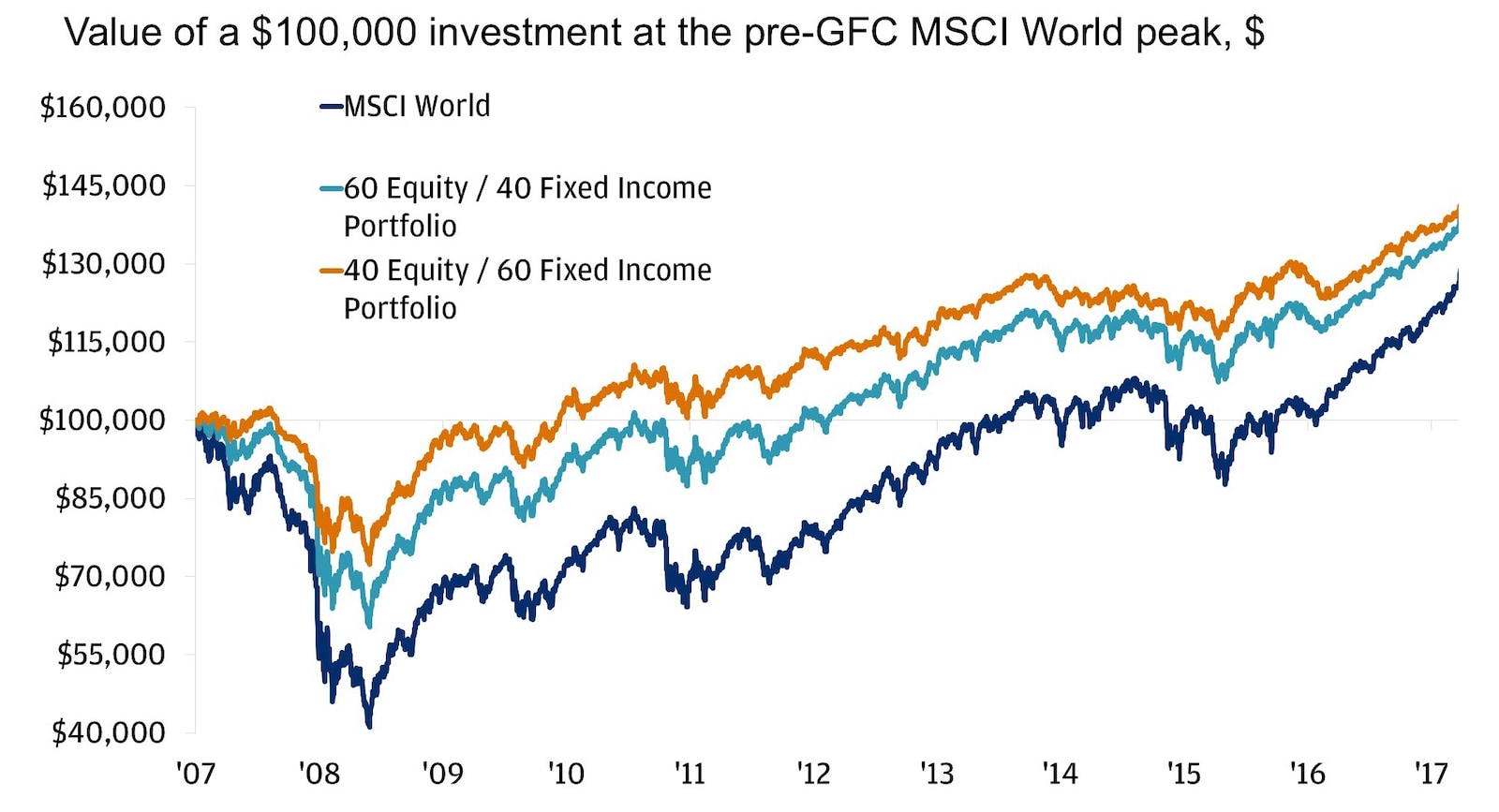
History has repeatedly shown that a well-diversified portfolio can help reduce volatility and risk. Concentrated portfolios tend to experience more severe losses during downturns, while diversified investments spread risk across asset classes. For example, during the 2008 financial crisis, investors with diversified portfolios experienced smaller losses compared to those heavily invested in equities alone.
Diversified approaches tend to recover faster and mitigate volatility
The importance of rebalancing: Maintaining your risk profile
Over time, as markets rise and fall, the risk profile of a portfolio naturally shifts. For example, as stocks grow in value, they may become an oversized portion of your investments, increasing overall risk. Regular rebalancing helps maintain the original asset allocation and prevents the portfolio from becoming too conservative. This practice also can help reduce loss aversion by creating a systematic approach to managing investments during market volatility. Investing does involve market risks, including possible loss of principals.
Rebalancing generally can create tax consequences from selling existing securities so make sure you consider this when rebalancing. A tax professional can help you understand the ramifications.
Rebalancing can reduce emotional decision-making
Loss aversion – the fear of losing money – is roughly twice as powerful a motivator when investors are making portfolio decisions than the pleasure of gains. Consequently, during periods of market volatility, investors may be tempted to convert assets to cash when prices fall. Prudent portfolio rebalancing helps curb this impulse by establishing predetermined actions that can keep the portfolio in line with long-term goals.
The bottom line: Stay invested for long-term success
Market volatility is a perennial part of the investment journey. While short-term downturns can be alarming, they are often followed by periods of strong growth. While past performance is not a guarantee of future success, staying invested, diversifying your portfolio and rebalancing regularly can help investors navigate the ups and downs of the market with greater confidence.
Frequently asked questions about investing during market volatility
First, measure the average return of a portfolio. Second, measure how much the returns deviate from the average.
Longer-term horizons typically are at lower risk for volatility, as volatility smooths out over time. Short-term horizons are more at risk for volatility, as there’s less time for markets to smooth out short-term fluctuations.
Diversifying your investments by investing in a variety of assets lowers the risk that the poor performance of a single asset could have on the portfolio.
Rebalancing a portfolio means adjusting the asset allocation of your portfolio to ensure that it maintains your desired level of risk and return. This helps guarantee that your portfolio remains aligned with your long-term goals. Diversification and asset allocation do not protect against loss.
Some ways to help avoid emotional decision-making include to create a clear investment strategy, diversify your portfolio, stay informed on market trends and economic indicators to make informed decisions, regularly review your portfolio and focus on long-term goals.
Invest your way
Not working with us yet? Find a J.P. Morgan Advisor or explore ways to invest online.