July 2025 headline inflation rate lower than expected: What it means

Editorial staff, J.P. Morgan Wealth Management
- The July 2025 headline Consumer Price Index (CPI) showed a lower-than-expected inflation increase year-over-year.
- Headline CPI rose 0.2% in July, while core CPI rose 0.3% as the impact of tariffs feels more gradual.
- Tariff-exposed categories showed mixed price changes, with some goods prices rising more sharply.
- Our strategists still believe a rate cut is possible at the next Federal Reserve meeting in September.

The July 2025 Consumer Price Index (CPI) from the Bureau of Labor Statistics increased 0.2% from June and 2.7% from a year earlier. Both figures were close to expectations, though the annual rate was slightly cooler than the 2.8% forecast. Core CPI, which excludes more volatile food and energy prices, picked up 0.3% for the month and 3.1% over the past year, marginally higher than in June.
Core CPI ticked up in July, but less severely than anticipated
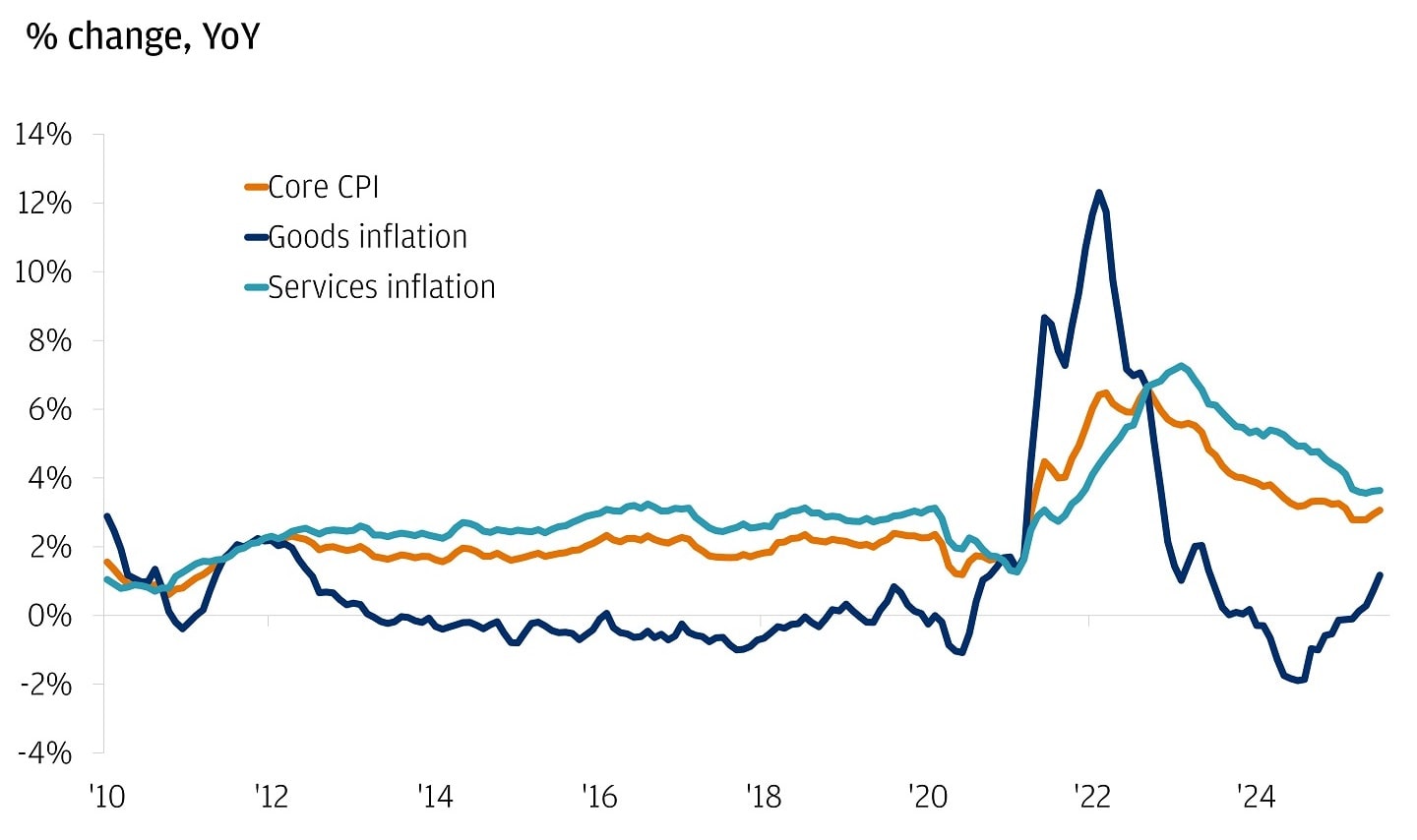
Cheaper gasoline and slower growth in shelter costs helped keep overall inflation contained, even as some goods began to reflect the early effects of tariffs.
How did consumer prices change in July?
Rent and housing costs are still rising, but much less quickly. Shelter prices, which make up about one-third of the inflation calculation, rose 0.2% in July. Because housing costs tend to shift more slowly than things like gas or food, changes here can influence the broader inflation trend for months at a time. The latest reading aligns with more real-time rental market data showing smaller increases in new lease prices compared with a year ago.
Lower energy costs provided the largest relief to budgets in July. Gasoline prices fell 2.2%, pulling the overall energy index down 1.1%. Natural gas and electricity costs also moved lower. Energy prices are among the most volatile parts of the CPI, often changing quickly in response to shifts in global oil production, weather and geopolitical conditions.
Food prices were flat overall. Grocery costs slipped 0.1%, as cereals, baked goods and beverages became cheaper, while dairy and meat prices increased. Dining out got more expensive, with the index for food away from home rising 0.3%. Prices at full-service restaurants saw one of the largest monthly increases in several months.
Work with an advisor
Our advisors can provide ongoing financial advice on how your portfolio can adapt to the changes in the market, your life and your goals.
Did tariffs create more inflation in July?
Businesses may be starting to pass on more of the cost of higher import taxes to their customers. Some goods categories that tend to be more exposed to tariffs registered price increases. Home furniture and bedding rose 0.9% in July, and used cars and trucks were up 0.5% after months of declines. Footwear saw a 1.4% increase, roughly double June’s pace. In contrast, appliances fell 0.9% after a sharp gain the previous month.
Elyse Ausenbaugh, Head of Investment Strategy for J.P. Morgan Wealth Management, believes that while tariffs are affecting consumer prices at a slower pace, that shouldn’t sidetrack the Federal Reserve (Fed)’s upcoming plans.
“This print again suggests that the impact of tariffs on prices is more gradual than feared – even if it’s fairly pronounced in categories like furniture and AV equipment,” Ausenbaugh said. “The softness in the last payrolls report should be enough to sway FOMC members to resume cuts in the meetings ahead.”
Tariffs can raise costs for companies that rely heavily on imported goods, which may strain profit margins. Businesses may raise prices to protect their profits, but prices don’t always rise immediately after new tariffs take effect. Retailers often work through pre-tariff inventory first, and some absorb part of the cost to stay competitive. Once new, higher-cost shipments arrive, prices on shelves typically adjust upward. The current round of tariffs began phasing in earlier this year.
What does July’s CPI data mean for inflation this year?
The July report shows inflation pressure easing in areas like energy and shelter but holding firm in some goods and services. Tariffs are expected to keep adding to costs through late 2025, though this effect might be partly offset if shelter cost increases continue to slow and energy prices stay stable or fall.
Inflation might remain above the Fed’s 2% target for several more quarters. The policy target is designed to keep prices stable while allowing for moderate economic growth. Too much inflation erodes purchasing power, while too little can signal weak demand and slow growth.
How does July’s CPI data affect the Federal Reserve?
The July CPI numbers give policymakers room to lower rates again in September if the August jobs report (released on September 5) shows a continued slowdown in the labor market. Any cuts are likely to be gradual so they do not risk reigniting price pressures. If inflation stays elevated, the Fed might slow the pace of reductions.
Ausenbaugh said while a cut is still anticipated, that decision from the Fed isn’t as cut and dry as it may seem.
“Overall, it seems fair to say that the Fed could be considering a move in September, but I don’t think a cut at that meeting is as much of a given as market pricing is implying,” Ausenbaugh said. “We will get plenty of data between now and then that could give the Fed pause one more time before taking action in the fourth quarter.”
What does July’s CPI data mean for consumers?
The cost of living is still climbing, but some of the most visible costs are starting to ease. Slower rent hikes and lower prices at the pump should help household budgets in the near term. However, shoppers may want to consider jumping on sales for big purchases on the to-do list, getting ahead on any potential tariff-driven price increases as retailers work through their existing inventory.
The fun stuff is getting a little pricier. Restaurant costs keep climbing, with prices for food away from home rising 0.3% in July, up 3.9% over the past year. Travel costs shifted in July. Airline fares jumped 4% after months of decline, but hotel prices fell 1.3%.
Ausenbaugh took note of the increase in services inflation, particularly from the aforementioned travel bucket.
“The pick-up in services inflation is interesting, especially with the big contribution from airfare prices,” Ausenbaugh said. “It seems to reflect a normalization after a weak period earlier this year rather than a durable pick-up in spending that would make the Fed more cautious. We’re still looking for 0.5% of rate cuts by the end of 2025.”
What does July’s CPI data mean for investors?
The July CPI report doesn’t change our strategists’ view on how to approach portfolios in the current environment. While there’s more clarity on tax and trade policy than earlier in the year, meaningful uncertainty remains around growth, inflation and how tariffs will filter through the economy. Valuations remain elevated, with the S&P 500 hitting multiple all-time highs in July, and our strategists continue to expect periods of volatility.
Regardless of your investing mix, however, portfolio “hygiene” remains important. This includes managing target allocations and ensuring diversification extends beyond U.S. dollar assets. The right balance could help investors stay grounded as policy, growth and inflation paths continue to evolve.
As always, consult with a J.P. Morgan advisor to understand what this data could mean for your portfolio.
Invest your way
Not working with us yet? Find a J.P. Morgan Advisor or explore ways to invest online.