April 2025 inflation rate lower than expected: What this means for investors

Editorial staff, J.P. Morgan Wealth Management
- April's headline and core (ex-food and energy) Consumer Price Index (CPI) measures came in at 0.2% month-over-month, slightly below the 0.3% increase expected.
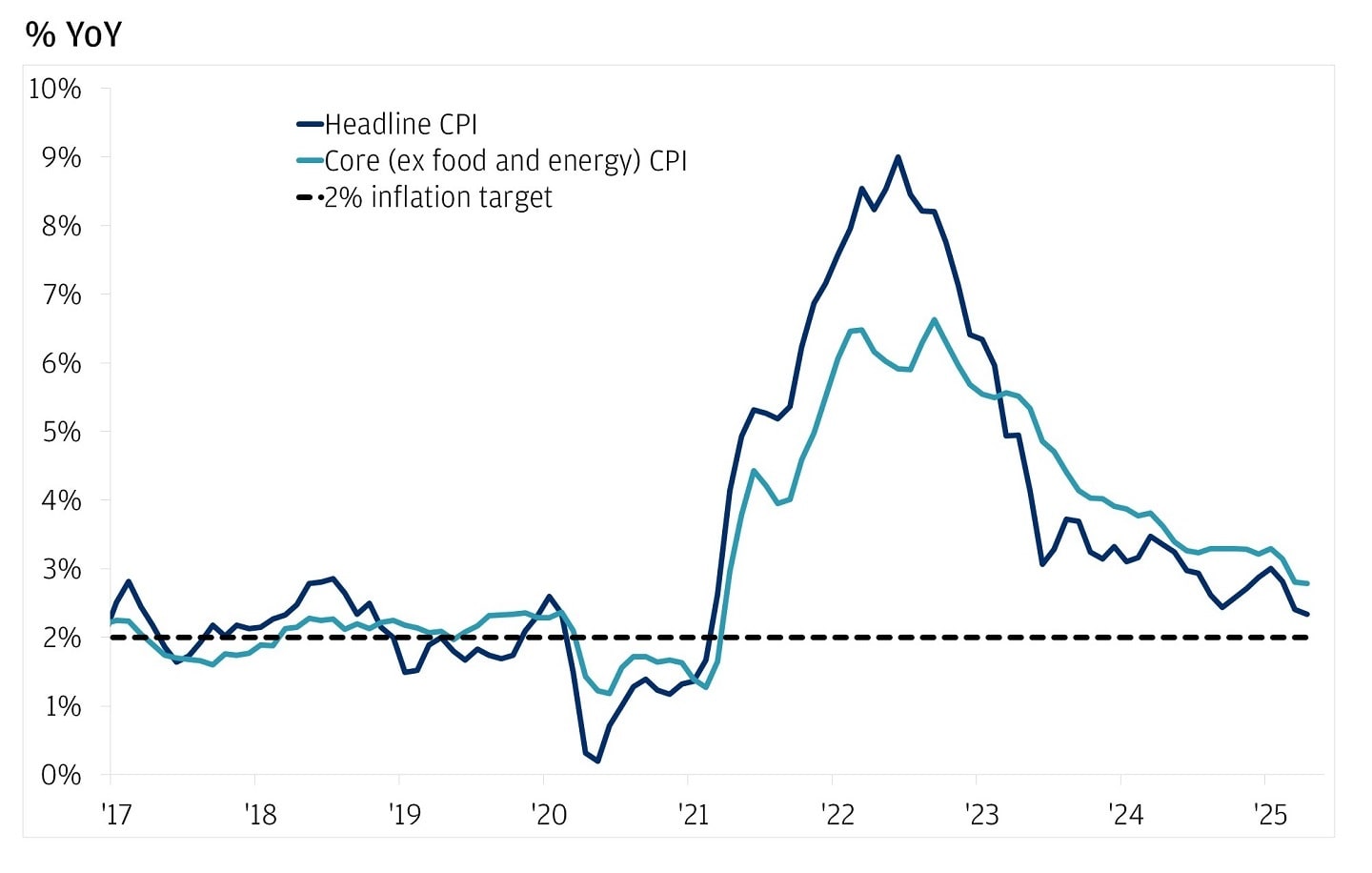
- Year-over-year inflation showed signs of cooling, reaching its lowest level since early 2021, suggesting a potential easing of near-term inflationary pressures. However, our strategists believe the potential impact from tariffs is still likely to keep the Federal Reserve on hold.
- Investors should maintain a balanced approach, as the impact from tariffs could cause a boost to inflation later this year, highlighting the importance of diversified investment strategies.

Inflation ticked up slightly in April, rising 0.2% month-over-month (MoM), according to the latest Consumer Price Index (CPI) report from the Bureau of Labor Statistics. This marks a modest reversal after March’s unexpected 0.1% decline. The primary driver of April’s rise in inflation was shelter costs, which rose 0.3% and accounted for more than half of the total increase in the all-items index.
U.S. Consumer Price Inflation
The energy portion of the index rose 0.7% in April, primarily due to gains in natural gas and electricity prices. Gasoline prices, often a noticeable inflation item for consumers, declined 0.1% from March. Year-over-year (YoY), the average price of gasoline has fallen 11.8%, and the price of fuel oil has fallen 9.6% over that period.
Other categories showing price increases included household furnishings and operations, which saw a notable 1% jump. The data on the tariff effects isn’t clear, however, as other categories that should be sensitive to tariffs, including new vehicles and apparel, either remained flat or decreased in price month-over-month.
Vinny Amaru, Global Investment Strategist at J.P. Morgan Wealth Management, believes this may be due to a simple timing discrepancy.
“Part of the benign reading could be the timing mismatch of when goods arrived in the U.S. during the month of April versus how quickly businesses adjust prices. May's data will likely be a more helpful read on the pass through from tariffs to consumer prices. And we still expect goods inflation to pick up gradually in the coming months from elevated tariffs.”
On the services side, medical care, motor vehicle insurance, education and personal care costs also inched higher over the month, but has remained lower than other categories.
As Amaru stated, “Services inflation continues to cool, which is a welcome sign and could offset some of the price pressures emanating from goods this year.”
Work with an advisor
Our advisors can provide ongoing financial advice on how your portfolio can adapt to the changes in the market, your life and your goals.
How does April’s CPI data affect the Federal Reserve?
The latest inflation print should give the Federal Reserve (Fed) more time to wait and see regarding the potential impact of tariffs on consumer prices. That means our strategists don’t expect the Fed to cut rates at its next meeting in June, barring something unforeseen.
“We don't see anything in the April [CPI] report that moves the needle for the Fed. If anything, it confirms that the impact from tariffs hasn't yet been meaningfully reflected in the data,” Amaru said.
What does April’s CPI data mean for consumers?
The all-items index rose 2.3% year-over-year through April, a slight cooling from the 2.4% annual rate logged in March. This marks the smallest 12-month increase in the all-items index since February 2021.
April’s inflation print also presents other opportunities for consumers:
Shop apparel sales strategically
Apparel prices fell in April. If tariffs, which have been paused for now, eventually bite, prices may rise later in the year, so taking advantage of current markdowns can be a smart move.
It might be a good time to book a vacation
Falling airfare is good news for consumers and business travelers. While our strategists do not foresee a U.S. recession in 2025, even a modest slowdown should keep airfares in check over the coming months.
What does April’s CPI data mean for investors?
For investors, the latest inflation report does not change our strategists’ outlook for the second half of the year. The key pillars remain:
Staying allocated to equities
Our strategists’ outlook for the U.S. equity market anticipates high single to low double-digit total returns in the S&P 500 over the next 12 months, driven by earnings growth, particularly in the technology sector. Outside the U.S., they see potential opportunities in Europe and Japan for increased fiscal stimulus and possible repatriation of flows as businesses continue to push through corporate reforms.
Don’t forget about core fixed income
U.S. core fixed income is likely to remain an important source of diversification in portfolios for 2025, especially if the U.S. economy slows more than expected. Investment grade credit and municipal bonds remain key areas of interest as we move into the second half of the year.
Maintaining diversified assets to make portfolios more resilient
Our strategists expect inflation to inch higher over the second half of the year as elevated tariff rates start to make their way into consumer prices. To ensure that portfolios remain resilient to this possible outcome, gold could be an investment to consider.
As always, consult with a J.P. Morgan advisor to understand what this data could mean for your portfolio.
Explore ways to invest
Take control of your finances with $0 commission online trades, intuitive investing tools and a range of advisor services.