Oil shocks, inflation and the AI buildout: Investing’s biggest risks and opportunities midway through 2026

Editorial staff, J.P. Morgan Wealth Management
- Global fragmentation, inflation and the artificial intelligence (AI) buildout are three forces shaping markets in 2026.
- Investors should consider staying diversified and using volatility as a chance to add to long-term holdings, while positioning for a more security-driven, fragmented world.
- Elevated inflation means investors should expand their arsenal beyond just equities and a fixed-income plan while protecting their purchasing power.
- An AI supercycle will likely continue, meaning investors should focus on the global winners of the buildout.

As we reach the midpoint of 2026, the biggest investment risks and opportunities are being driven by a world that’s changing fast – and one in which geopolitical tensions, sticky inflation and an artificial intelligence (AI) supercycle are reshaping markets.
A Middle East conflict-driven energy shock and subsequent swings in stock prices serve as a reminder of how geopolitical events can impact financial markets in the near term. Inflation remains stubbornly high, which means cash can quietly lose ground and a portfolio of stocks and bonds may not feel as dependable as it did in the past. And then there’s AI. Arguably the most debated investment theme over the last few years, it has real disruption risks but also the potential to power the global economy’s next leg of growth and productivity.
J.P. Morgan Wealth Management has just released its 2026 Mid-Year Outlook, providing an in-depth look at these investment themes. “Promise and pressure are happening at the same time, and that creates opportunities,” says J.P. Morgan Wealth Management Global Investment Strategist Vinny Amaru. “Fragmentation, inflation dynamics and AI are opening new lanes to invest globally.”
While it’s undoubtedly a fast-moving and uncertain time, J.P. Morgan Wealth Management strategists are expecting steady global growth and solid returns for multi-asset portfolios in the coming year. But of course, the outlook isn’t without risks, which is why diversification – across asset classes and geographies – is a critical tool to help achieve long-term goals.
Here are the pressure points and bright spots to watch through the remainder of this year.
Adjusting to a more fragmented world
Global fragmentation is showing up in real-world chokepoints that can move prices fast, as demonstrated by the latest Middle East conflict. More generally, countries are prioritizing energy security and defense spending over cost and efficiency. This creates two realities at once: Higher disruption risk in places like Europe and in global supply chains, and new opportunities in regions that can supply critical resources, such as energy and AI infrastructure.
"The key chokepoint is the Strait of Hormuz, given its central role in global oil and liquefied natural gas (LNG) flows,” Amaru says. "Higher energy prices could weigh on consumer spending and corporate profit margins. So far, the U.S. economy and U.S. asset markets are holding up well in the face of yet another supply shock.”
What investors should watch
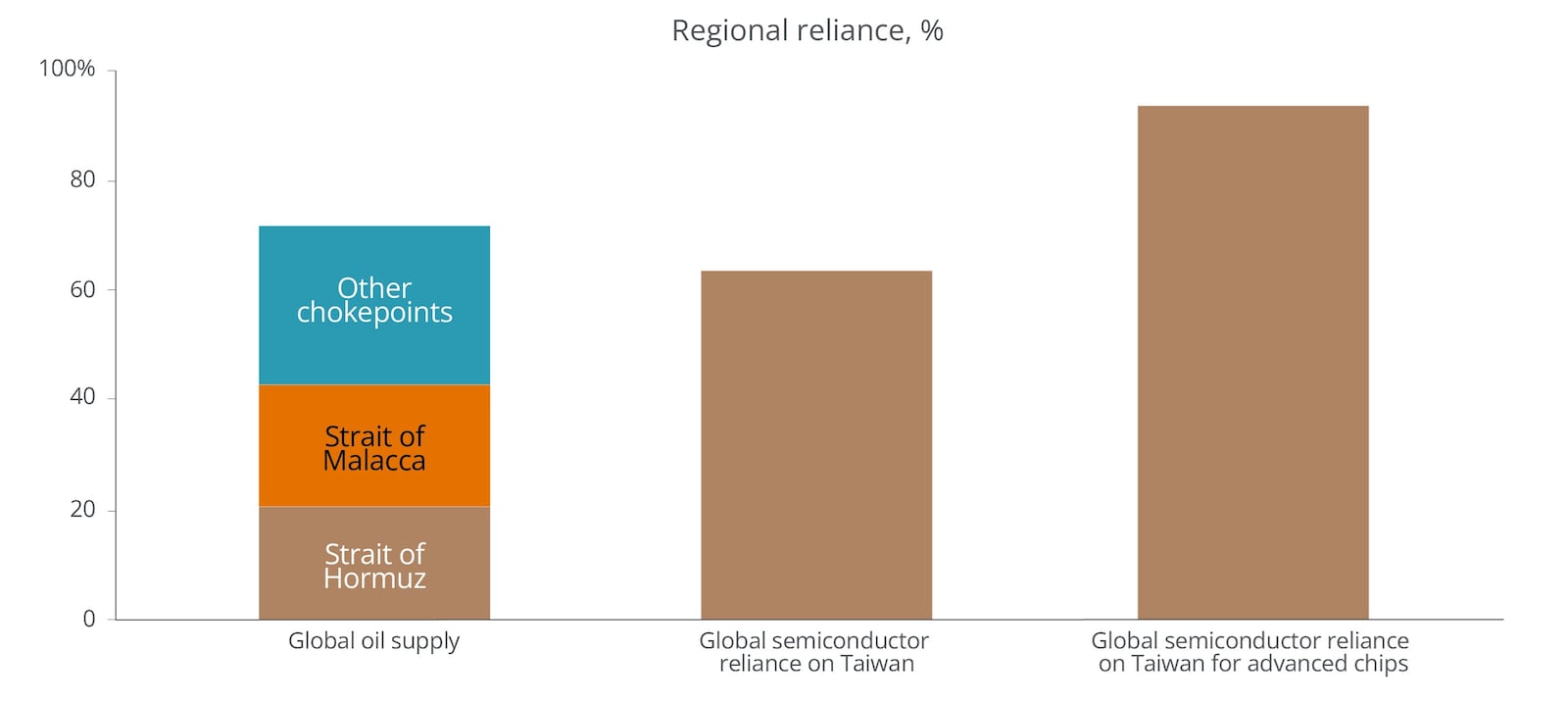
Major transit corridors are in a fragile state. The Strait of Hormuz isn’t the only notable geographical chokepoint; the Taiwan Strait, which transports a majority of the world’s most advanced semiconductors, is equally if not more critical. Any interference of ships passing through here could inhibit the delivery of semiconductors across the world that are necessary for the AI buildout.
Oil and semiconductor trade is reliant on chokepoints
A more divided world could raise costs. Even after diversifying away from Russian natural gas, Europe still depends on other countries for energy. This leaves its economy more vulnerable to higher energy prices while it juggles defense and infrastructure spending with high government debt levels. Elsewhere, U.S.–China competition could split the global economy into two systems that make cross-border business more expensive and complicated.
New power players may emerge. Resource-rich regions and AI supply-chain hubs in Latin America, the Gulf and East Asia could capture significant value if AI spending stays strong. And if China’s AI push drives profit growth, Chinese stocks could benefit.
Interested in working with an advisor?
Work 1:1 with our advisors to help build a personalized financial strategy that’s built around you.
Inflation may create a new reality
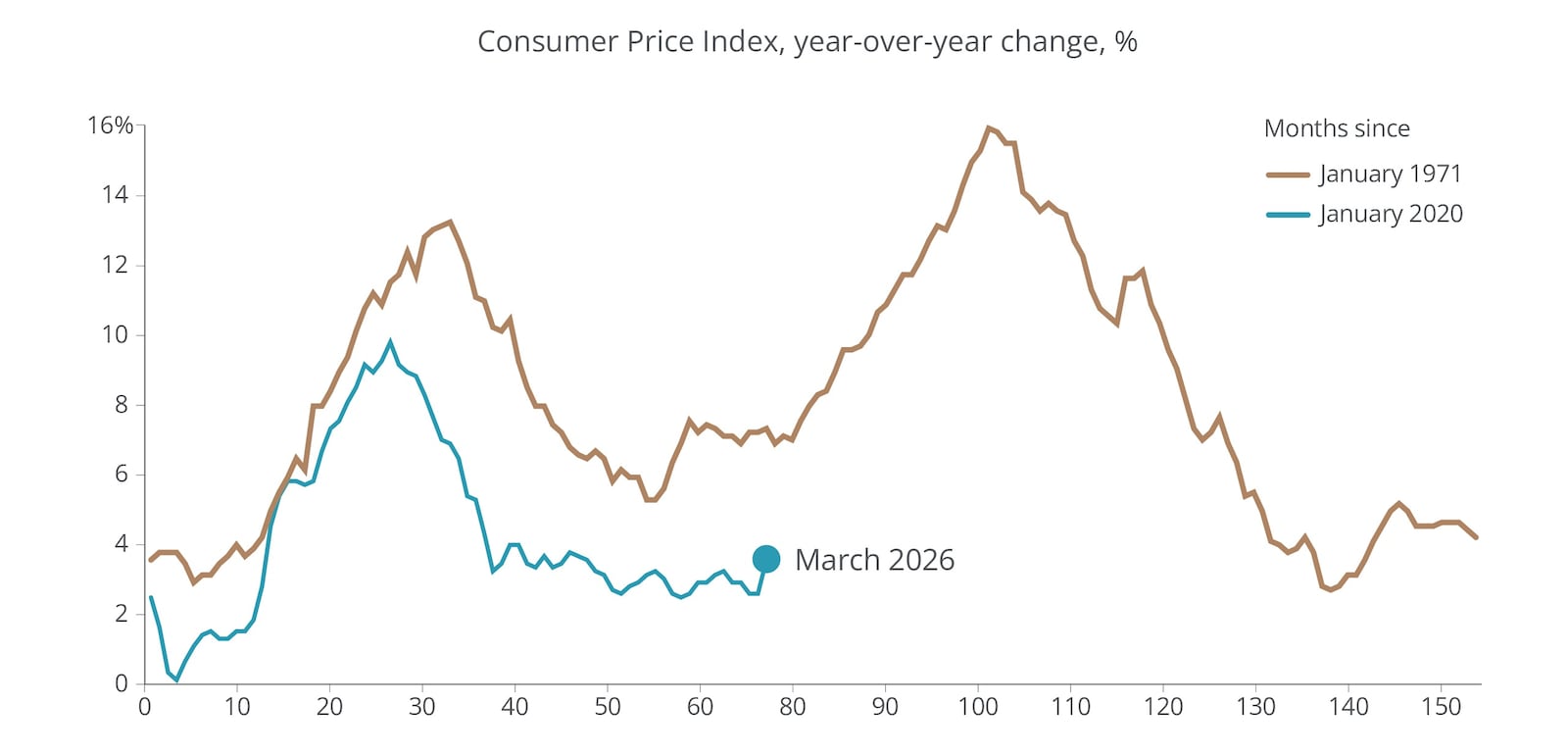
The Iran conflict added renewed pressure on U.S. inflation, which was already hovering around the 3% range. Repeated shocks like this make inflation more unpredictable than it was before the COVID-19 pandemic. Stocks and bonds can struggle simultaneously in a world of volatile inflation.
As for how investors should think about the new normal? “Inflation volatility doesn’t have to quietly erode purchasing power,” Amaru says. “Investors who plan with intention should expand the toolkit beyond just equities and fixed income to stay on offense while still protecting purchasing power.”
What investors should watch
Inflation shocks could become the new normal. It’s been one inflation shock after another since the pandemic: Russia’s invasion of Ukraine, tariffs, sharp swings in immigration policy and the Iran conflict. But a string of “temporary” shocks can start to feel permanent and build higher prices into everyday costs, as the inflation of the 1970s showed.
The 1970s saw two distinct surges in inflation
Cooling pressures could help ease inflation. A tepid labor market is keeping wage growth contained, which should feed through to only modest services inflation. Prices may also cool if energy headwinds fade over the coming months.
The AI supercycle keeps spinning
AI could prove to be a disinflationary force, raising productivity and corporate profits over time. It could also disrupt jobs and business models along the way.
AI's role as both growth engine and disruptor is exactly why it has been one of the biggest economic stories of the year, according to Amaru. “It should lower barriers to business formation, catalyze new industries and unlock more creativity and dynamism across the economy,” he says. “Of course, this isn’t just a U.S. story but a global one.”
What investors should watch
AI may change more jobs than eliminate them. New “agent-like” AI tools are starting to complete longer, multistep tasks with less supervision, which could accelerate adoption and subsequently displace many office jobs. But there’s little evidence as of now that AI is causing widespread job losses since it still struggles with work that requires judgment and context, making it more likely AI could change how people do their jobs and boost economic output.
AI may create new winners and losers. When companies can automate repetitive tasks, it can make employees more productive and potentially increase profits. But it could disrupt some existing business models like legacy subscription-based software as a service (SaaS). Adoption of the technology may also create new revenue opportunities for some companies.
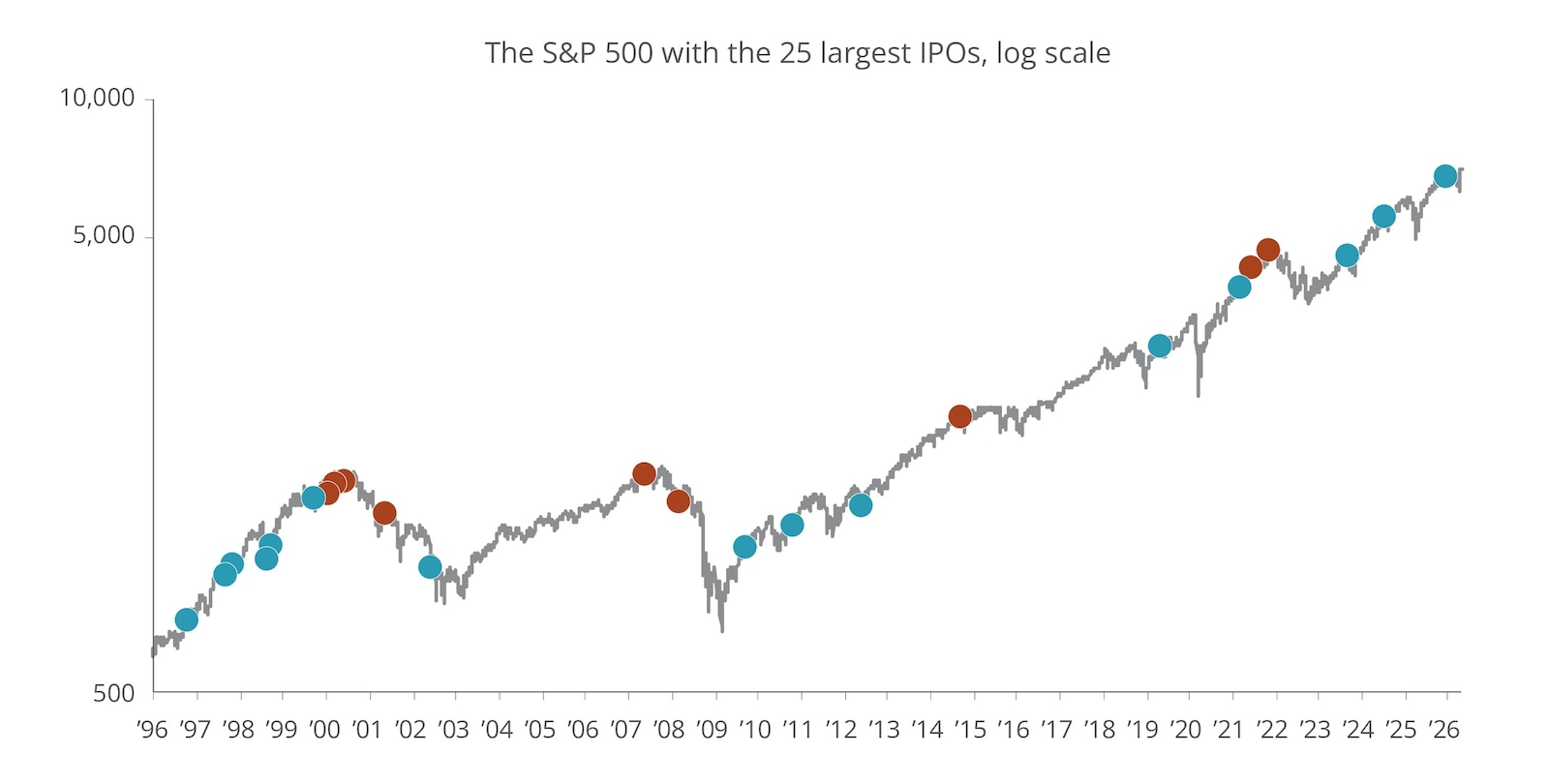
A high-profile IPO wave could signal market froth. The upcoming initial public offering (IPO) calendar will be telling – SpaceX, Anthropic and OpenAI could go public before 2027. Large waves of companies going public in short periods and experiencing significant initial rallies could be a warning sign of overexuberance.
Do large IPOs coincide with market peaks?
It is not possible to invest directly in an index.
The bottom line
The three forces shaping markets in 2026 are creating both pressures and opportunities for investors. Global fragmentation is likely to lead to more spending on energy, security and defense. Inflation is likely to stay elevated and unpredictable. AI has the potential to boost productivity and corporate profits but is also capable of disrupting existing jobs and business models. At the end of the day, investors who stay focused on their long-term plan and ensure their portfolios are diversified may be well-positioned to achieve their goals.
Invest your way
Not working with us yet? Find a J.P. Morgan Advisor or explore ways to invest online.