Venezuela’s turning point: What it means for markets and investors

J.P. Morgan Wealth Management

On January 3, the United States conducted military strikes in Venezuela, resulting in the capture of President Nicolás Maduro and his wife, Cilia Flores. Framed by President Trump as a targeted effort against drug trafficking and security threats, the operation marks a significant development in U.S. involvement in Venezuela, particularly in its oil sector. While the headlines are striking, the immediate implications for markets and investors are more nuanced.
This military action was not entirely unexpected. Months of escalating tensions and incremental U.S. enforcement actions had led prediction markets to assign a 50%-60% probability to imminent U.S.–Venezuela military engagement. The focus now turns to the transmission channels through which this event could impact the global economy – chief among them, oil.
Broader market implications
Outside of oil, Venezuela’s role in other global commodity markets is relatively limited. The recent geopolitical developments have also sparked renewed interest in safe-haven assets. Gold prices climbed over 2%, approaching levels last seen during December’s record high. This move underscores gold’s role as a preferred hedge during periods of heightened uncertainty.
The path forward for Venezuela and the broader region remains highly risky and uncertain. Achieving lasting political stability, meaningful economic recovery and a credible restoration of oil production will be complex and challenging. Venezuela’s debt burden remains unsustainable, with a debt-to-gross domestic product (GDP) ratio of roughly 190%, and the likely necessity of a comprehensive restructuring, adding further complexity and uncertainty to the outlook for the country.
As regional dynamics continue to evolve, neighboring Colombia is also worth monitoring. It has recently been subject to U.S. actions against alleged drug trafficking vessels in the Caribbean, but with less than 1% of global oil output and declining reserves, its impact on markets is limited.
Ready to take the next step in investing?
We offer $0 commission online trades, intuitive investing tools and a range of advisor services, so you can take control of your financial future.
Oil: The central transmission channel
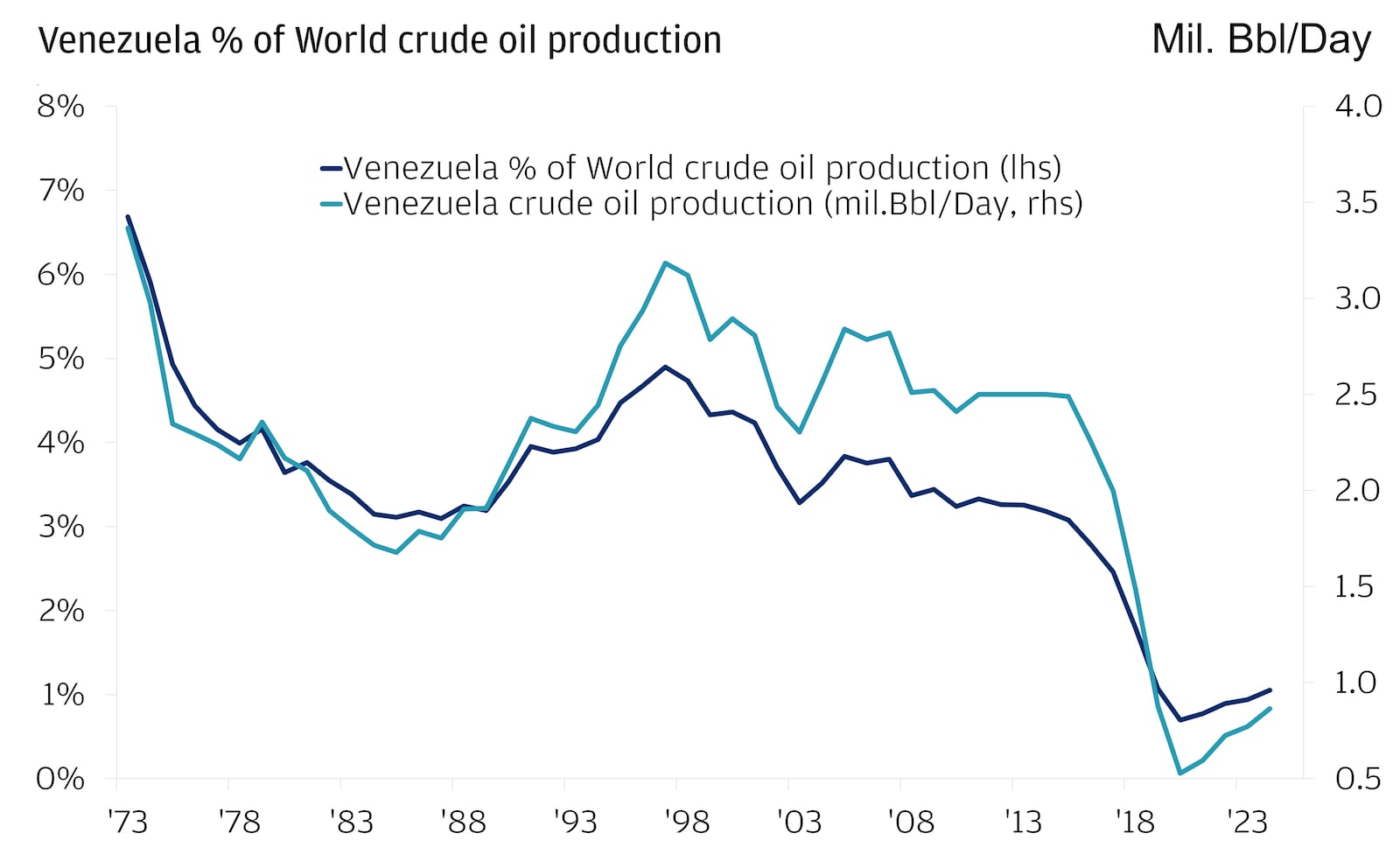
Venezuela holds the world’s largest proven oil reserves – about 300 billion barrels, or one-fifth of the global total. However, due to technical constraints and years of underinvestment, the country currently produces less than 1% of global supply. Importantly, the recent U.S. strikes did not target oil infrastructure. President Trump has emphasized plans for U.S. firms to play a larger role in rebuilding Venezuela’s energy sector. Chevron, the only major U.S. oil company operating in Venezuela, saw its shares surge over 6% on the news Monday morning, with other oil majors and service companies also initially rallying.
Despite the headlines, the near-term impact on global oil supply and prices is likely to be limited. Venezuelan crude is “extra heavy,” requiring specialized refining, and any meaningful revival of the country’s oil industry will take years and significant investment – estimates suggest upward of $100 billion. With global oil prices down roughly 20% over the past year and Brent crude trading near $60 per barrel, the current supply surplus further dampens the risk of a price spike. In fact, if U.S. involvement leads to a sustained increase in Venezuelan output, it could exert downward pressure on prices over the medium term.
Venezuela crude oil production is roughly 1% of world total
Geopolitical events and market history
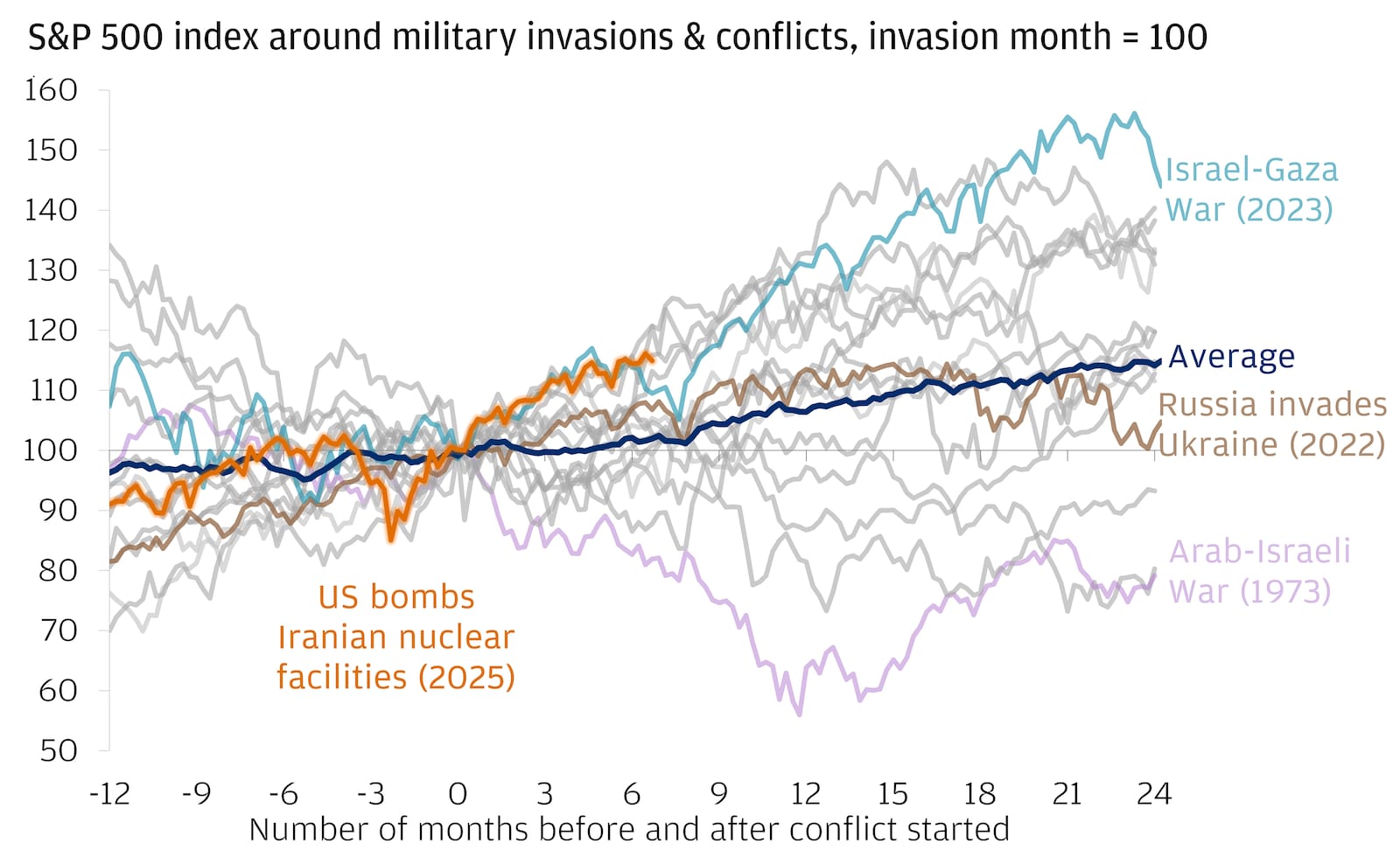
Geopolitical shocks often capture headlines and spark short-term volatility, but history shows their lasting impact on markets is typically limited. Our framework for assessing such events focuses on the transmission channels to the global economy – primarily commodities like oil. Unless there is a significant and sustained disruption to supply, markets tend to absorb shocks and refocus on fundamentals.
Meanwhile, outside of Venezuela, the broader market reaction has been muted, with global equities largely steady.
History suggests short-lived volatility around geopolitical events
The bottom line
For investors, the key takeaway is to maintain perspective – geopolitical events can create noise, but disciplined, diversified portfolios remain the best defense against uncertainty.
As always, we will continue to provide timely updates as the situation evolves and new information emerges.
All market and economic data as of 01/07/26 are sourced from Bloomberg Finance L.P. and FactSet unless otherwise stated.
You're invited to subscribe to our newsletters
We'll send you the latest market news, investing insights and more when you subscribe to our newsletters.