With key reports on hold during government shutdown, alternative sources show softening jobs market

J.P. Morgan Wealth Management

The U.S. government shutdown, which began on Wednesday, October 1, has disrupted the flow of macroeconomic data. With operations at entities like the Bureau of Labor Statistics on pause until a deal is reached, key releases like the Non-Farm Payrolls report – which was supposed to be published on Friday, October 3 – fell off the calendar.
At a time when the market is being particularly vigilant around labor market health to suss out the timing of the next potential rate cut by the Federal Reserve (Fed), the freeze on government data releases is inconvenient (at best). Rather than getting bogged down by what we don’t have, we are embracing the ability to monitor the mosaic of employment conditions using alternative sources of data.
Here is a rundown of some proxies that can help you maintain a sense of how payroll gains, layoffs and wages are faring while we are not receiving government-released data due to the shutdown.
Payroll gains: The ADP National Payroll Report
Private company Automatic Data Processing (ADP) partners with the Stanford Digital Economy Lab to analyze roughly 26 million U.S. workers’ anonymized payroll data. Like the Bureau of Labor Statistics’ Non-Farm Payrolls report, the release of ADP’s National Payroll Report is scheduled for the first week of each month.
While the two reports can sometimes diverge, the privately produced ADP data has offered a solid directional indication of payroll trends over the past few years.
Latest ADP data shows continuation of weak payroll growth
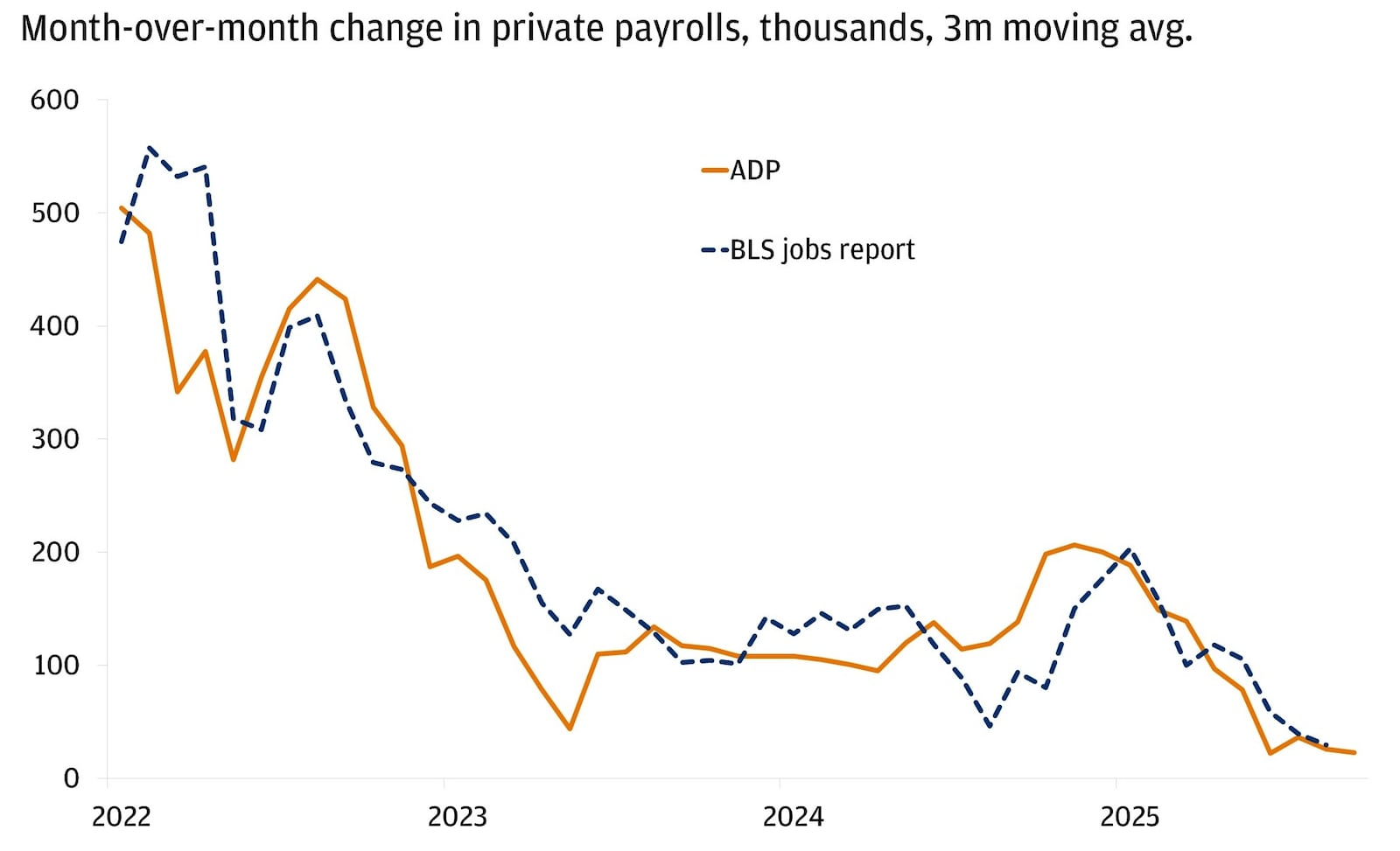
The message sent by ADP’s October 1 release rhymed with the trend we’ve been observing in the data released by the government. It reported a 32,000 drop in September private payrolls (the biggest in roughly two and half years) and a revision in the August job creation number from 54,000 to -3,000.
The bottom line? The pace of hiring in the U.S. is quite slow right now, which is a key reason why the Fed started its rate cutting cycle in September in the first place.
Ready to take the next step in investing?
We offer $0 commission online trades, intuitive investing tools and a range of advisor services, so you can take control of your financial future.
Layoffs: Corporate commentary and Fed data
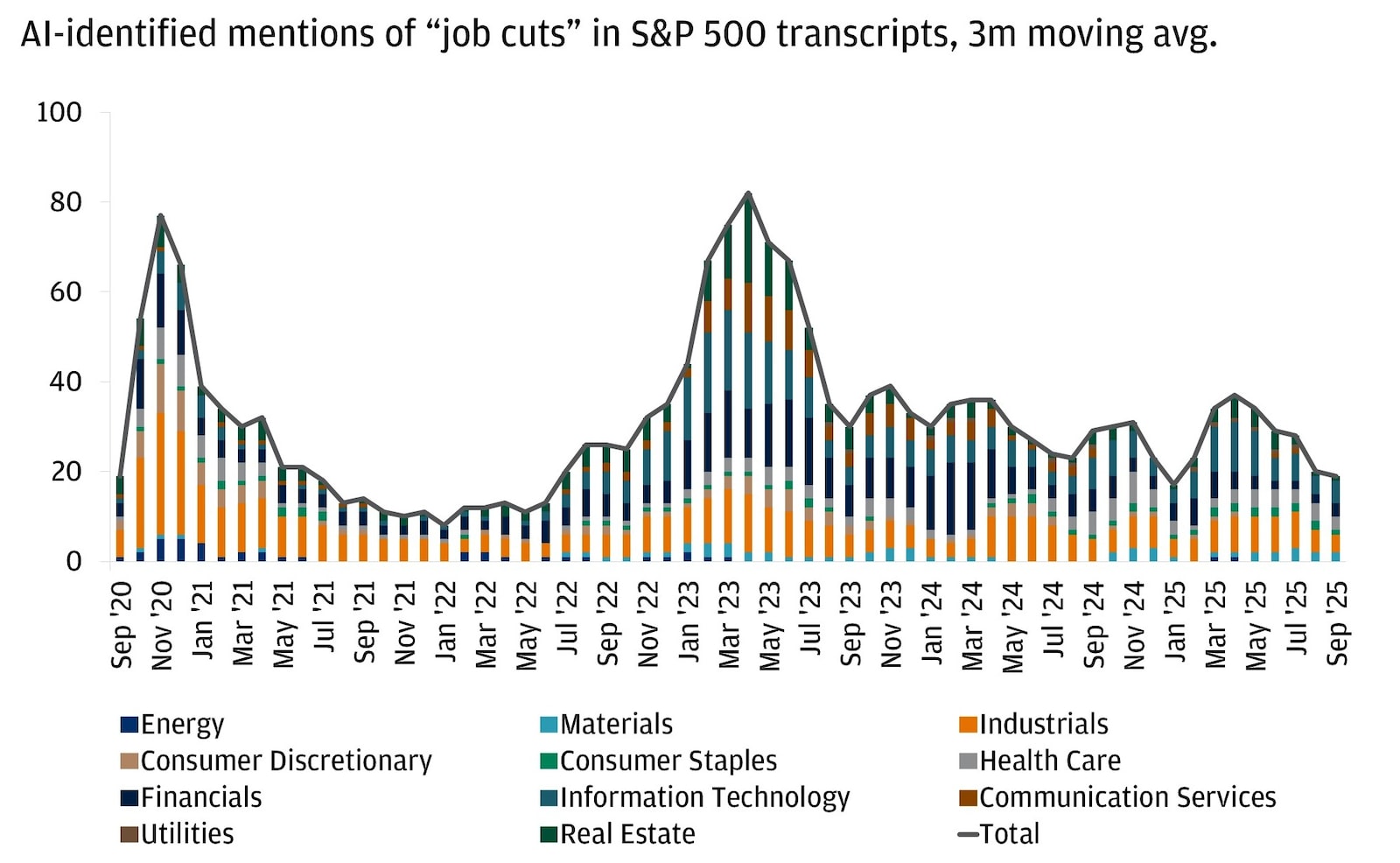
As publicly traded companies report earnings and offer forward guidance to the public, one of the key themes we listen for are any plans to cut headcount in the future. Artificial intelligence has made it easier to comb through this commentary and aggregate takeaways, even at the sector level.
Although we saw a pick-up in mentions of “job cuts” among S&P 500 companies amid the swirl of tariff uncertainty earlier this year, such signaling has recently become less common.
Mentions of “job cuts” falling
Data aggregated by the Cleveland branch of the Federal Reserve corroborates the story. With the Worker Adjustment and Retraining Notification (WARN) Act of 1998 mandating that businesses with 100 or more employees give at least 60 days’ notice before closing or pursuing mass layoffs, we can keep a pulse on the potential for layoffs to push the unemployment rate higher in the months ahead. Right now, that indicator is implying the lowest number of future layoffs since 2022.
The bottom line? We’re not yet seeing signs that firings are picking up, bolstering our view that the labor market is bending – but not breaking.
Wages: Private trackers and business surveys
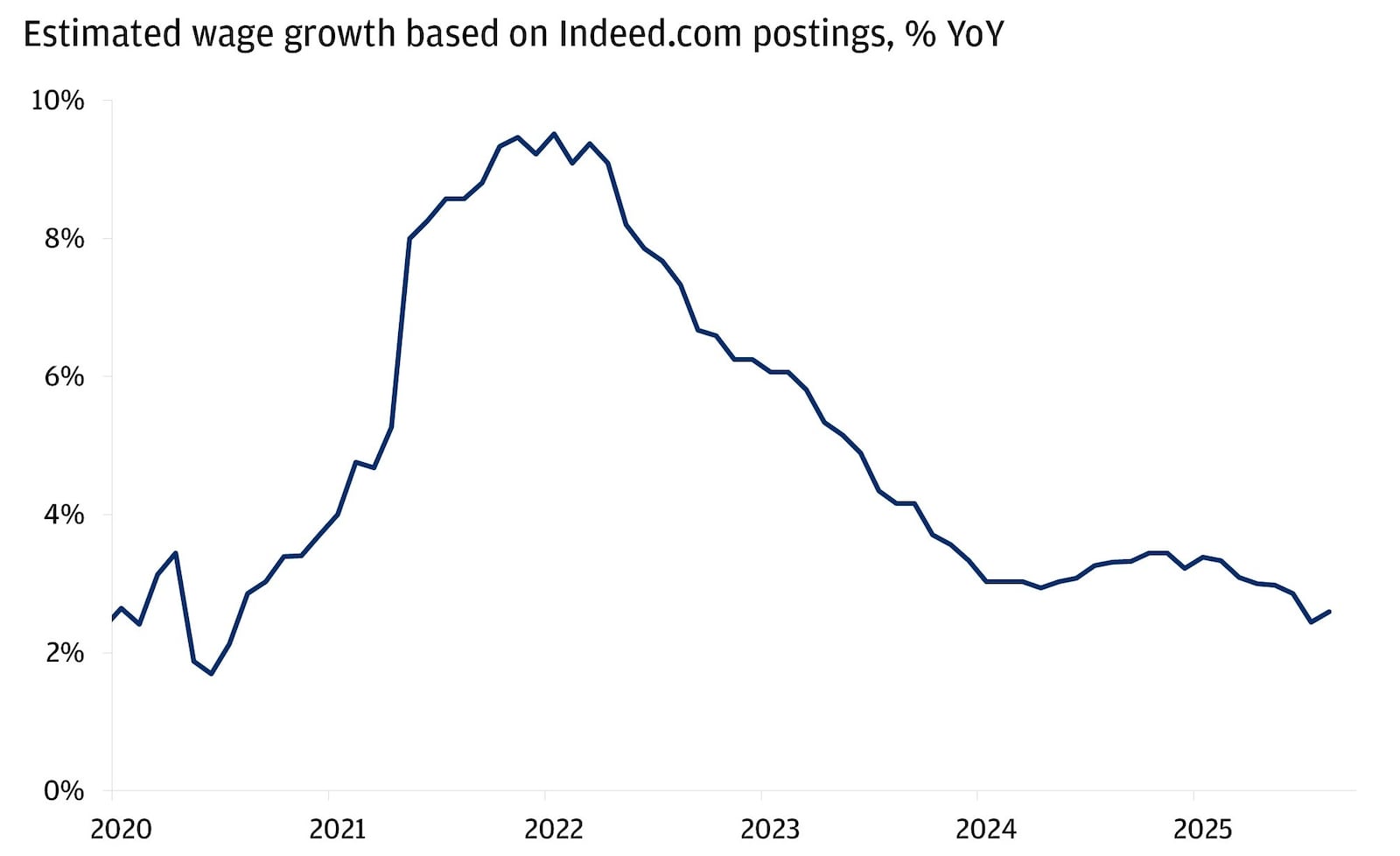
Indeed is an employment website focused on matching businesses looking for talent with prospective employees looking for a job. Using the wages and salaries posted on its open role listings, Indeed aggregates and releases its U.S. Wage Tracker.
Indeed’s tracker shows a slowdown in wage growth
We can also look to non-profits like the National Federation of Independent Businesses (NFIB) for similar guidance. Rather than scraping data from job postings, the NFIB conducts surveys that include questions around plans to raise worker compensation in the next few months.
Both indicators reflect the same trend we’ve been observing in the Bureau of Labor Statistics data: Wages are still growing at a positive clip – and one that exceeds the current rate of inflation – but the pace of that growth continues to slow.
The bottom line? The slowdown in wage growth is consistent with our observation of a looser labor market and is actually an important enabler for the Fed to continue cutting rates. If wage growth were picking up, it could feed concerns that sticky inflation pressures are mounting and discourage the central bank from easing too quickly.
Final thoughts
Overall, the data we do have isn’t surprising and points to a labor market that continues to cool, but not collapse. This positions the Fed to consider another move later this month, in line with the market’s current pricing of a 98% chance of a rate cut coming out of the Federal Open Market Committee’s October meeting.
As we covered in one of our recent Top Market Takeaways notes, investors have historically treated shutdowns as non-events, and there hasn’t been a clear market impact overall. On average, the S&P 500 has continued its typical positive trend in the days before or after a shutdown, and U.S. Treasury yields and the U.S. dollar have followed a similar pattern.
All market and economic data as of 10/08/2025 are sourced from Bloomberg Finance L.P. and FactSet unless otherwise stated.
You're invited to subscribe to our newsletters
We'll send you the latest market news, investing insights and more when you subscribe to our newsletters.