Are we seeing irrational exuberance in the market? We don’t think so

Irrationally exuberant? We don’t think so
Markets snapped back in the aftermath of last week’s jobs report. The S&P 500 advanced +1.6%, driven by outperformance from the Magnificent 7 (+3.8%). As increased risk appetite rippled through markets, 2-year and 10-year Treasury yields drifted higher. Moreover, Federal Reserve rate cut expectations imply an almost 95% chance of a 25 basis point rate cut in September.
That momentum carried through to Thursday, when at midnight, U.S. tariffs on imported goods rose to their highest level since 1933. At the same time, U.S. large-cap equity markets pushed toward record highs. The index has surged almost 30% since April lows – one of the sharpest four-month rallies outside of a recession in decades, despite effective tariff rates settling just below 20%.
U.S. tariff rate assumptions
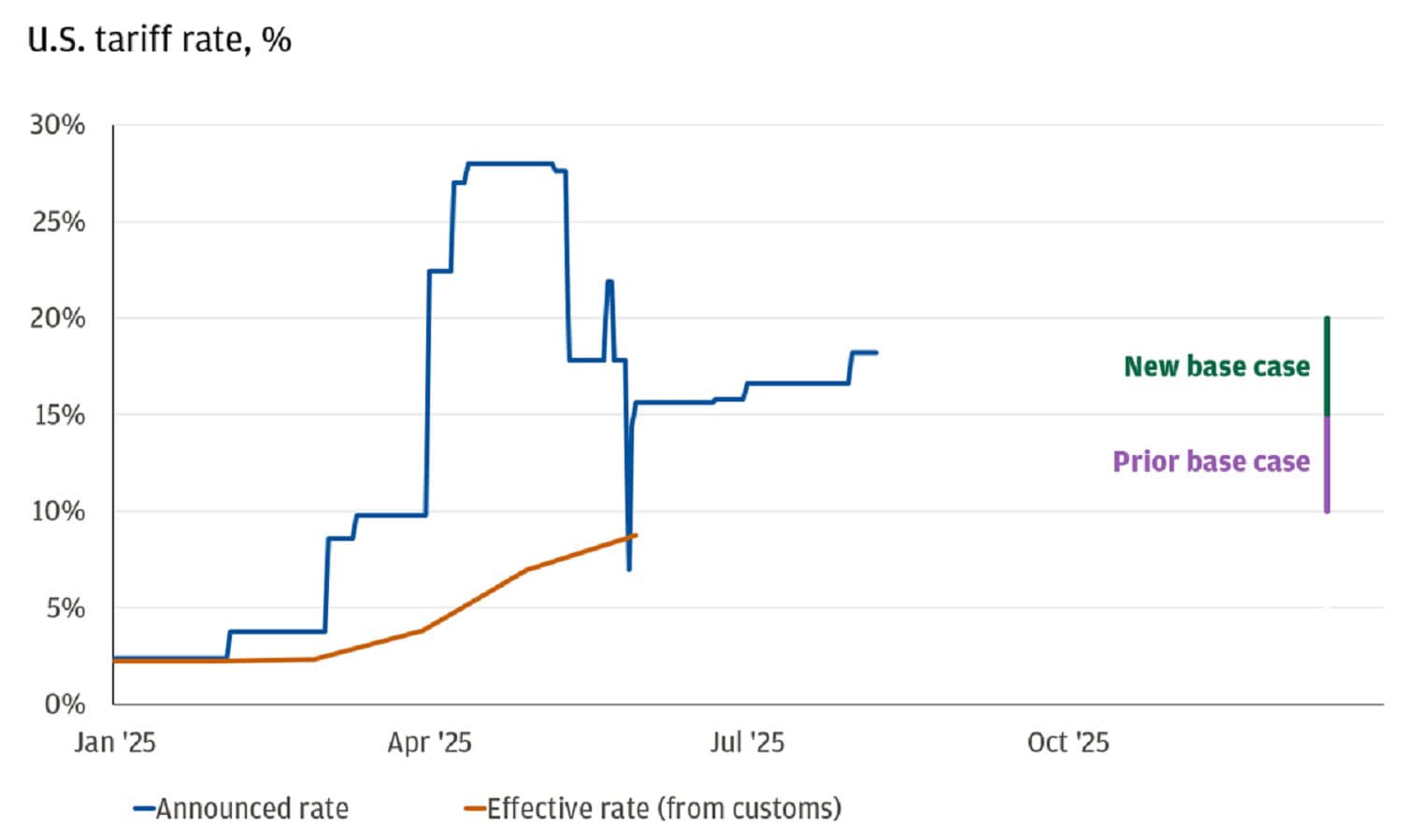
Is the market irrationally exuberant? We don’t think so.
In fact, we think the S&P 500 can deliver high single-digit total returns over the next 12 months, even if tariffs stick at current rates. There are three key reasons why.
Work with an advisor
Our advisors can provide ongoing financial advice on how your portfolio can adapt to the changes in the market, your life and your goals.
Economists and analysts have already downgraded their expectations for growth this year
Before “liberation day,” economists expected U.S. gross domestic product (GDP) growth to be 2.3% in 2025. Today, they only expect 1.5% full-year growth. Similarly, analysts trimmed their full year expectations for S&P 500 earnings per share by nearly $10, or 3%. The consensus opinion was that tariffs and policy uncertainty would disrupt business confidence, hiring, investment and consumption. Interestingly, those forecasts seem to be on track. The labor market has clearly downshifted, as has consumption. While the latest tariff deadline has passed, it seems foolish to think that we have seen the last twist in the tariff saga. But the stock market isn’t getting hung up on the slower economy that is here today; they are focused on the strength of corporate earnings and the growth recovery that is to come.
Despite the economic slowdown, corporate earnings have exceeded expectations
Heading into the latest earnings season, the consensus expected less than 5% earnings growth. Now that most companies have reported, the S&P 500 is tracking toward an astounding 11% growth rate. In fact, full-year earnings expectations for both this year and next have already started to turn higher. Further, it seems like the market is differentiating between the winners and losers of the trade war. Earnings expectations are flatlining at best for consumer-facing and smaller companies, which have less leverage over their trading partners and less flexible supply chains.
Differences in earnings revisions by sector and size
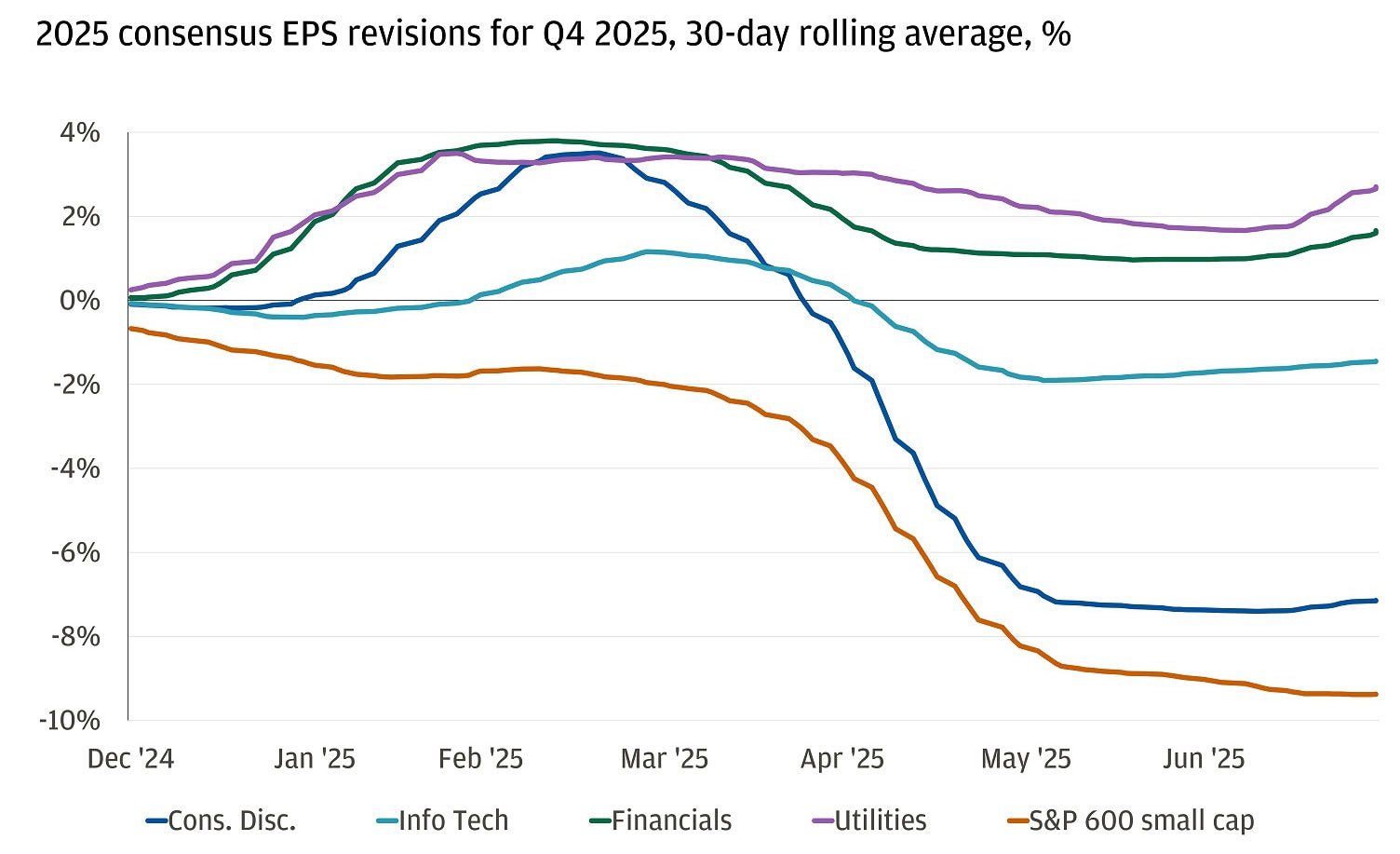
The tariff bark is worse than its bite, at least for large-cap stocks
The latest example is President Donald Trump’s suggestion that imported semiconductors would be taxed at a 100% rate unless the companies commit to relocating production to the United States. Another sign? Apple products are exempted from the latest tariff rates on Indian goods. Indeed, the company also announced an additional $100 billion investment in U.S. manufacturing facilities. The stock gained almost 9% this week. Tariffs are not happening in a vacuum.
The other key piece of the administration’s fiscal policy is the One Big Beautiful Bill Act (OBBA) that allows for 100% bonus depreciation for purchases of qualified business property and immediate expensing for domestic research and development (R&D) expenses. This change is not as dramatic as the consistent tariff threats, but it is no less real for companies. Some analysts expect that it could increase free cash flow for some of the hyperscalers by over 30%.
We are comfortable with broad market exposure over the next 12 months, but some sectors might do better than others. We believe financials, utilities and technology will continue to outperform driven by improving earnings expectations. We see further upside for the tech sector, buoyed by artificial intelligence (AI) investments, continued capital expenditures (capex) and the OBBBA. Utilities have transformed from a historically unexciting sector to a dynamic one, driven by increased power demand for data centers. Financials are set to benefit from a deregulatory environment, which is expected to free up capital for lending, increased mergers and acquisitions (M&A), and shareholder return through buybacks and dividends.
For investors, understanding these underlying dynamics is crucial. While the broader market continues to chug along, the reality is that there’s dispersion beneath the surface and certain segments are feeling the strain of a potential economic slowdown. Our investment strategy remains focused on U.S. large-cap equities, particularly those with diversified supply chains and strong management teams, since they're better positioned to weather the current environment. They can keep rallying, even in the face of the highest tariff rates in a century.
All market and economic data as of 08/08/25 are sourced from Bloomberg Finance L.P. and FactSet unless otherwise stated.
Explore ways to invest
Take control of your finances with $0 commission online trades, intuitive investing tools and a range of advisor services.