Small-cap success: Why this rally looks different

Executive Director, Global Investment Strategist, J.P. Morgan Private Bank

By Kriti Gupta and Nick Roberts
While investors often worry about concentrated market gains, there is already evidence of a tangible market broadening under the hood. Even as the artificial intelligence (AI) trade continues to garner attention, it’s the investors in small-cap stocks that have been more handsomely rewarded this year – perhaps even more so than the pure play tech bulls. The S&P SmallCap 600 Index returned approximately 22% in the first half of 2026, outpacing both the S&P 500 and the tech-heavy Nasdaq 100, which posted gains of around 10% and 20%, respectively.
So, what’s driving it and will it last?
A new era
While the Nasdaq 100 more than doubled from the first quarter of 2021 to the end of 2025, the more domestic-facing and interest-rate-sensitive small caps returned 13.5%. Much of this underperformance took its cue from earnings. Small-cap earnings stagnated between 2022 and 2025, pressured by rising input costs, weak pricing power and limited exposure to high-margin tech businesses. Meanwhile, large-cap earnings accelerated sharply.
Small caps post best first half in decades
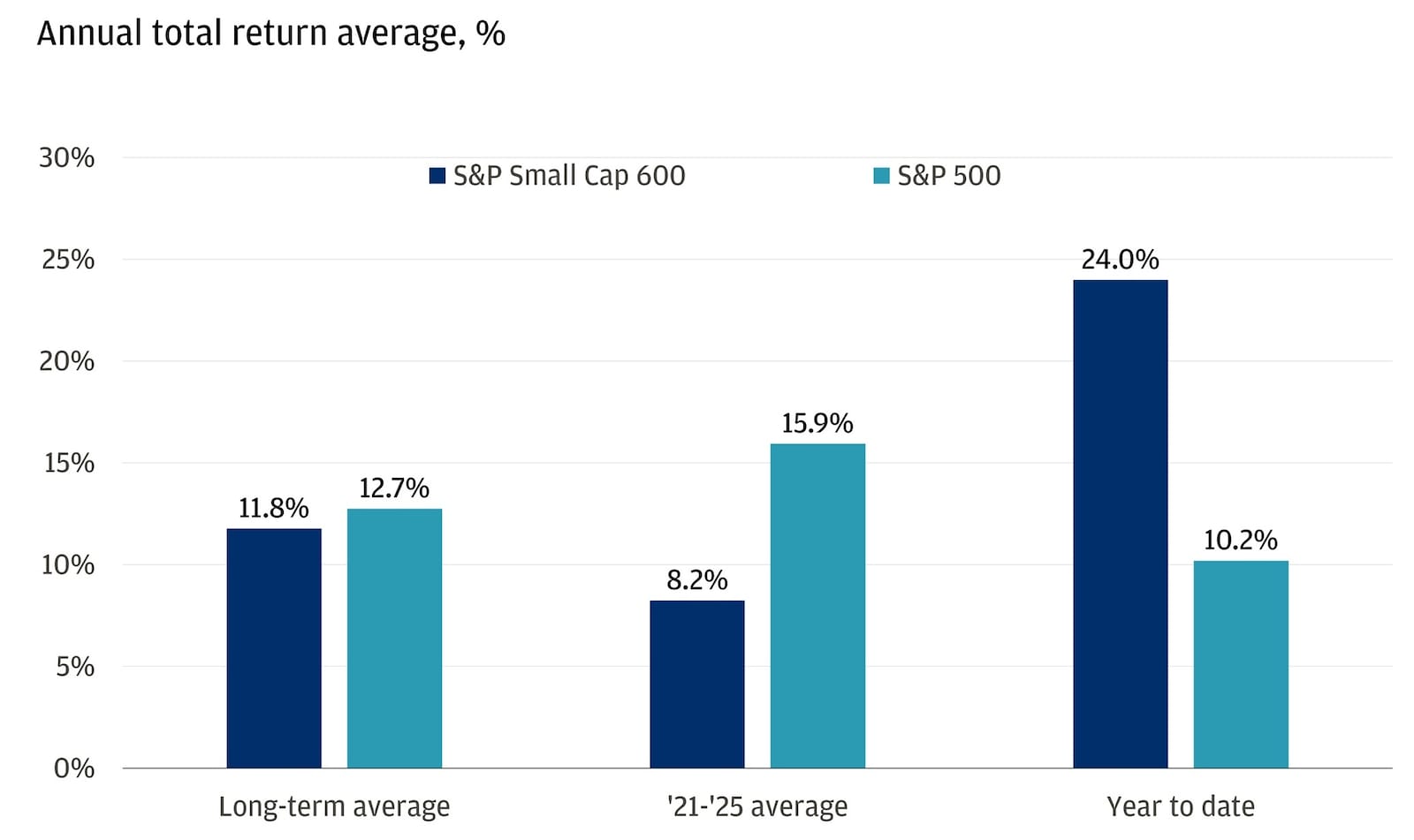
Outlooks and past performance are not reliable indicators of future results. It is not possible to invest directly in an index.
Small caps have traditionally been made up of more cyclical and old-economy stocks. Technology only accounts for 13% of the small-cap universe versus 37% in the S&P 500. In essence, small caps are a better reflection of confidence in the United States’ domestic economy through bank lending, local demand, wages and capital expenditure. While short bursts of small-cap outperformance over the last three years have been driven by falling bond yields and investors playing catch-up, those gains quickly faded.
This market move feels different. Led by a fundamental improvement earnings, it shows a broadening of the AI trade across both sector and scale. This is especially important for investors who share a more optimistic view of the U.S. economy, even in the face of worries around an economy that can run too hot.
Ready to take the next step in investing?
We offer $0 commission online trades, intuitive investing tools and a range of advisor services, so you can take control of your financial future.
Squaring rate-hike expectations
Expectations of rate cuts have traditionally boosted small caps, thanks to lower policy rates and, as a result, lower interest expense. A series of rate cuts in the fall of 2025 brought the funds rate to 3.50%–3.75%, a move that signals a desire to support growth and can push investors to pursue smaller or riskier companies.
Naturally, this spurs economic growth but for small-cap stocks especially, every cut can be an immediate boost to earnings. Unlike large-cap companies that are mostly locked into low-cost, long-term fixed bonds, a large portion of small-cap stocks remain exposed to floating-rate debt. As a result, even modest changes in short-term rates can have an outsized impact on earnings
But investors are now pricing in one to two rate hikes by the end of the year. So, why are small-cap stocks rallying in the face of a potential headwind?
For starters, the magnitude of interest rate changes being priced into financial markets is less than it has been in previous hiking cycles. Any potential move would be more digestible now than it has been in the past, which creates room for investors to appreciate both their valuations and earnings.
Starting with valuations, small caps as a whole trade at a roughly 20% discount to their large-cap peers. The discount on a 10-year average is 9.8%. But it’s the group’s earnings expectations that are more notable.
After several years of rangebound small-cap earnings estimates, they inflected sharply higher in mid-2025 and continue to be revised upwards this year. That’s thanks to lower interest rates, a domestic capital expenditure boom and moderating input costs. Consensus earnings growth estimates for the S&P SmallCap 600 Index now stands at an annual rate of 15% for the next two years.
Small cap earnings estimates have surged
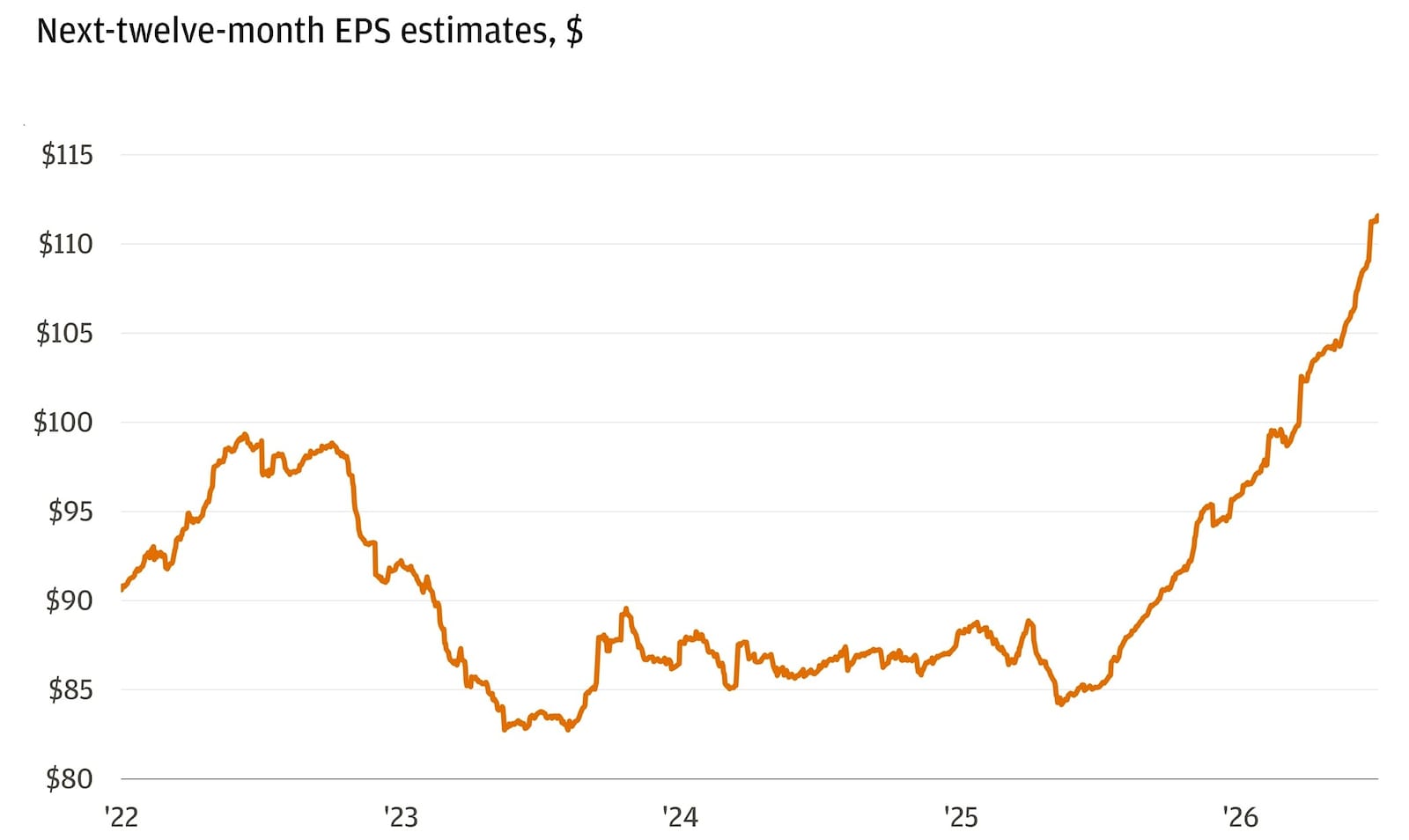
The physical AI buildout, fiscal stimulus, thinner margins and higher fixed-cost bases give small caps far greater operating leverage than their large-caps peers – even if a modest pickup in U.S. domestic demand occurs. As a result, wages, local spending and business investment flow through disproportionately to their bottom line. That can turn incremental economic strength into outsized earnings upside precisely because they are not companies of scale.
The broadening has legs
For years, investors waiting for a broader market rally have been repeatedly disappointed as market leadership narrowed and mega-cap technology companies dominated returns. But the baton is beginning to pass. While AI remains a powerful theme and continues to power large-cap indexes higher, investors no longer have to rely on a handful of winners. Rather, the tech-powered gains could lead to more market breadth. That means investors may no longer need to choose between the mega-cap AI story and the rest of corporate America, but rather see stocks across market caps rally in tandem.
All market and economic data as of 07/02/2026 are sourced from Bloomberg Finance L.P. and FactSet unless otherwise stated.
You're invited to subscribe to our newsletters
We'll send you the latest market news, investing insights and more when you subscribe to our newsletters.