AI use is exploding. So are the bills.

Global Investment Strategist

Two years ago, the biggest question surrounding artificial intelligence (AI) was whether businesses would use it at all. Today, it’s one of the fastest-adopted technologies in history, with nearly one in four American firms deploying it at scale. But the debate has now shifted to a tougher question: When AI usage rises, do the results justify the costs?
A token for your thoughts
At its core, rising AI costs are driven by the price of AI “tokens” – the unit of text that a generative AI model (like ChatGPT) processes. The more complicated a task an AI model attempts, the more tokens it consumes, and the more computing power it requires from data centers. For example, a short email draft can be cheap. A multistep “agent” that reads documents, compares options, writes code, iterates and produces structured output can be dramatically more expensive because it burns tokens at each step.
Businesses have discovered this the hard way as a few teams or employees burn through enormous amounts of tokens very quickly. Data from June shows the top 1% of AI users are consuming more than 600 times as many tokens as the median user. This intensity tends to skew toward complex coding use cases, while the more common use cases are far less “token-heavy.”
Specialized tasks are 50+ times more costly
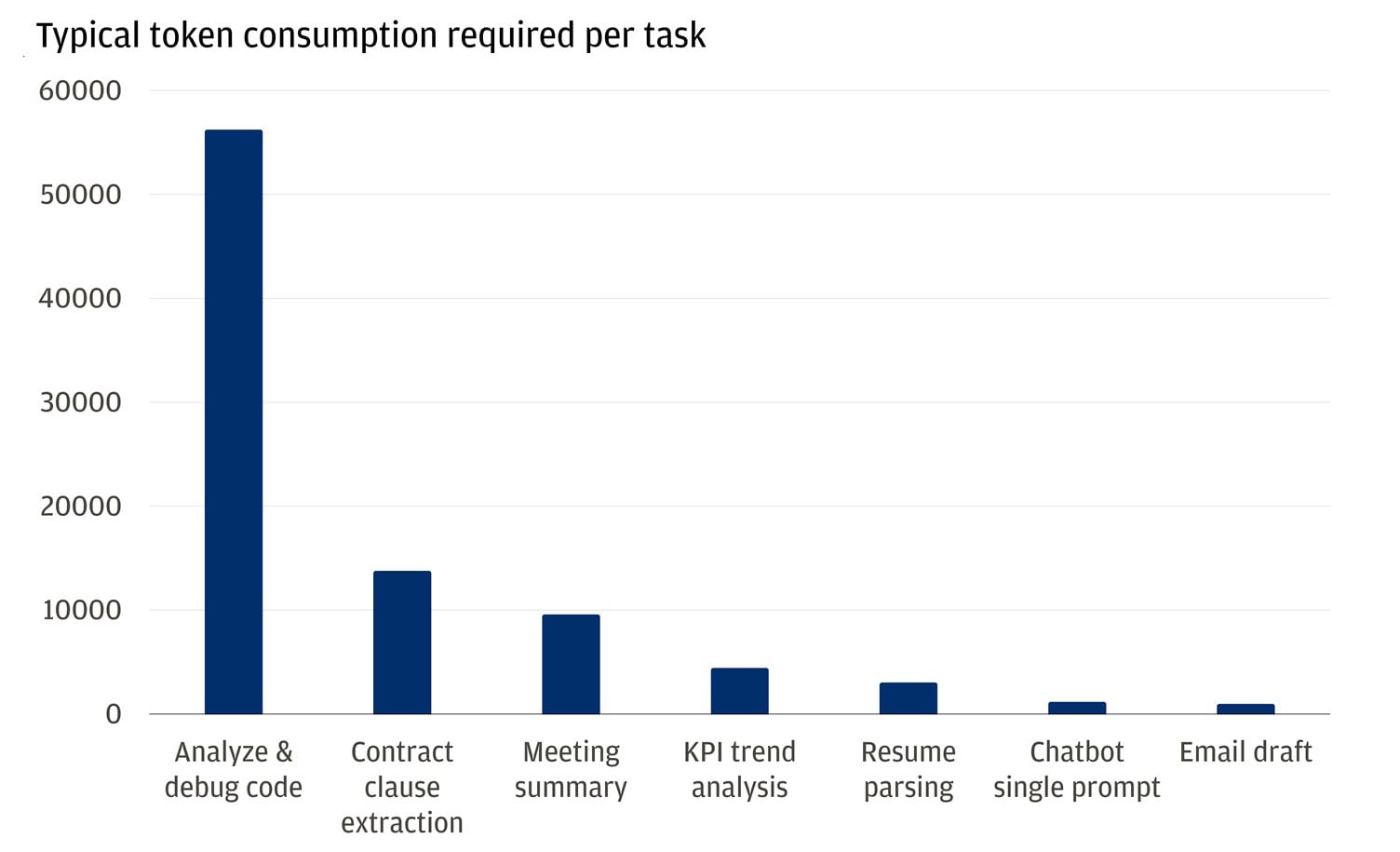
Such variations are becoming increasingly important as the way companies pay for AI and token prices themselves change rapidly.
Pricing in flux
Individuals who use large language models (LLMs) access them through “consumer” subscriptions, which typically cap token usage and charge a fixed rate. Many low-level subscriptions are even free. For companies that have so-called “enterprise” subscriptions, usage is not capped, and prices have typically been charged on a per-seat basis.
But a shift is underway. As token usage ballooned with the advent of token-heavy AI agents, AI providers began to switch their pricing models over to ones where costs scale directly with activity. For many companies, AI prices now resemble utility bills more than traditional software subscriptions. With this pricing shift, corporate costs began to be directly tied to their token usage and token prices themselves, which are up over 60% since December 2025 as demand spikes for data center computing power. This trend has been volatile as various waves of firms surged into token-heavy agentic models before some recoiled from high costs.
AI token costs have trended higher
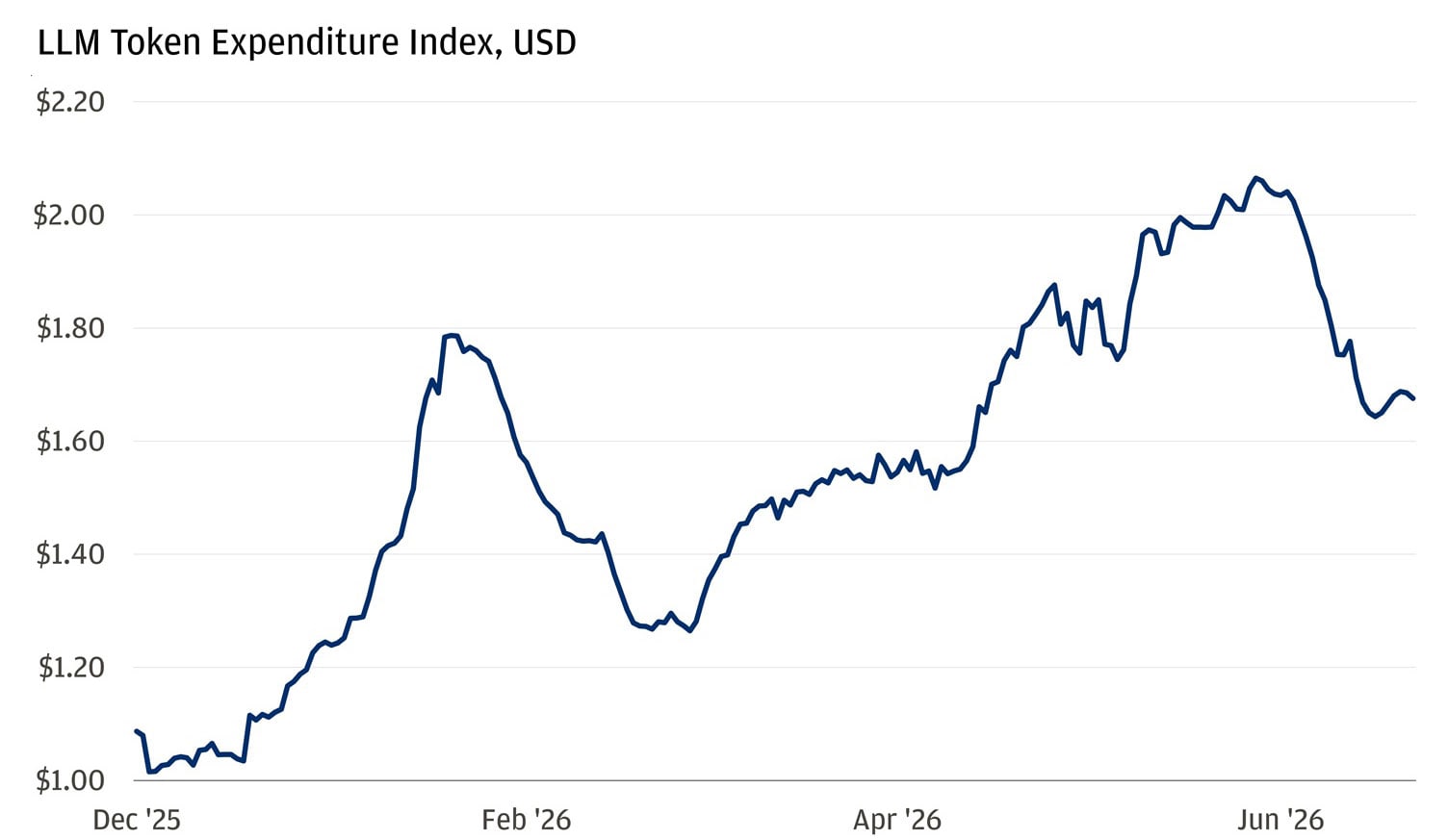
Some estimates suggest a software engineer at a firm with Claude’s enterprise subscription could rack up a token bill of up to $730 each month. Hypothetically, that means a typical Fortune 500 firm with 5,000 engineers would exceed $3.5 million in monthly expenses for AI coding. Reports indicate the heaviest users have incurred monthly costs into the thousands of dollars, with some running through the year’s AI coding budget before May. These usage levels have been rising rapidly and could be running into a budgetary brick wall.
Ready to take the next step in investing?
We offer $0 commission online trades, intuitive investing tools and a range of advisor services, so you can take control of your financial future.
A new AI playbook
These cost dynamics are already shaping corporate behavior and causing firms to take another look at adoption plans that had prioritized scaling up AI usage as quickly as possible. Corporate executives at tech companies have acknowledged that it is sometimes difficult to draw a clear connection between the surge in AI usage and improved product outcomes.
Even AI hyperscalers are doing some introspection. Some have begun scaling back in-house use of certain external AI tools due to high costs, redirecting employees toward internal tools that are sufficient for most tasks. In one case, an internal leaderboard designed to encourage AI adoption was scrapped after employees started burning tokens to boost their rankings without improving output.
Taken together, a pattern is emerging: Companies are adapting to higher costs by moving away from blindly scaling AI usage and toward optimizing where it delivers the best return on investment.
A ‘good enough’ alternative?
As corporate AI costs rise, the marginal superiority of U.S. AI models over Chinese competitors may no longer be the only factor driving adoption decisions. China's top LLM, GLM-5.2, performs as well as the world's best model from March, and it costs over 80% less to use than the global top model today. For enterprises making cost-based decisions, sacrificing a small amount of (sometimes unnecessary) quality for such a deep discount can be attractive.
China’s “frontier” AI models tend to be cheaper
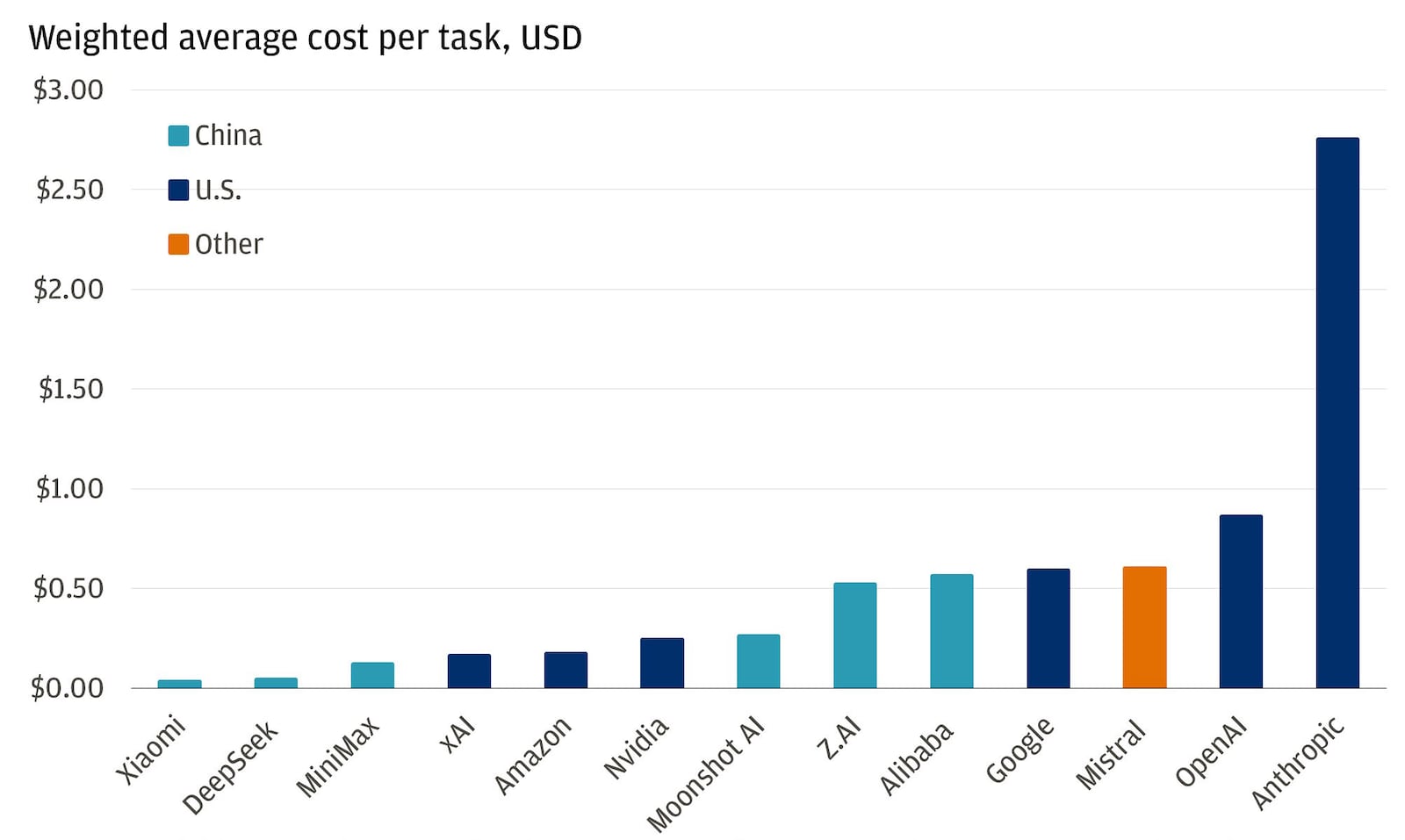
This dynamic has major implications for the future of the AI rollout. We’ve seen something similar before with the cloud computing revolution of the 2010s: What started as a scarce, seemingly “magical” capability eventually became a budget line item to be optimized. Once using the cloud became normal, pricing power shifted away from the most expensive generic players toward the parts of the ecosystem that were harder to swap out.
AI is heading down the same path. As more “good enough” models emerge at a fraction of the cost, companies may reserve premium models for the small slice of work where they provide a stronger return. Everything else may be approached like a metered utility to be managed – just like another electricity or water bill.
Bottlenecks create investable opportunities
Both supply and demand drive the spike in token costs. The demand for AI continues to surge and still has a ways to go, even if some of that demand is filled by models that sit slightly behind the frontier. But the supply of compute capacity is slowed down by the time and effort required to construct the massive data centers.
Semiconductor firms, cloud providers, power generators and other parts of the AI infrastructure stack remain central beneficiaries as companies invest to support the next phase of adoption.
All market and economic data as of 07/17/2026 are sourced from Bloomberg Finance L.P. and FactSet unless otherwise stated.
You're invited to subscribe to our newsletters
We'll send you the latest market news, investing insights and more when you subscribe to our newsletters.