Proposals versus policy: How to deal with uncertainty

J.P. Morgan Wealth Management

By, Alan Wynne, Global Investment Strategist and Harry Downie, Global Investment Strategist
Both U.S. stocks and core bonds produced positive returns on the week. But where we ended the week doesn’t capture the anxiety felt amid whipsawing headlines out of Washington, D.C.
Tariffs, a cancellation of Chinese contracts at the Panama Canal and a U.S. takeover of Gaza were just some of the proposals which caught markets’ attention this week. Below we review each and offer thoughts on what you can do in portfolios to potentially insulate against the associated risks.
The week started with tariffs
Last weekend, President Donald Trump announced tariffs roughly five times the size of his first term trade actions. They are also equivalent to almost half of U.S. imports and effectively, a 5% universal tariff. If these tariffs are implemented and sustained, it would be a meaningful negative supply shock to all parties.
Within the same announcement was the news that 25% tariffs on most goods imported from Mexico and Canada would be implemented on February 4. That didn’t end up happening.
After some negotiation, Mexico agreed to send 10,000 National Guard officers to the border to stem the flow of fentanyl and migration into the U.S. Canada appointed a new fentanyl czar, listed cartels as terrorist organizations and launched a joint “strike force” with the U.S. Deals were struck to delay tariffs on both Mexico and Canada by a month.
What ultimately went into effect from the weekend announcements was a 10% additional tariff on all goods from China.
Work with an advisor
Our advisors can provide ongoing financial advice on how your portfolio can adapt to the changes in the market, your life and your goals.
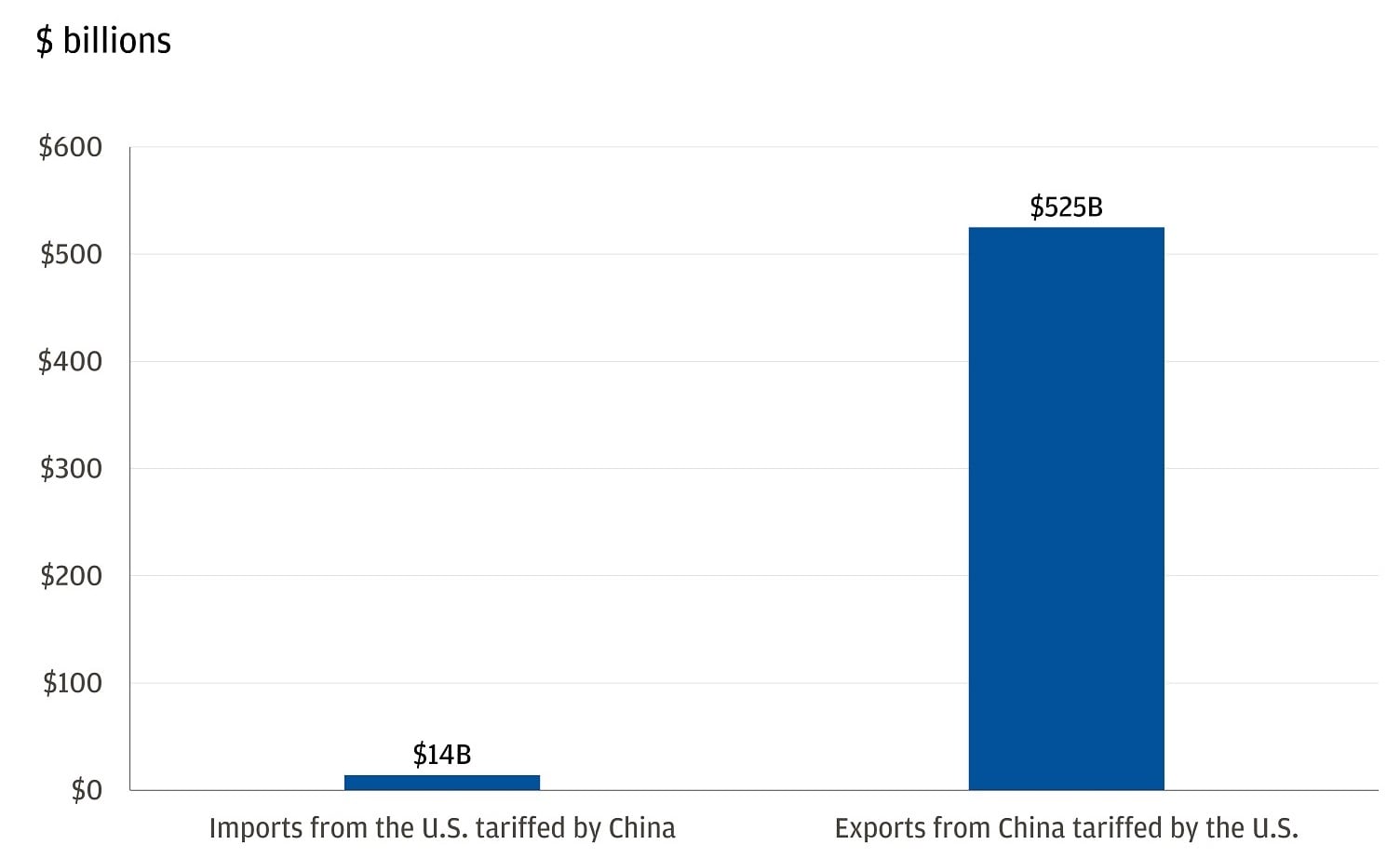
In response, Beijing announced their own tariffs on the U.S., including a 15% levy on less than $5 billion of U.S. energy imports and a 10% fee on American oil and agricultural equipment, set to kick in on February 10. The delay in implementation potentially leaves room for negotiation and President Xi Jinping’s response appeared carefully calibrated to avoid creating further headwinds for China’s economy.
Tariffs imposed by China and the U.S.
Why are tariffs being used?
Rather than hypothesize, let’s look at the White House’s stated reasons in their fact sheet.
America’s economic position enables it to use tariffs as a trade tool
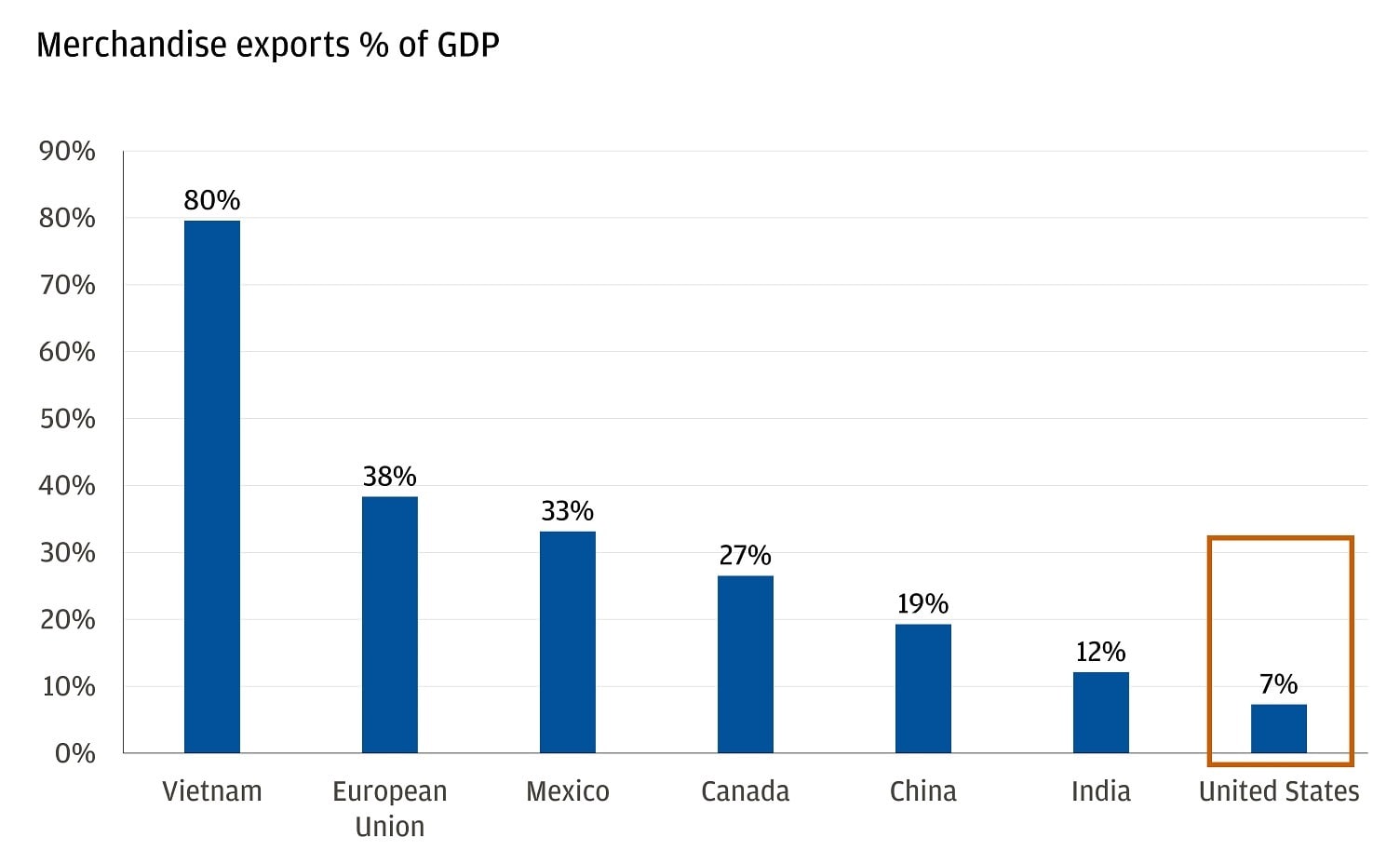
Exports make up a much smaller component of U.S. gross domestic product (GDP) (7%) as compared to for its trading partners (Canada 27%, Mexico 33%, China 19%), making the potential negative growth shock of tariffs less impactful to U.S. growth.
Why can the U.S. levy tariffs?
Illegal immigration has surged into the U.S.
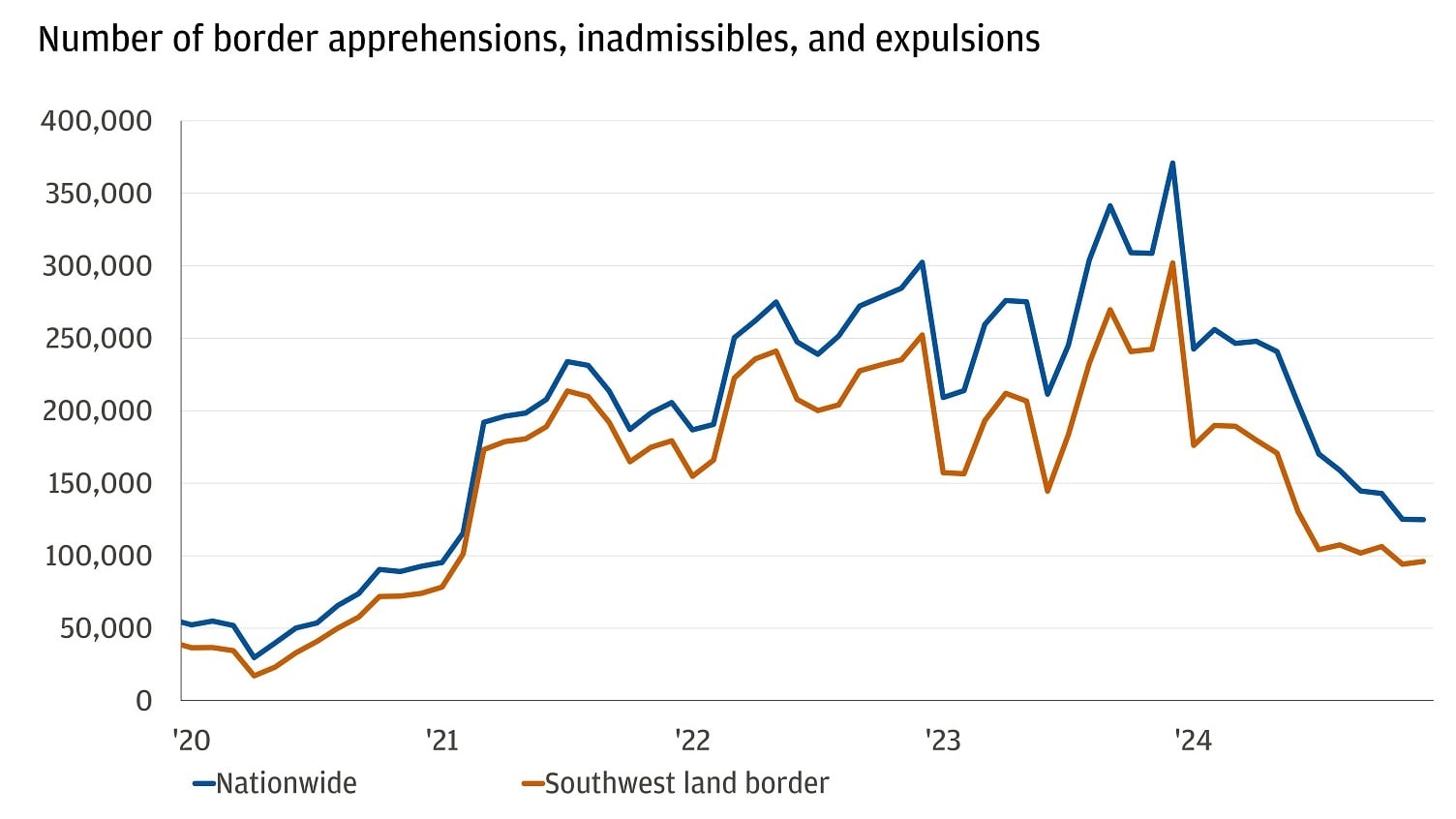
Border encounters peaked at about 350,000 in a single month in late 2023. That number has since fallen, but remains double the pre-COVID level. Encounters at the Southwest land border with Mexico make up roughly 75% of the total over the last three months, while those at the northern border with Canada account for only about 10% (interestingly, 15% of encounters come from non-land borders).
Border encounters declining, Mexican border makes up bulk of encounters
Fentanyl remains a nationwide crisis
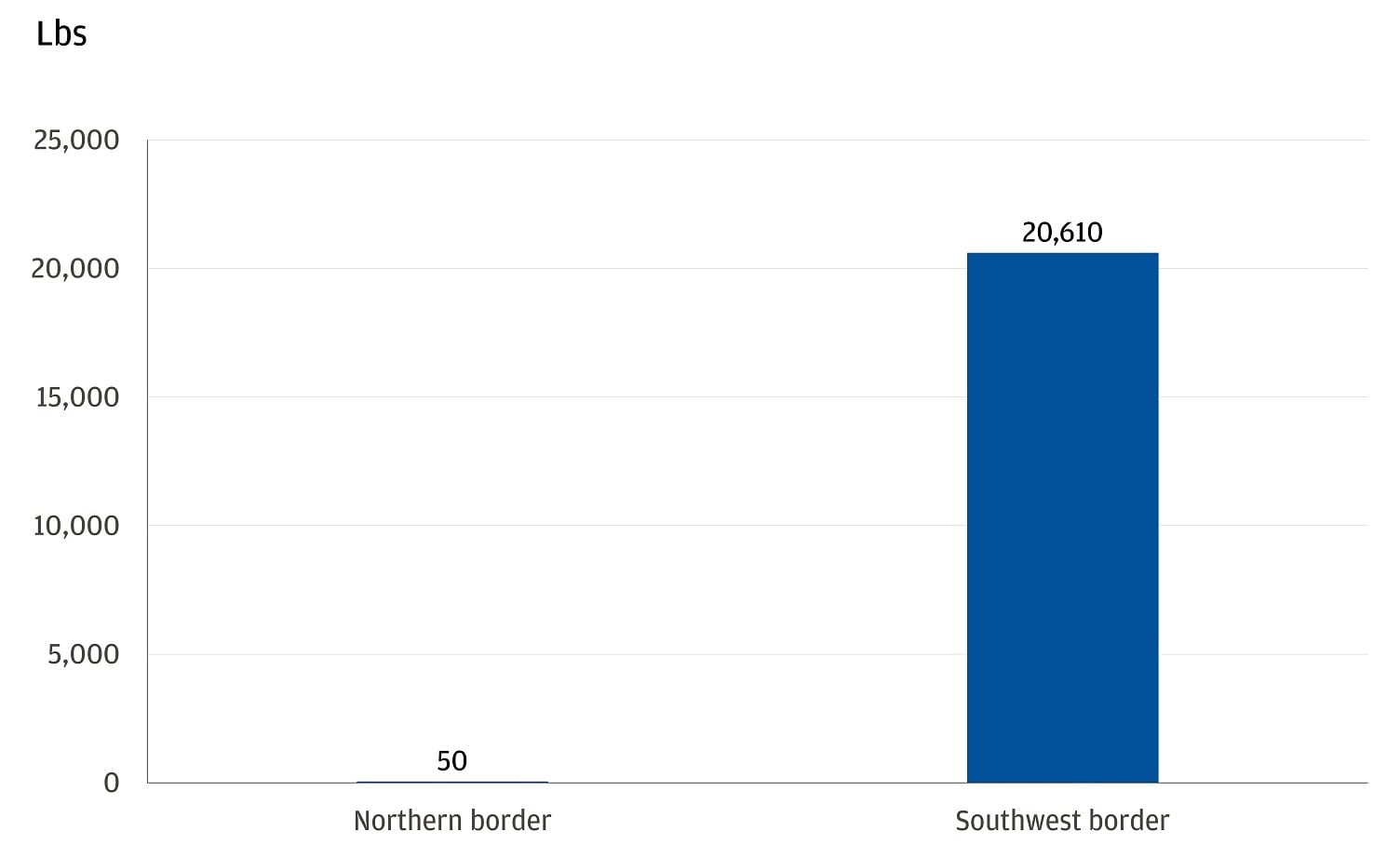
Roughly 21,000 pounds of fentanyl were seized at the Southwest land border in 2024, compared to only about 3,000 pounds in 2019. Deaths from synthetic opioids including fentanyl more than doubled in the U.S. over the 4 years from 2019-2023. In 2024, the U.S. Treasury found that “since 2019, Mexican TCOs (transnational criminal organizations) predominantly import fentanyl precursor chemicals and related manufacturing equipment by air and marine shipping from the People’s Republic of China (PRC).”
2024 U.S. fentanyl seizures
Money laundering
According to the U.S. Treasury’s 2024 national money laundering risk assessment, Chinese money laundering networks are “now one of the key actors laundering money professionally in the United States and around the globe.” The State Department estimates that $154 billion in illicit funds pass through China each year.
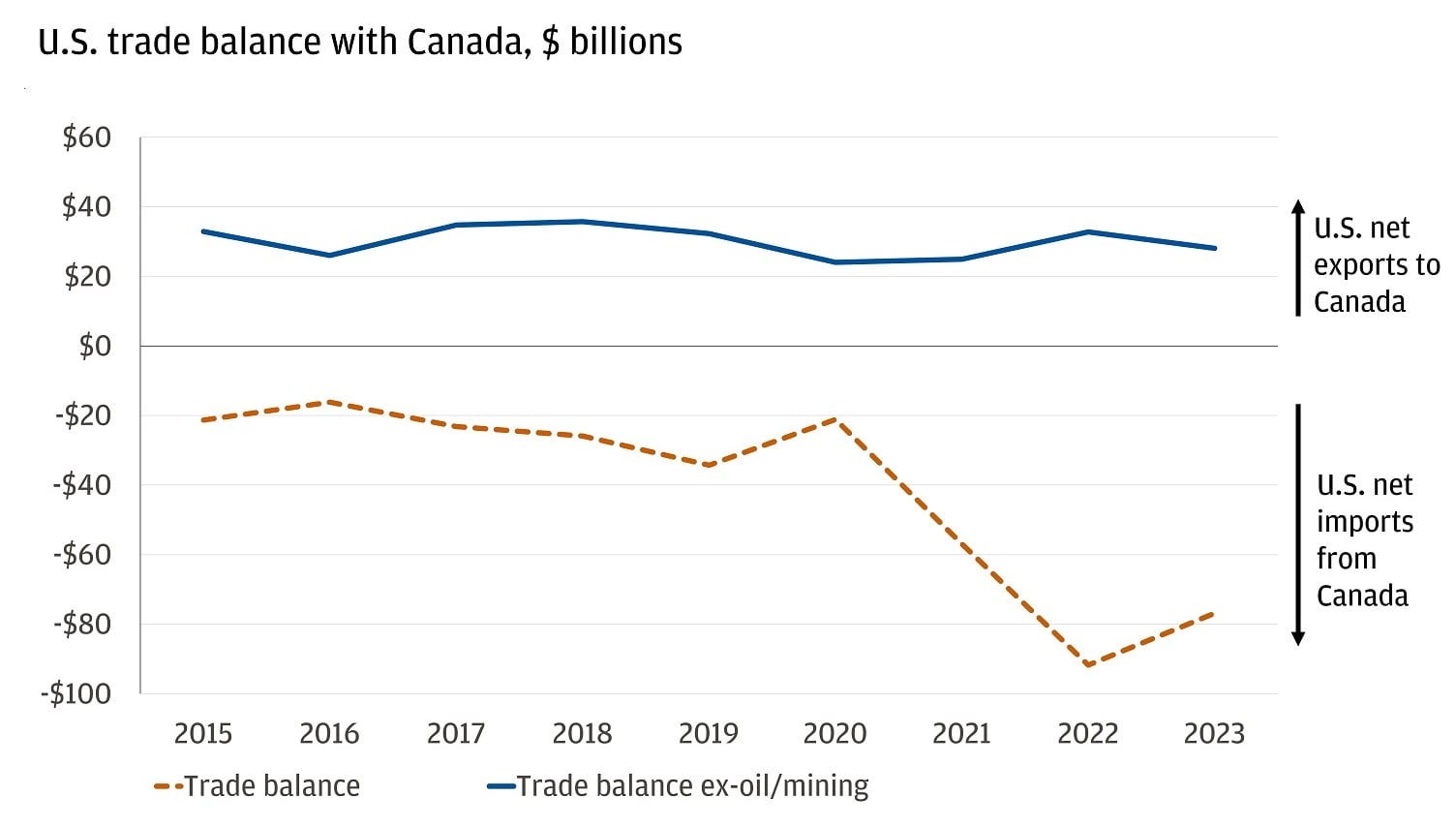
These four issues from the White House fact sheet were used as the justification for the tariff announcements and the ties to China and Mexico seem clear enough. However, it is less clear how those issues directly relate to Canada. It made up only 10% of U.S. illegal immigration encounters, has only had approximately 50 pounds of fentanyl seized by the United States in 2024 and is not explicitly mentioned as a major money launderer in the 2024 risk assessment. However, recent comments from President Trump provide additional rationale for Canada’s tariff inclusion, such as the inability to bank in Canada and the blanket issue that the U.S. buys more from Canada than they do from the U.S.
The U.S. has a negative trade balance with Canada, but a positive one excluding oil products
Actions so far show willingness from Mexico, Canada and the U.S. to work towards progress on the stated issues. On the other hand, the lack of immediate negotiations with China shows the administration’s desire to act first and negotiate later. More evidence of the hard line taken by the U.S. on China was seen through Secretary of State Marco Rubio’s visit to Panama.
The U.S. applied pressure in Panama in an attempt to decrease Chinese influence.
Panama is contemplating the cancellation of its contract with Hutchison Ports PPC, a subsidiary of Hong Kong-based CK Hutchison Holdings Ltd., which operates two key ports near the Panama Canal. This consideration arises amid the Trump administration’s concerns about China’s growing influence over the canal, a vital waterway where 75% of cargo is U.S.-bound or originating.
U.S. and China depend most on the Panama Canal
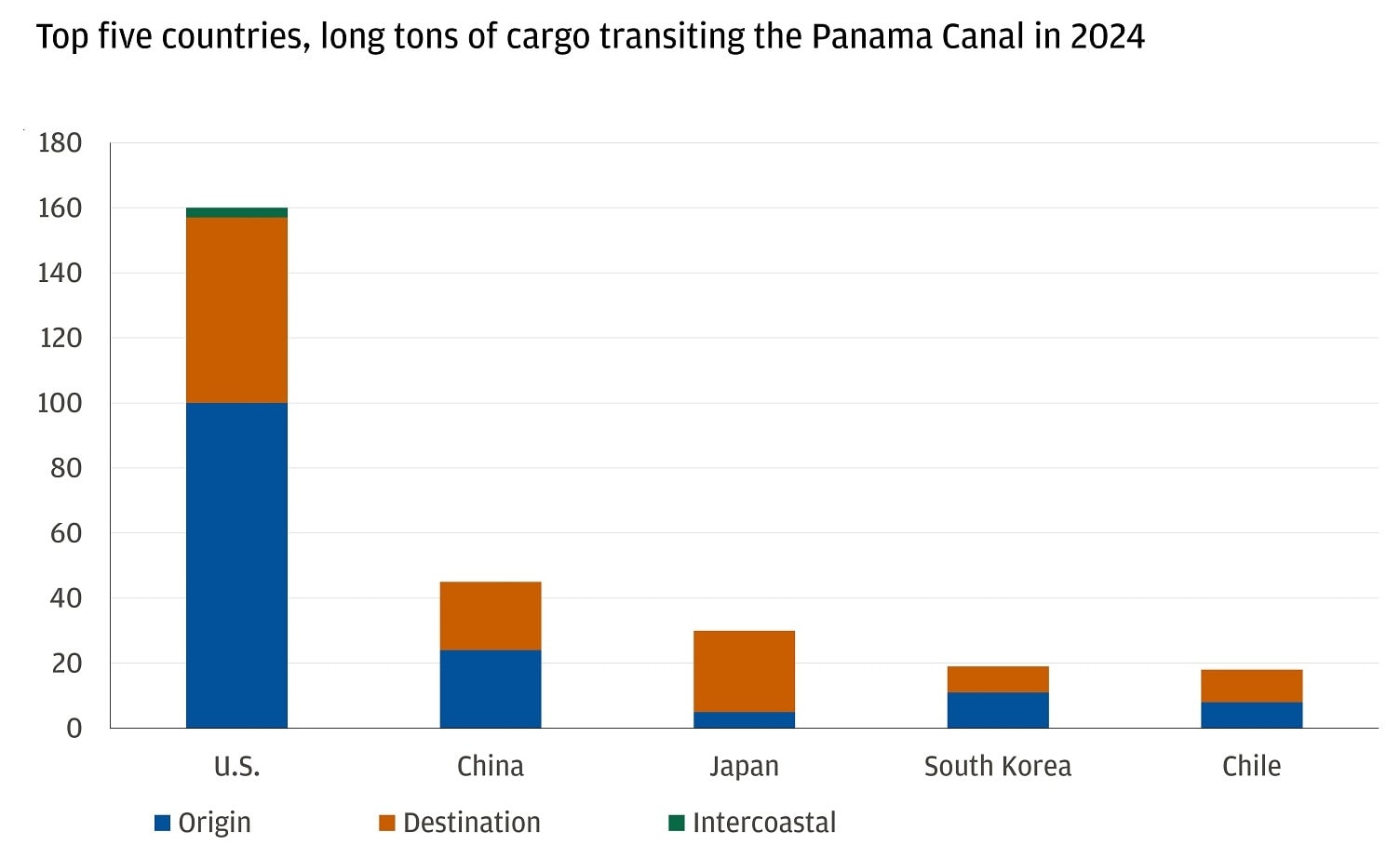
The canal is a significant revenue source for Panama, contributing nearly $5 billion (or 4%) annually to the country’s GDP. The U.S. holds significant economic leverage over Panama as its biggest trade partner and source of foreign direct investment.
The situation underscores the geopolitical tensions surrounding the canal, with the U.S. viewing China’s involvement as a potential military and economic threat.
President Trump proposed a U.S. takeover of Gaza
The idea was largely welcomed by Israel’s Prime Minister Netanyahu to enhance security following the conflict with Hamas. However, the proposal was condemned by members of the international community as an infringement on Palestinian rights and a potential violation of international law.
The proposal has sparked debate about Gaza’s future and the broader Israeli-Palestinian conflict, with ceasefire talks ongoing.
What does all this mean for investors?
The events of this week don’t change our constructive U.S. equity view, but they highlight the increased uncertainty and geopolitical risk of the current environment.
The end goal for tariffs, China relations and foreign policy more broadly remain unclear. Progress with Mexico and Canada implies tariffs may be more of a negotiating tool (for now) with our closest neighbors. However, the tariffs (and their lack of delay) on China signal they are more likely an economic tool aimed at protecting national security.
In the face of uncertainty, investors might consider owning assets that can potentially enhance portfolio resilience, perhaps through steady income and/or uncorrelated returns.
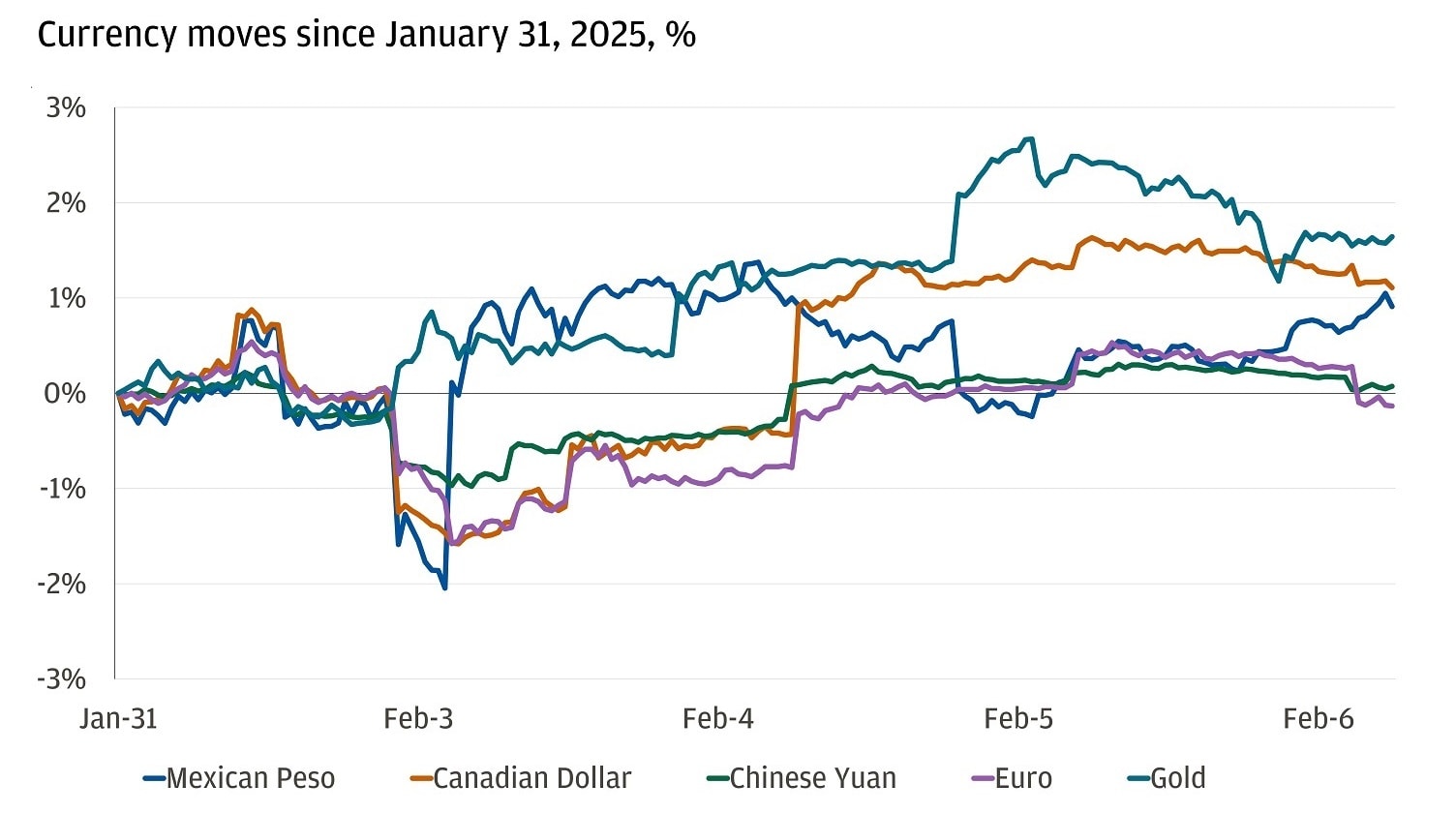
An asset that has shined throughout the uncertainty is gold, for example. The precious metal steadily climbed to all-time highs while tariff-affected currencies swung wildly.
Amid the currency volatility, gold rose to all-time highs
Beyond the diversification benefits that gold may bring to portfolios, we see two additional reasons why gold’s rally could continue in the year ahead:
- Demand from less price sensitive buyers: 81% of central banks surveyed in 2024 by the World Gold Council said they plan on increasing their gold allocations over the next 12 months. Notably, 0% plan on decreasing their allocation.
- Limited supply: Current estimates, including the gold reserves still underground, total 244,040 tons of gold that will ever be available on Earth. If brought together, all the gold deposits would fill just a little over three Olympic-sized swimming pools.
To explore ways to enhance your portfolio’s resilience specific to your own set of goals, contact your J.P. Morgan advisor today.
All market and economic data as of 02/07/25 are sourced from Bloomberg Finance L.P. and FactSet unless otherwise stated.
Explore ways to invest
Take control of your finances with $0 commission online trades, intuitive investing tools and a range of advisor services.