Slower growth, higher inflation and S&P 500 all-time highs

Global Investment Strategist

Slower growth, higher inflation – and markets don’t seem to mind
This week, economic data wasn’t exactly a picture of stability. Yet, markets were largely unbothered. Consider:
- Tariff-induced price increases are starting to show up in inflation data, with the core Consumer Price Index (CPI) coming in at 3.1% year-over-year – a 30-basis-point increase since the indicator bottomed in May. The details suggest that the tariff impact isn’t manifesting as a disruptive spike in prices, but rather a more gradual pass-through that we expect will continue in the months ahead.
- Producer prices jumped 0.9% month-over-month for both headline and core in July. Over half of this broad-based increase was attributable to final demand trade services margins, which surged 2% – reflecting the markup between selling prices and purchase costs and signaling firms are exercising strong pricing power. This reinforces our view that inflation pressures will continue to build.
- Job growth has slowed and while continuing unemployment claims fell modestly from last week’s level, they remain meaningfully higher than they were in January.
- Commercial & industrial loan growth (the pace at which banks are lending to businesses for operations, equipment or expansion) topped 4% year-over-year. The pickup suggests that corporates are still willing to invest and look through tariff headwinds, even as surveys show subdued forward intentions for capex.
With all the data developments taken into account, the S&P 500 still managed to close above 6,400 for the first time ever this week, hitting yet another all-time high as investors focus on secular growth themes and better-than-expected earnings.
It’s the kind of macro backdrop that can make investors feel uneasy – and why, in our Mid-Year Outlook, we said that this is a time to focus on getting comfortably uncomfortable.
Based on data we see from our platform, clients have adopted the same mindset – looking through near-term noise and positioning for the forces that matter most over the long term. Against this backdrop, three trends stand out.
Work with an advisor
Our advisors can provide ongoing financial advice on how your portfolio can adapt to the changes in the market, your life and your goals.
Flows into our in-house AI-related investment strategies in 2025 have already surpassed full-year 2024 totals
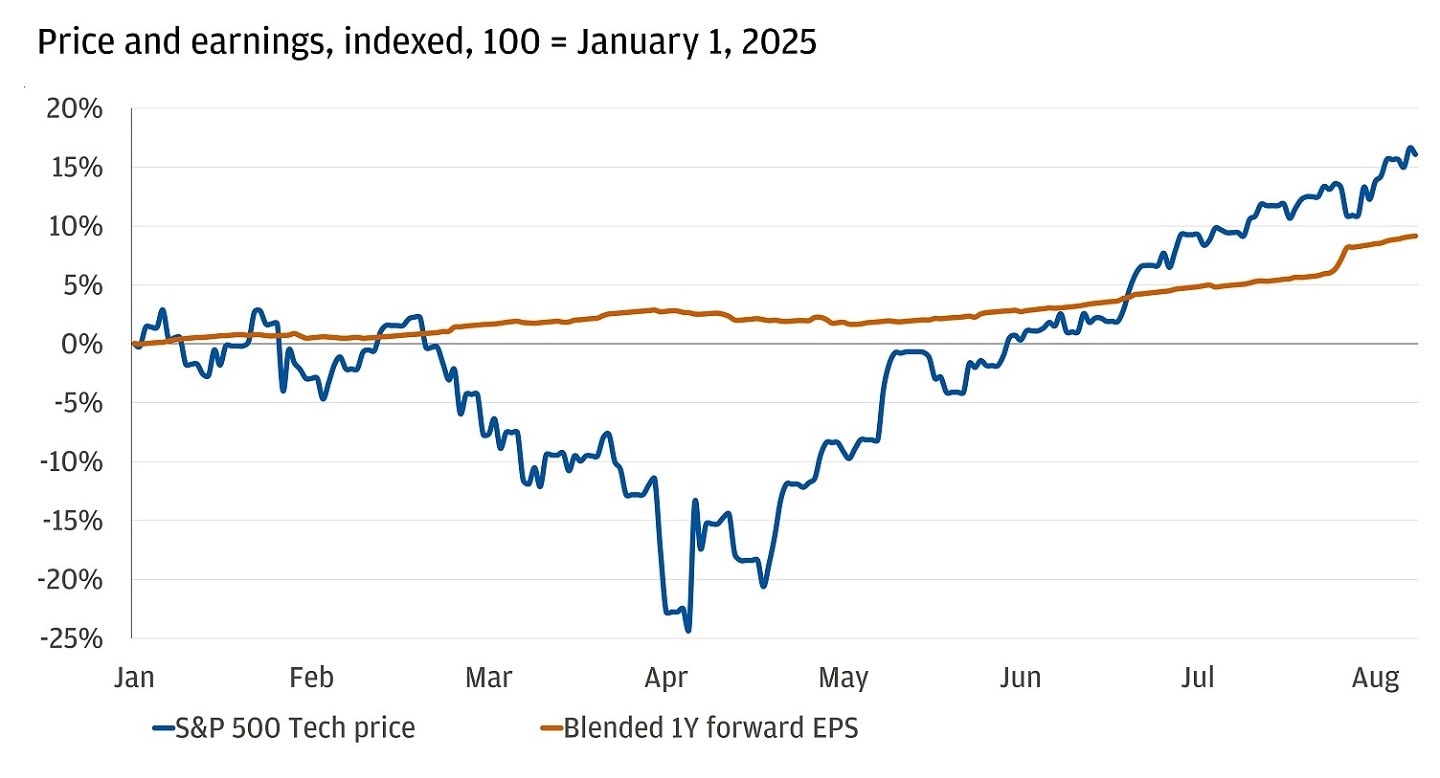
Secular trends are driving the market forward, rewarding those who lean into strength. Overall equity flows are slightly ahead compared to this time last year, with certain sectors making a significant impact. Key drivers include companies at the heart of the artificial intelligence (AI) ecosystem – hardware, software and data infrastructure – delivering above-market earnings growth and raising forward guidance, reinforcing investor belief that AI is not just hype; its applications are already generating revenue. Looking ahead, AI is set to create a virtuous cycle: Higher productivity typically leads to margin protection and sustained capital spending.
Expensive, not a bubble: Valuations backed by earnings growth
Year-to-date flows into equity-linked structured notes are almost two times those from the same time last year
Clients who have been hesitant to add equity exposure at all-time highs have turned to structured notes – capturing market participation with built-in protection. On average, these strategies have been issued at a low double-digit yield with buffers on the downside. In today’s higher-rate, higher-volatility environment, they have offered a way to enhance yield, target high-conviction themes and stay invested while managing downside risk.
Municipal bonds had a record week in July, trading 2.6 times the average national and double the average number of trades year-to-date
This trend highlights significant client activity as they seek long-term, tax-efficient yields. Municipal bond issuance is on track for a record year. While inflation concerns have led to low demand, causing a sell-off at the long end and tightening at the front end, absolute yields remain elevated. Aside from inflationary sell-offs in 2022 and 2023 and the COVID shock of 2020, the Bloomberg Municipal Bond Index hasn’t reached these levels since 2011 on a yield-to-worst basis.
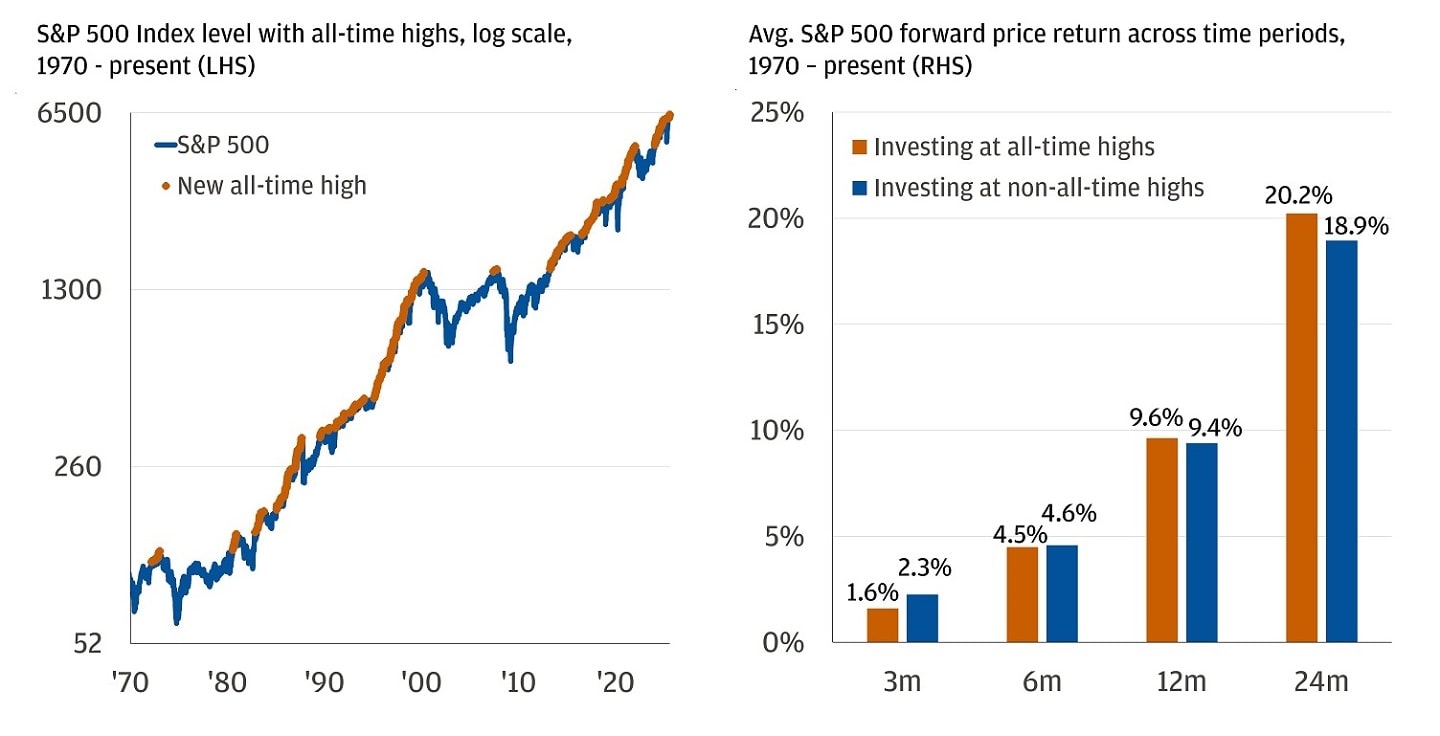
All in all, our clients have embraced the mantra of being comfortably uncomfortable – putting capital to work despite a slowing economy and an uneven macro backdrop. Investing – even at all-time highs – has historically led to consistent gains for long-term investors. Markets making new highs tend to make more of them and investing at these levels has not meaningfully impacted returns. By leaning into opportunities with defined outcomes, structural growth potential and inflation protection, they’ve stayed invested in a way that balances resilience with upside participation.
Investing near “all-time highs” has often led to future gains
All market and economic data as of 08/15/25 are sourced from Bloomberg Finance L.P. and FactSet unless otherwise stated.
Explore ways to invest
Take control of your finances with $0 commission online trades, intuitive investing tools and a range of advisor services.