Tariff tensions reawakened and market volatility: The US-China trade shakeup

J.P. Morgan Wealth Management

Recent headlines have revitalized concerns about the impact that elevated tariff rates could have on corporate profits and economic growth. These challenges have contributed to added market volatility as investors react to renewed U.S.-China trade tensions – with equity indexes declining and U.S. Treasury yields rallying.
What happened on the U.S.-China front?
China significantly tightened its controls on rare earth exports – a critical resource for high-tech industries – by implementing a new rule that requires any product containing more than 0.1% Chinese rare earths, or manufactured with equipment that utilizes them, to obtain a license before it can be exported. This policy is aimed squarely at sectors integral to national security, such as military and semiconductor production, as China seeks to leverage its market dominance in these strategic materials.
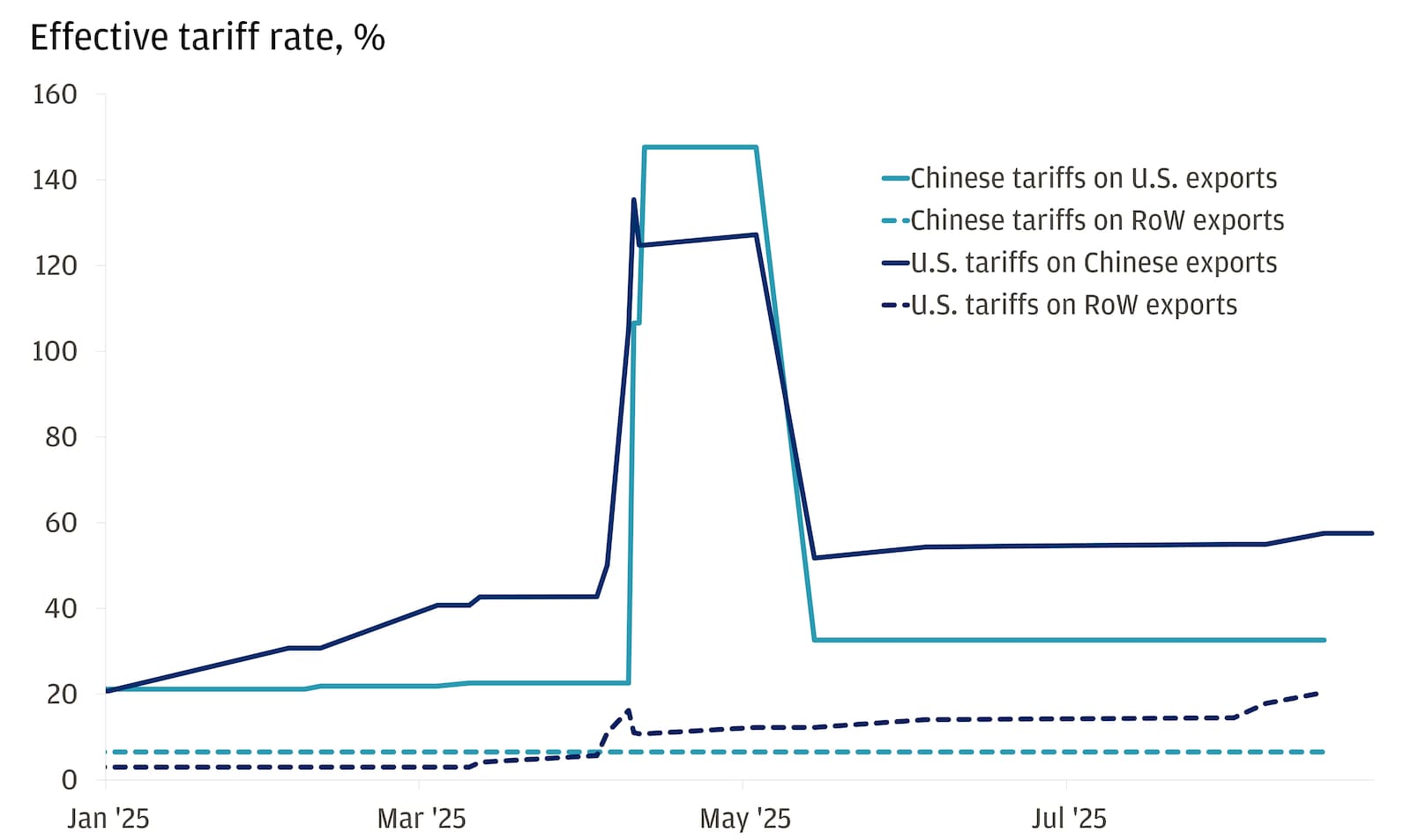
In response, President Trump threatened to escalate U.S. trade measures by imposing an additional 100% tariff on Chinese goods, supplementing an already steep 50% tariff. Moreover, the administration signaled its intent to enforce even tougher restrictions on U.S. chip-design software, a move aimed at curtailing technology transfers that have long fueled China’s tech ambitions. The timeline for these measures is set for November, providing some time for negotiations.
Building on these developments, we expect continued talks between President Xi and President Trump, with both leaders set to meet at the upcoming APEC meeting in South Korea at the end of this month. This high-stakes meeting comes as both nations review their trade and export control policies amid evolving global market conditions. While a resolution seems achievable, the situation remains fluid.
Ready to take the next step in investing?
We offer $0 commission online trades, intuitive investing tools and a range of advisor services, so you can take control of your financial future.
If a short-term agreement is not reached and the proposed measures take effect, the impact could essentially restrict Chinese exports to the US, disrupt manufacturing, and impede the advancement of China’s semiconductor development. Although both countries have been gradually reducing bilateral trade exposure since early in the year, these adjustments may temper near-term economic growth.
What does this mean?
If the last six months have shown anything, it’s that markets can transform panic into resilience by refocusing on fundamentals. Already this week, President Trump has signaled openness to a potential trade deal with China. While markets remain cautious, the underlying strength of the U.S. economy should not be ignored. Before Friday’s selloff, the S&P 500 logged 119 consecutive trading days without a 2% drop, and stocks are rebounding as President Trump tempers the latest trade threats. Since the “Liberation Day” upheaval, the CBOE Volatility Index (VIX) has returned to historic lows, and Treasury yields have steadied. Rather than buckling under pressure, markets have shown an impressive ability to regain their footing.
The takeaway isn’t certainty – it’s agility
We’re now more than ever focused on portfolio resilience: being prepared for a range of outcomes in a world where the rules are still being rewritten. In this environment, investors are wise to maintain a balanced perspective. While the current challenges and uncertainties serve as reminders of the ever-present risks in today's geopolitical and economic landscape, they also offer opportunities for those who can identify value amid the chaos.
Reawakened trade war may push U.S. & China effective tariff rates even higher
All market and economic data as of 10/14/2025 are sourced from Bloomberg Finance L.P. and FactSet unless otherwise stated.
You're invited to subscribe to our newsletters
We'll send you the latest market news, investing insights and more when you subscribe to our newsletters.