Oil, the Fed and AI: 3 themes driving markets

Global Investment Strategist
- The Federal Reserve (Fed) left interest rates unchanged at its July meeting as the inflation outlook remains uncertain.
- An increase in oil prices related to a re-escalation of geopolitical tensions contributed to a choppy month for global equities in July.
- While investors may remain focused on artificial intelligence (AI), geopolitics and the Fed, strong corporate earnings are a primary reason we continue to hold a constructive view on U.S. equities over the next 12 months.

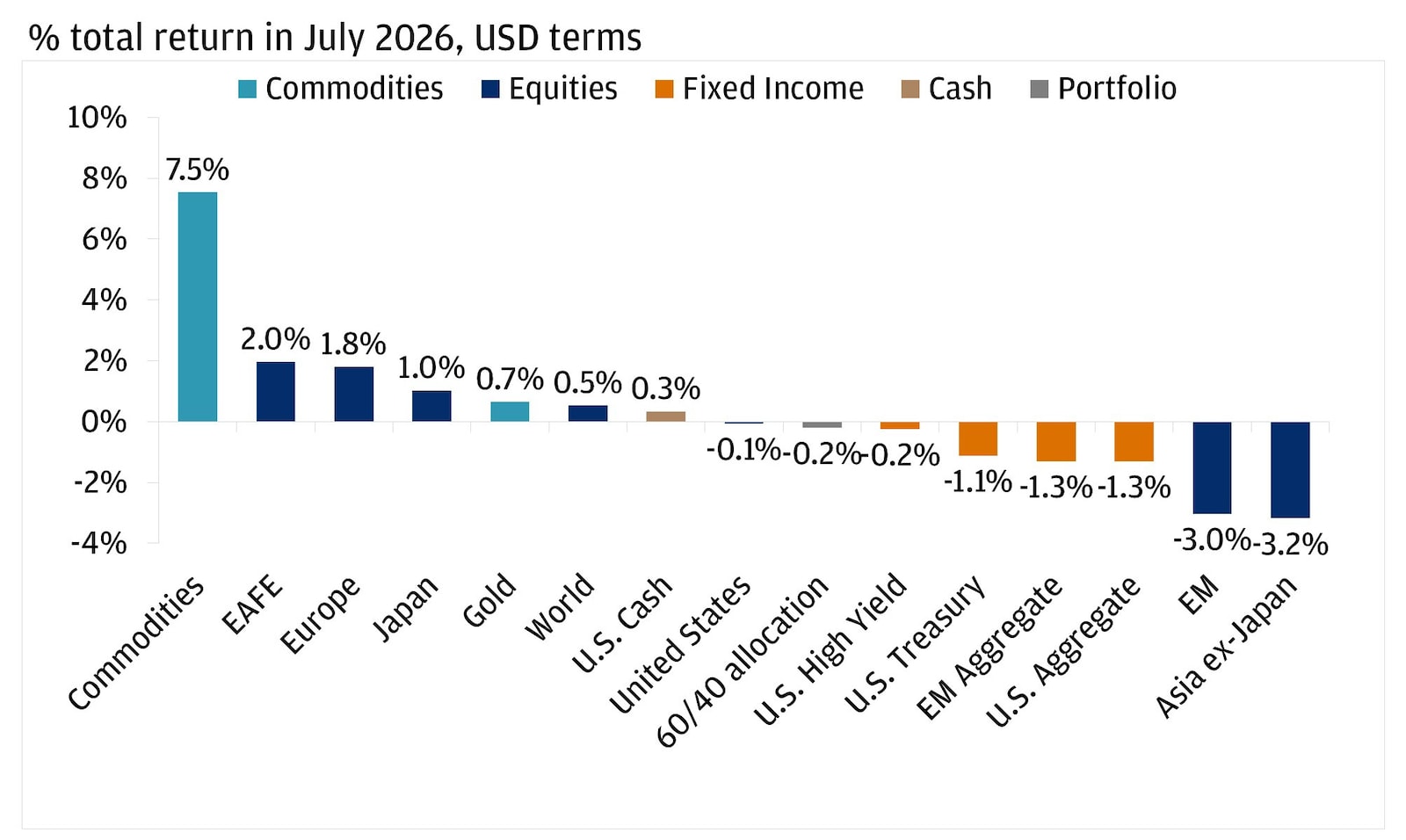
If there was one theme that defined markets in July, it was the return of uncertainty. Oil prices (+20.5%) moved sharply as tensions in the Middle East rose and eased throughout the month. Higher oil prices have increased inflation, raised expectations that the Federal Reserve (Fed) will hike interest rates and weighed on equities. Emerging market (-3.0%) and Asia ex-Japan (-3.2%) equities declined sharply. Europe (+1.8%), U.S. (-0.1%) and Japanese (+1.0%) stocks proved more resilient.
Commodities outperformed in July as Middle East conflict re-escalated
In this article, we discuss how these developments shaped markets in July and consider what investors may want to watch moving into August.
The resurgence of geopolitical tensions pressures oil prices
In July, investors closely monitored the alternating periods of escalation and cease fire developments in the Middle East involving Israel, the U.S. and Iran. The conflict followed an uneven path throughout the month. U.S. strikes were followed by Iranian retaliation, and oil prices surged. Ceasefire discussions emerged, and oil prices fell. Then hostilities re-escalated.
Throughout its duration, we have maintained the view that the Iran conflict would not become the severe shock many feared. Our base case has been that the conflict would ultimately de-escalate. June’s memorandum of understanding between Washington and Tehran seemed to support that view, and the spot price of crude promptly fell, ending June near pre-conflict levels at around $70 per barrel. That period of calm ended quickly with both sides exchanging strikes throughout July, helping to push oil to near $100 per barrel at one point in the month before prices ultimately ended July in the mid-$80s.
A key focus now is that inventories are likely lower, making each round of escalation potentially more significant. Global oil inventories provided a buffer during the first phase of the conflict, particularly in the U.S. and China. As the conflict has dragged on, that shock absorber has thinned. If the Strait of Hormuz remains closed for an extended period, there could be less spare product available to cushion prices.
Fading momentum of tanker traffic is pushing oil prices higher
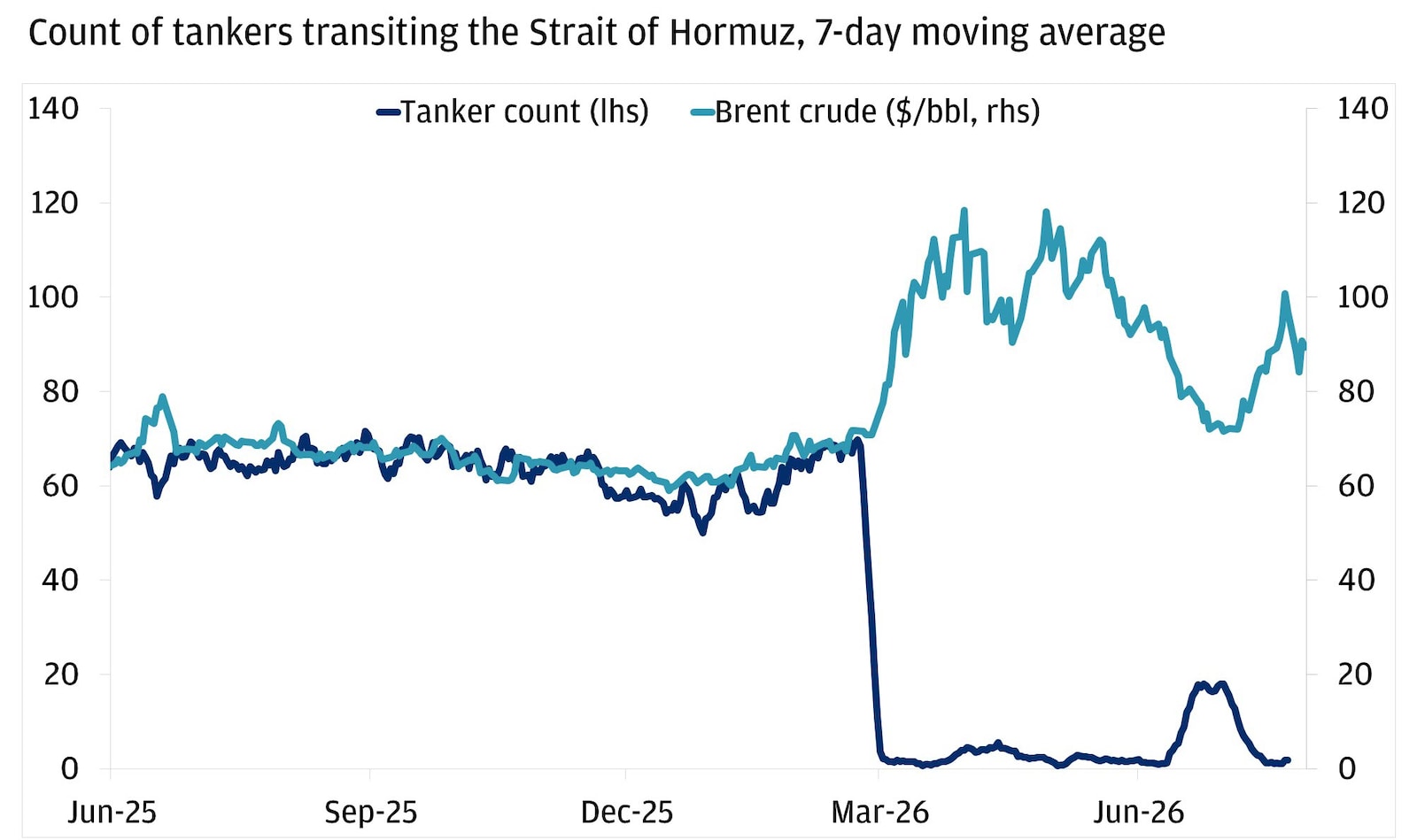
We continue to expect the conflict to progress toward de-escalation, believing that the U.S. administration understands the risks of a prolonged conflict coupled with dwindled reserves, which could cause oil prices to climb significantly.
Interested in working with an advisor?
Work 1:1 with our advisors to help build a personalized financial strategy that’s built around you.
The Fed waits for more evidence
One reason investors pay such close attention to developments in energy markets is because oil is a key input across the economy, and higher oil prices can affect costs for transportation, manufacturing, shipping, gasoline and utilities. This means oil prices can impact the price stability side of the Fed’s dual mandate.
Following the moderation in oil prices during June, inflation also cooled. The Consumer Price Index (CPI) slowed to 3.5% year-over-year in June from 4.2% in May. With oil prices moving higher again during July, however, there is greater uncertainty surrounding the inflation outlook. The Federal Open Market Committee (FOMC) ultimately kept rates unchanged in July, but Chair Kevin Warsh emphasized that the Fed is focused on broader trends in the data rather than any single economic report. Energy prices will likely remain an important variable influencing the path of inflation.
Even with the recent moderation in inflation, price pressures remain above the Fed's 2% target. Simultaneously, the labor market continues to hold up well. The unemployment rate remains a relatively healthy 4.2%, suggesting policymakers can continue focusing on inflation without facing significant pressure from a weakening or overheating labor market.
The Fed is focused on achieving price stability
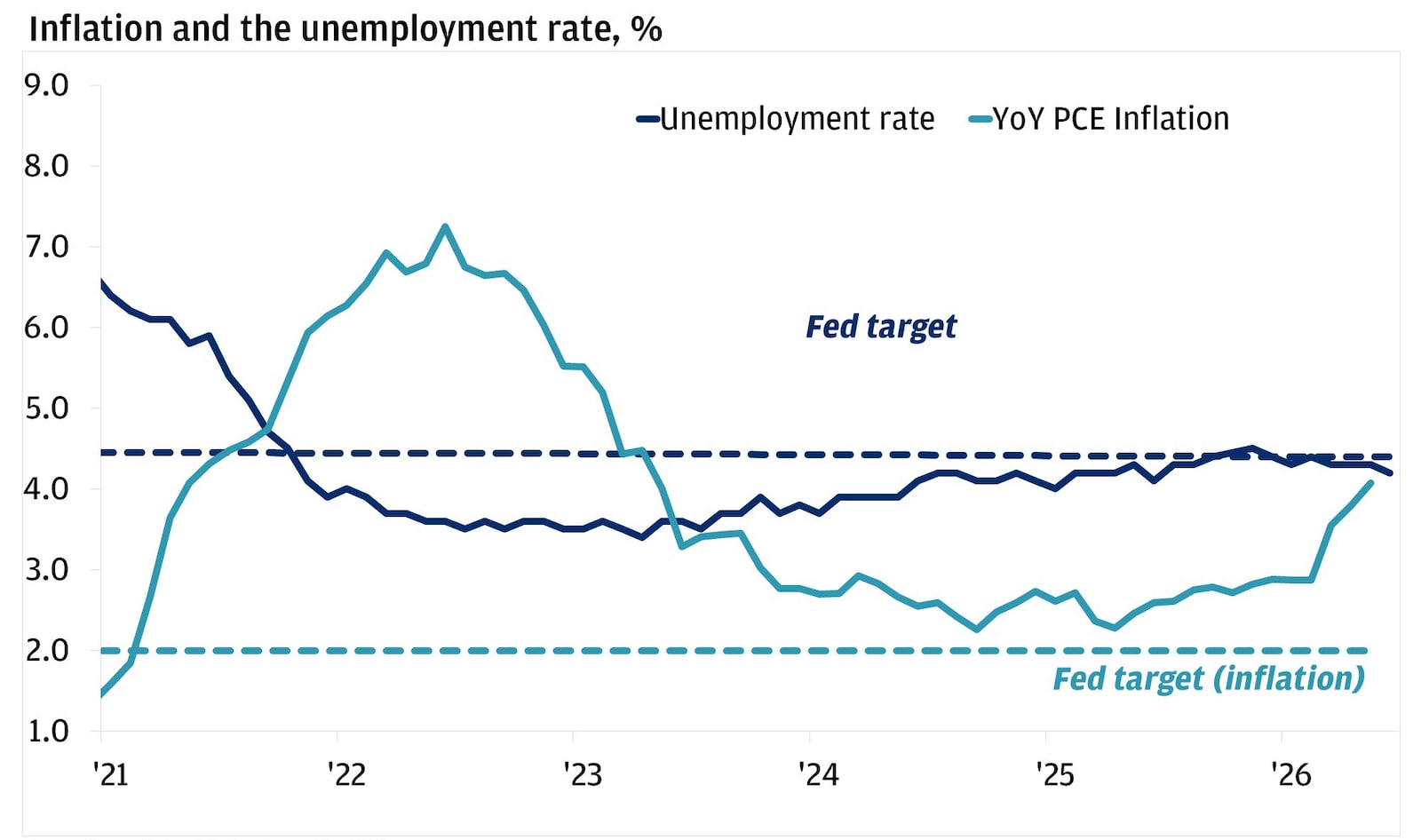
Our previous base case was for the Fed to remain on hold this year, as we expected inflation to undershoot Fed forecasts as energy prices and supply chains held. Following July’s developments, we’ve updated our view, and we believe the Fed is more likely than not to hike. We’re now penciling in a single 25-basis-point increase in the federal funds rate this year as the normalization of supply chains around the Strait of Hormuz could take longer than we initially expected.
We do believe that a path in which a hike is avoided still exists, but it likely depends on incoming inflation readings and developments in energy markets. For investors, no matter what the Fed ultimately decides, we don’t think this should spark meaningful changes in investment strategies. However, it could be a good time to conduct a portfolio review and ensure allocations are aligned with goals and risk tolerance.
Earnings season puts AI optimism to the test
July was a choppy month for most major equity regions as the re-escalation of the conflict helped cause risk-off market moves. Investors saw emerging markets impacted more severely by the higher energy prices. In the U.S., one key fundamental driver remains particularly strong: earnings.
With roughly a quarter of S&P 500 companies having reported results so far, earnings are estimated to grow more than 47% year-over-year. Even excluding one-time gains driven by private investments for Google parent Alphabet, earnings growth would still mark the seventh consecutive quarter of double-digit expansion and the second consecutive quarter above 20%. Notably, earnings growth this strong is rare.
Earnings super-cycle continues, with >20% earnings growth expected in 2026
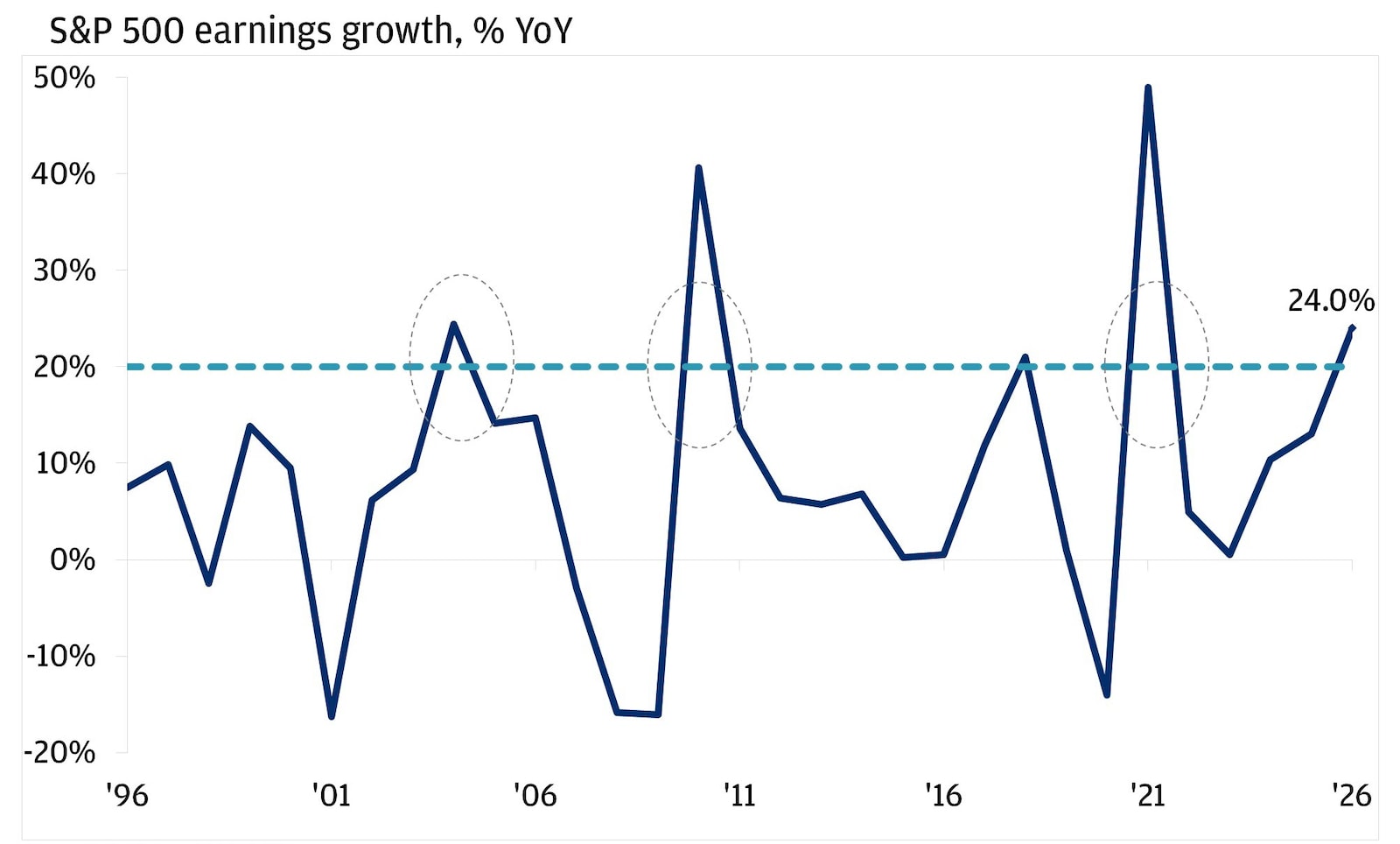
Investors also continued to closely watch whether investments related to artificial intelligence (AI) are generating meaningful business results. Microsoft was rewarded for stronger-than-expected Azure growth and continued confidence in its AI investment plans, while Facebook parent Meta faced pressure after raising spending expectations. The differing reactions reinforced a key theme this earnings season: Investors remain enthusiastic about AI, but they are increasingly demanding evidence that those investments will translate into future earnings growth.
In the long run, earnings drive stock returns. While investors may remain focused on AI, geopolitics and the Fed, strong corporate earnings are a primary reason we continue to hold a constructive view on U.S. equities.
The bottom line
July’s message for investors was a reminder not to react to headlines but to understand how those headlines flow through the economy and markets.
Higher oil prices renewed inflation concerns. Inflation kept the Fed cautious. And higher monetary policy uncertainty raised the bar for companies with elevated growth expectations, especially in AI-related areas. As we move into August, continued geopolitical and policy uncertainty reinforces the role diversification can play in portfolios.
A balanced portfolio may not capture every short-term winner, but it can potentially help investors mitigate drawdowns while participating in long-term growth. Your J.P. Morgan Wealth Management advisor is here to help.
Invest your way
Not working with us yet? Find a J.P. Morgan Advisor or explore ways to invest online.