What to do when the Fed cuts rates: Three moves for your portfolio

Global Investment Strategist

Just as professional football teams develop a game plan before facing each opponent, investors can benefit from preparing for potential future shifts in the financial landscape. As we discussed last week, markets widely expect that the Federal Reserve will cut interest rates by 25 basis points this week to support a cooling labor market. Understanding the potential effects rate changes can have across financial markets and the economy could help investors make decisions in their portfolios.
Here are three plays to consider running in your portfolio as the Fed appears ready to shift into an easing cycle.
An easing Fed could lower returns on cash-like holdings going forward
One place investors may notice impacts of rate cuts is in their cash-like holdings (think savings accounts, certificates of deposit (CDs) and money market funds), which typically see a decline in yields as the Fed cuts rates.
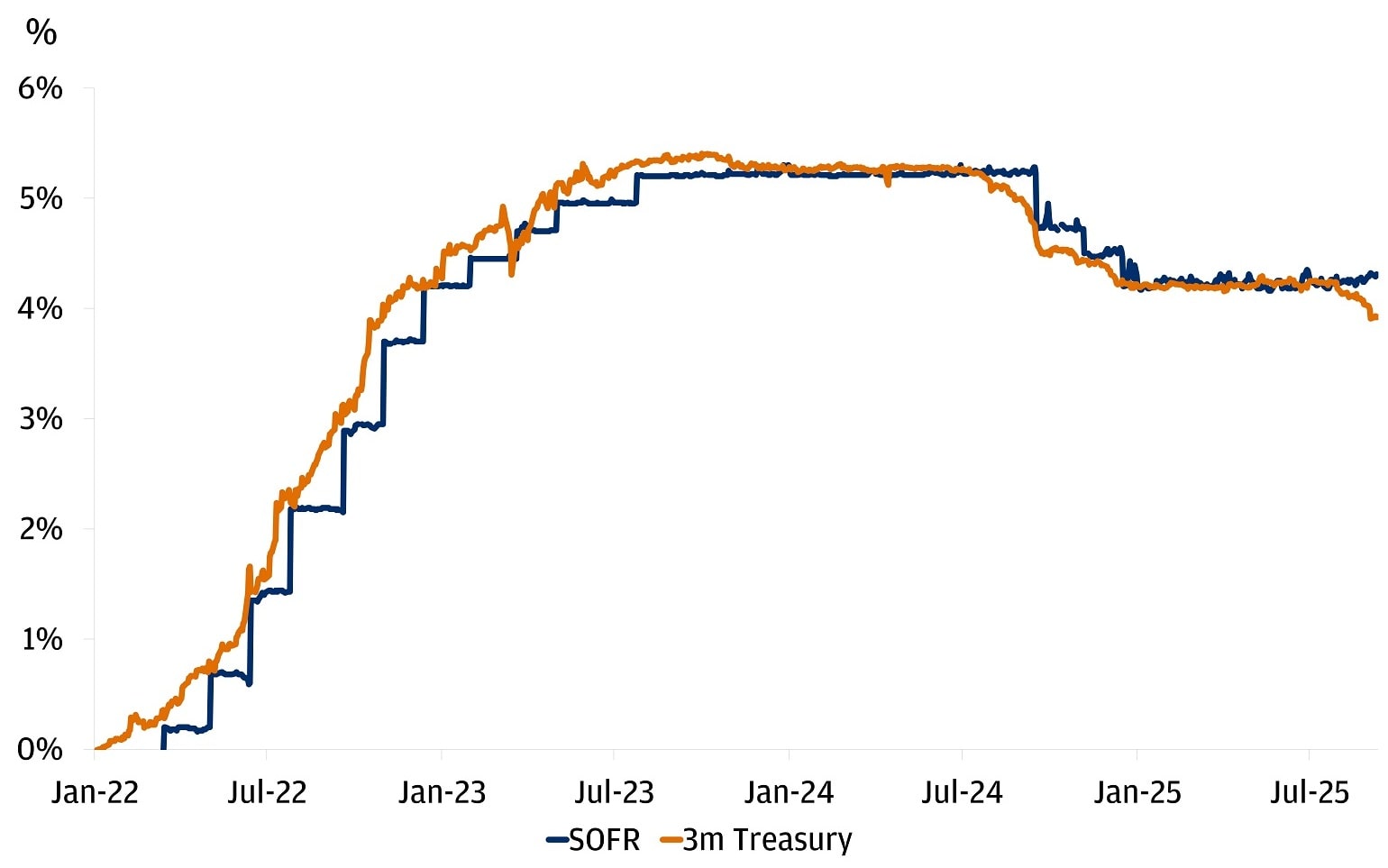
To see this in action, we can look at how the Secured Overnight Financing Rate (SOFR), which closely tracks the Fed’s policy rate, moves in comparison with yields on the 3-month Treasury bills, which are often considered a cash proxy. The SOFR moves in tandem with the federal funds rate, so as the Fed cuts, the SOFR also falls. On the other hand, the yield on the 3-month Treasury bill typically changes in anticipation of Fed moves. The chart below shows that the SOFR is sitting around 4.4% while the 3-month Treasury bill yield has already dropped to about 4.1%, reflecting that the expectations for rate cuts have already started to impact yields on cash-like instruments.
Cash yields are falling ahead of rate cuts
Our expectations are for 100 basis points of cuts over the next year, meaning that it’s possible yields on cash-like products will decline even further. To avoid potentially receiving less income on the same investment going forward, we suggest investors consider locking in the higher yields that are available now, focusing on high-quality corporate or municipal bonds.
Ready to take the next step in investing?
We offer $0 commission online trades, intuitive investing tools and a range of advisor services, so you can take control of your financial future.
U.S. stocks could benefit from Fed cuts
When thinking about how to position portfolios during a cutting cycle, investors should consider why the Fed is cutting rates – is it to rescue the economy from a recession or simply to help provide a boost to keep the economic expansion alive? A still-resilient consumer, elevated corporate profit margins and a continuation of increased corporate capital investment, especially in areas like artificial intelligence, help us believe it is the latter.
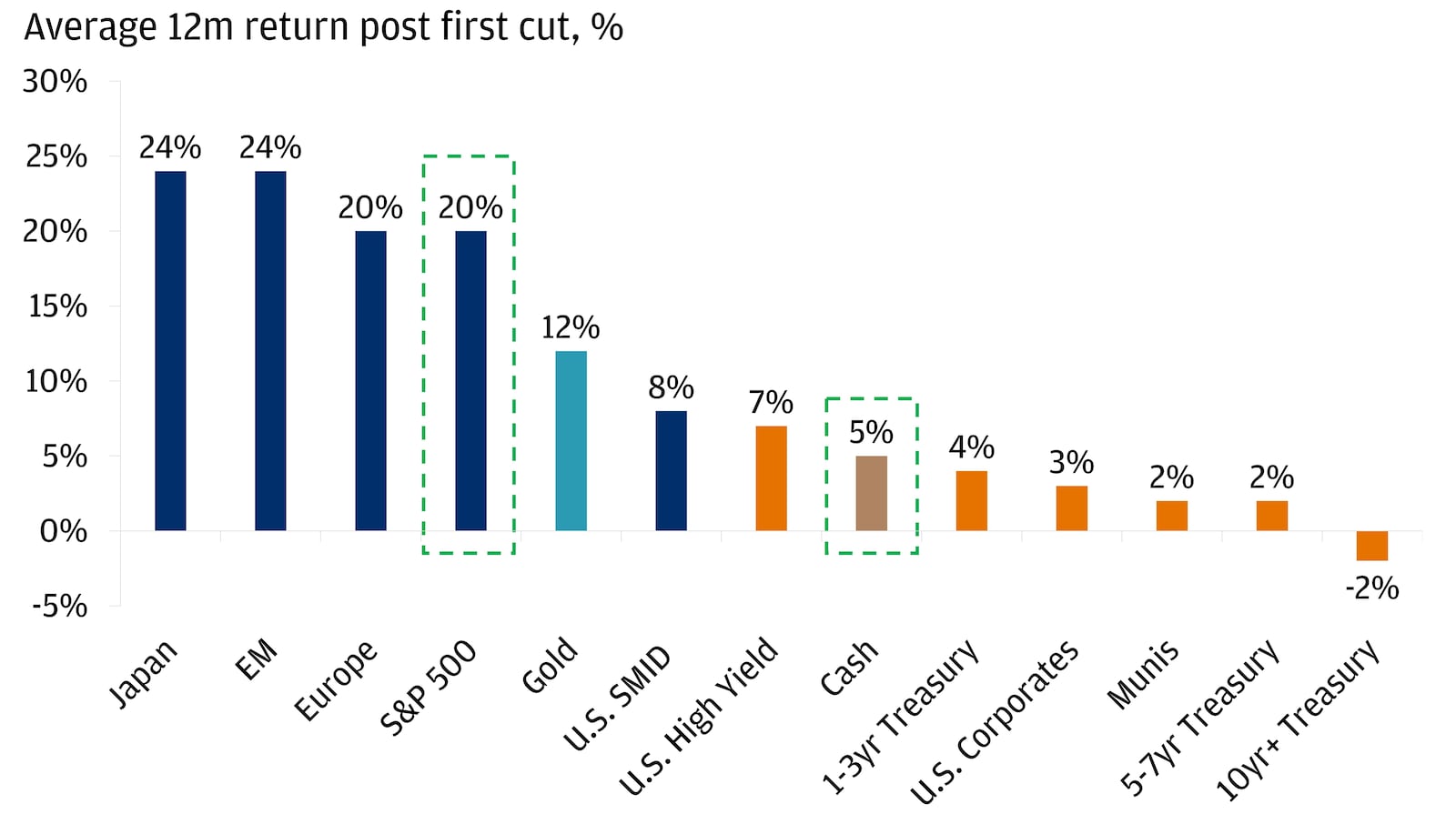
This “soft landing” scenario is an important distinction for investors. History shows that non-recessionary cutting cycles bode well for risk assets. The chart below highlights average 12-month returns for major asset classes following the first Fed rate cut in non-recessionary cycles. Equities – including Europe and the U.S. – have delivered strong performance, with the S&P 500 averaging a 20% gain compared to single-digit returns for cash.
Easing financial conditions, absent a recession, can be an ideal scenario for stocks, as it reduces borrowing costs for companies and consumers – potentially providing more fuel to the equity rally.
Risk assets perform well in non-recessionary cutting cycles
Explore gold and structured notes to hedge against risks to the outlook
Even with a positive outlook that U.S. equities can continue to rally, markets can be unpredictable. There are ongoing risks to the outlook, such as tariffs, that could put a drag on growth and lead to elevated inflation. While we think the economy will avoid a recession, it is wise to consider incorporating assets that can potentially hedge portfolios if risks materialize.
Often seen as a hedge to rising inflation, gold has been one of the best performing assets so far this year as the tariff-driven inflation uncertainty remains in the backdrop. Investors could also consider structured notes, which may offer downside hedging in the event of market pullbacks while also maintaining some exposure to market upside.
Your Fed rate cut playbook
The Fed shifting toward lower interest rates can have impacts on consumers, businesses and the economy. A well-thought-out game plan that positions portfolios to capitalize on the changing financial conditions could help in achieving your financial goals.
All market and economic data as of 09/17/2025 are sourced from Bloomberg Finance L.P. and FactSet unless otherwise stated.
You're invited to subscribe to our newsletters
We'll send you the latest market news, investing insights and more when you subscribe to our newsletters.