More than one way to skin the labor market: October ADP shows a slight rebound in job growth

Global Investment Strategist

The saying “there’s more than one way to skin a cat” has always seemed odd – who’s actually skinning cats? But when it comes to the labor market, the idea holds true: There’s more than one way to get the data we need. With the government shutdown putting traditional sources on hold, alternative methods are essential. Private-sector employment and payroll data have stepped up as our new go-to resources.
Adapting to missing government data
Economists typically rely on data points such as weekly jobless claims and nonfarm payrolls to gauge the labor market. But with the Bureau of Labor Statistics unable to operate during the shutdown, those indicators are unavailable. This impacts not only those whose paychecks are directly affected, but also those of us tracking employment, wages and inflation. In response, we’re turning to other sources. Private-sector data is providing a more nuanced – and less dire – view than the headlines suggest.
Ready to take the next step in investing?
We offer $0 commission online trades, intuitive investing tools and a range of advisor services, so you can take control of your financial future.
State-level unemployment claims
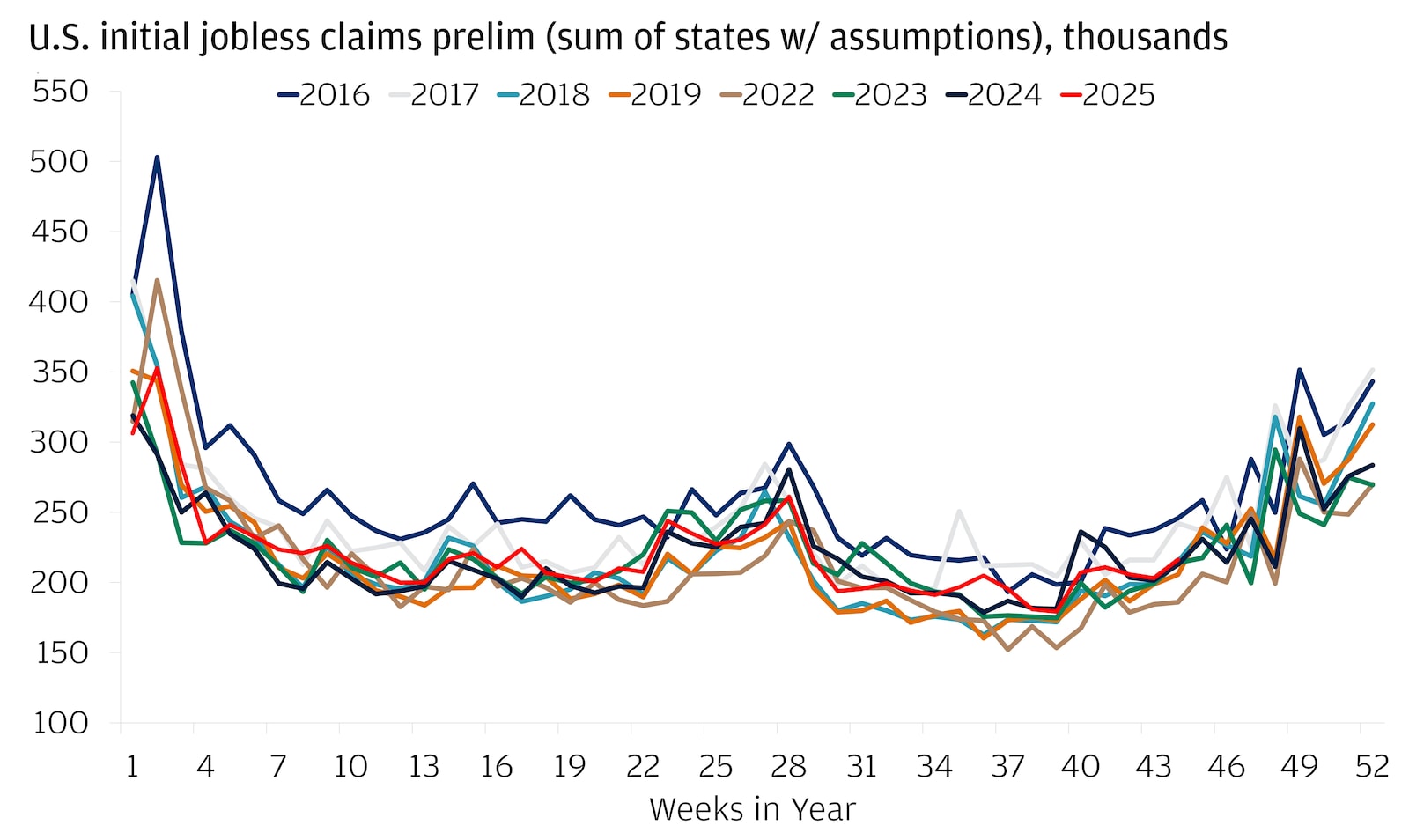
With the Labor Department’s weekly jobless claims report paused since September, we’ve improvised by using state-released unemployment claims data. By applying standard seasonal adjustment factors, we can smooth out fluctuations and approximate the national figures. While not perfect (e.g., missing recent data from New Mexico), this method still allows us to estimate trends. For the week ending November 1, seasonally adjusted initial jobless claims rose to about 228,000 – a stable level.
U.S. initial jobless claims trends: Analyzing state-based estimates
But how can private-sector payroll data paint a picture for us? Here are just a few other ways we can check the pulse of the labor market:
- Challenger report:
October saw 153,074 job cuts, up 175% from last year and nearly triple September’s number. Total job cuts for the year reached 1,099,500 – a 65% increase from last year. However, many layoffs were concentrated at large companies like UPS and Amazon, which can skew the overall picture. Importantly, hirings surged even more, with 283,000 new jobs in October. Unlike 2008, layoffs are not dramatically outpacing hirings. - National Federation of Independent Business (NFIB):
The October NFIB report is optimistic: 56% of small business owners are actively recruiting, especially in construction and transportation. While wage increases have slowed, future pay hikes are planned, signaling ongoing confidence. - ADP private-sector data:
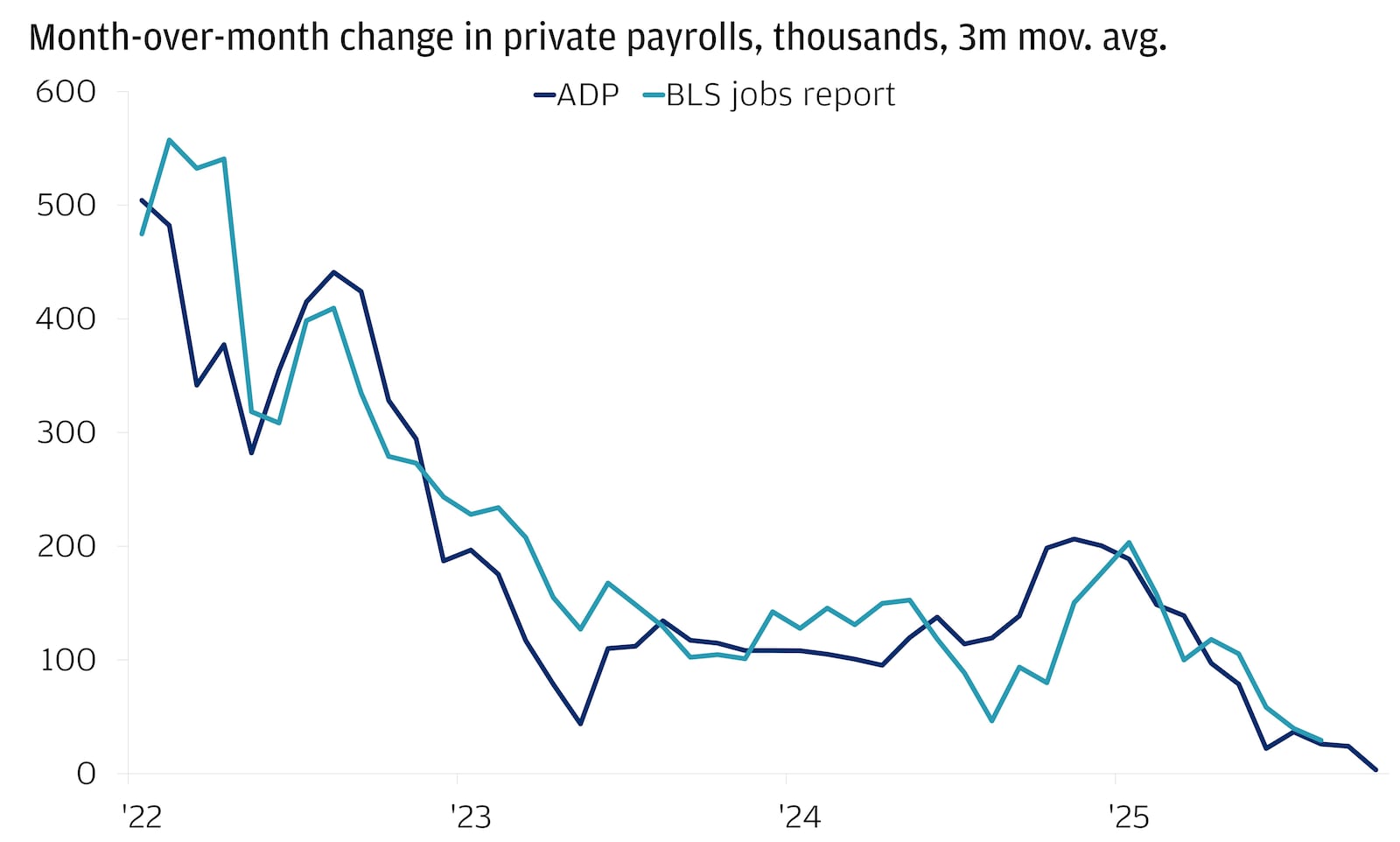
ADP’s October report showed private-sector jobs increasing by 42,000, with wages up 4.5% year-over-year. Growth is driven by education, health care and trade. Despite some job losses in certain industries, others are hiring, keeping the overall market balanced.
October ADP private payrolls slightly better than expected
The bottom line
Recent data from private sources and business surveys show a labor market that’s adjusting, not collapsing. While hiring has slowed and some companies are making cuts, others are still adding jobs, and overall unemployment claims remain steady. It looks like the worst may be behind us for now. In fact, most businesses are still doing well, talk of job cuts hasn’t picked up and small firms are starting to look for new talent again. All in all, the labor market is bending but not breaking – and signs of stability are tentatively beginning to emerge.
All market and economic data as of 11/10/2025 are sourced from Bloomberg Finance L.P. and FactSet unless otherwise stated.
You're invited to subscribe to our newsletters
We'll send you the latest market news, investing insights and more when you subscribe to our newsletters.