Why US markets have been volatile this week

Global Investment Strategist

Markets have taken a step back from recent all-time highs, with the S&P 500 slipping nearly 3% since the middle of last week. This pullback reflects recent concern investors have about a potential artificial intelligence (AI) bubble and weakening labor market data.
What’s been moving markets this week?
Recent market moves have been largely driven by a sense of nervous anticipation as investors are closely waiting for two events:
- NVIDIA’s Q3 earnings report: Scheduled for release after today’s market close, this report is seen as a key indicator for the ongoing AI-driven rally. Many are looking for any signs that the momentum in technology stocks can continue.
- September jobs report: Initially delayed due to the government shutdown, the September jobs report is set for release on Thursday of this week. This report could provide a signal about the health of the labor market and influence expectations for the Federal Reserve’s interest rate path.
Ready to take the next step in investing?
We offer $0 commission online trades, intuitive investing tools and a range of advisor services, so you can take control of your financial future.
Stay invested, stay focused
While headlines may create investor anxiety in the near-term, it’s vital to remember that volatility is a feature, not a bug, of investing. Despite intra-year pullbacks, equity markets have tended to reward long-term investors over time. Since 1980, the S&P 500 has experienced an average intra-year decline of 14%. In 16 of those 44 years, the intra-year pullbacks were even steeper. These fluctuations are part of the investing journey. The full-year return ended up positive in 33 out of those 44 years – about 75% of the time. This means that, even with significant swings, staying invested has historically paid off.
Despite intra-year swings, equities tend to reward investors over time
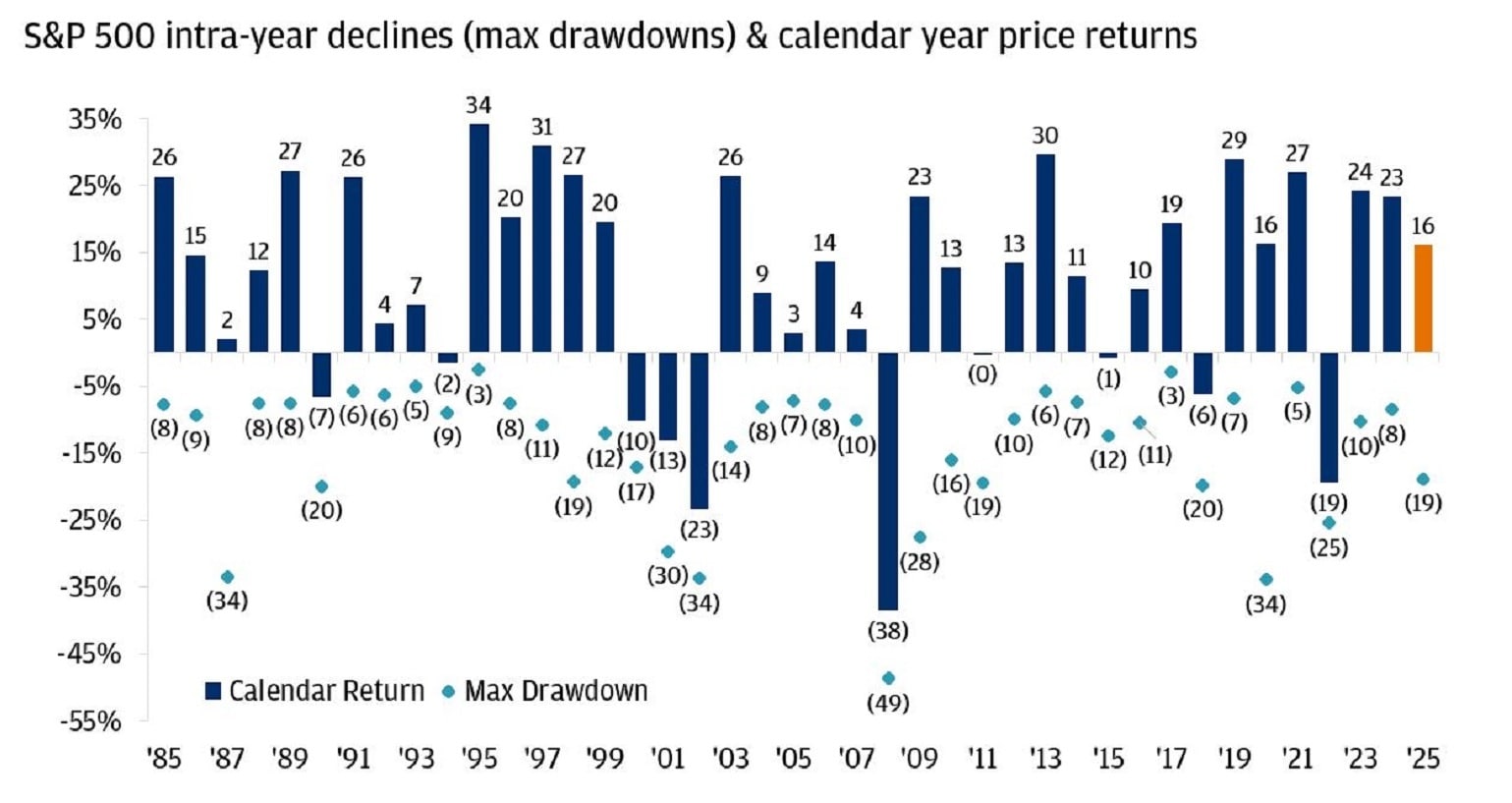
Most investors are familiar with the concept of risk and return. The “risk” in the stock market is volatility, while the “return” is the long-term capital appreciation that has historically rewarded those who stay the course. The chart above illustrates that while stock swings can vary greatly within any given year, the potential for long-term growth has historically outweighed the risk for those who remain invested.
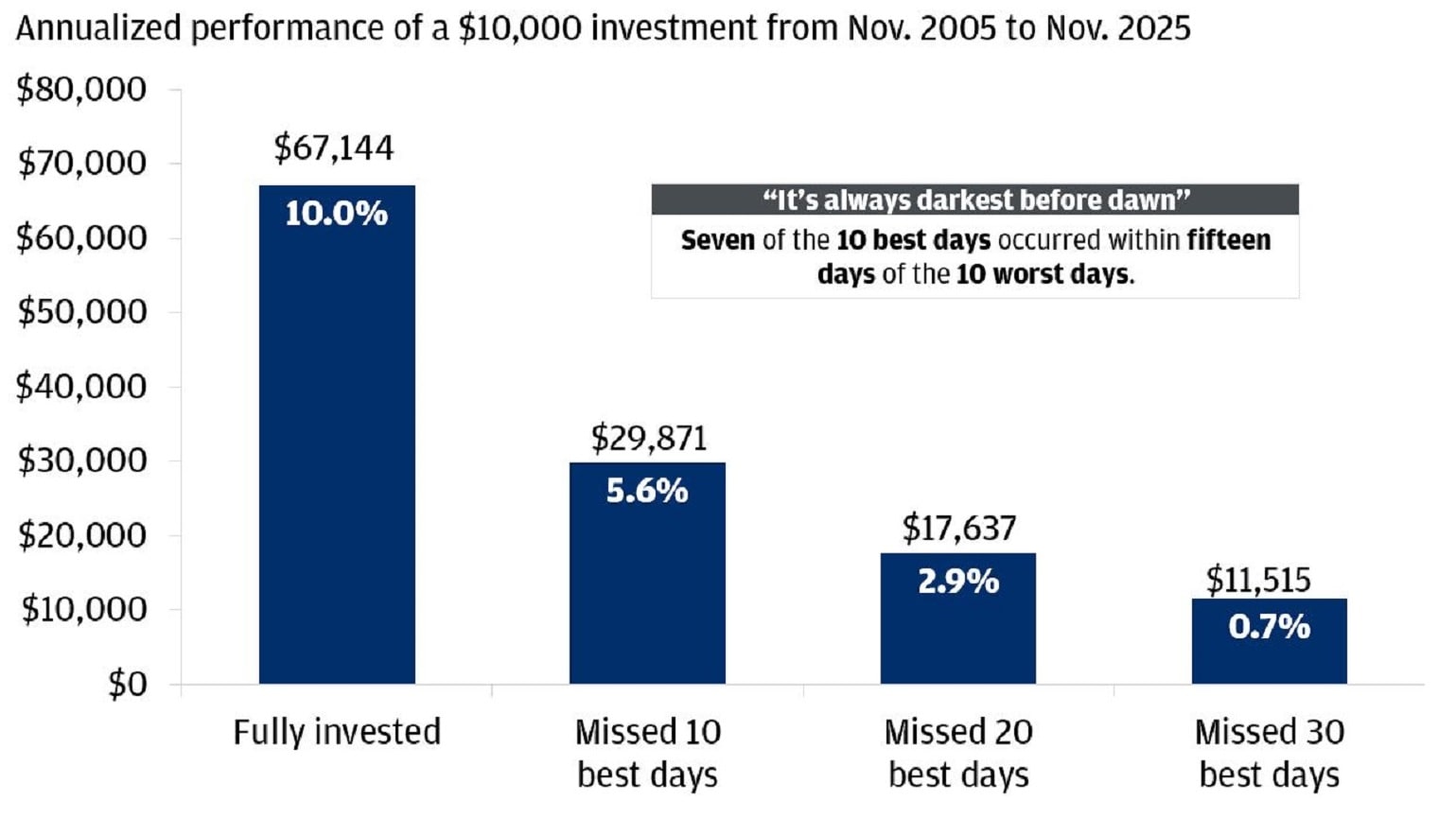
When volatility feels overwhelming, it’s natural to question your investment strategy. However, making decisions based on short-term market movements can be costly. For example, being fully invested in the S&P 500 over the past 20 years would have delivered an average annualized return of 10.3%. On the other hand, investors who missed just 10 of the best days, would have had their returns nearly cut in half. This highlights the importance of time in the market, rather than trying to time the market.
Performance of the S&P 500: MISSING THE BEST DAYS
The bottom line
While negative surprises in earnings or economic data releases could spark market volatility in the near-term, as we discuss in our 2026 Outlook: Promise and Pressure, we don’t believe stocks are currently in a bubble as AI companies have generated their returns entirely through earnings growth.
Over the last three years, the forward price-to earnings multiple of publicly traded AI stocks has declined while earnings per share estimates have more than doubled. Periods of volatility are inevitable and negative surprises in key economic or corporate releases can add to market swings. History suggests that staying invested and focused on long-term goals is often the best approach. Diversification, patience and a steady hand can potentially help investors avoid make emotionally driven decisions and poorly timed mistakes. If you have questions about your portfolio or want to discuss your investment plan, your J.P. Morgan advisor is here to help.
All market and economic data as of 11/18/2025 are sourced from Bloomberg Finance L.P. and FactSet unless otherwise stated.
You're invited to subscribe to our newsletters
We'll send you the latest market news, investing insights and more when you subscribe to our newsletters.