Recent stock market volatility reinforces that timing the market is a bad idea

J.P. Morgan Wealth Management

Markets breathed a sigh of relief after President Donald Trump's announcement of a 90-day pause on country-specific reciprocal tariffs, leading to a significant rally. The S&P 500 surged nearly 7%, and the Nasdaq climbed over 8% in less than an hour. However, this pause does not apply to tariffs on Chinese exports. Instead, the president announced an increase in tariffs on Chinese goods to 125% following Beijing's new retaliatory measures.
These drastic market swings have become a regular occurrence since the April 2 announcement. On Monday, U.S. equities experienced an intra-day swing of nearly 8.5%. The S&P 500 opened down nearly 5% but rallied to almost 3% positive within 15 minutes, ultimately closing flat.
Work with an advisor
Our advisors can provide ongoing financial advice on how your portfolio can adapt to the changes in the market, your life and your goals.
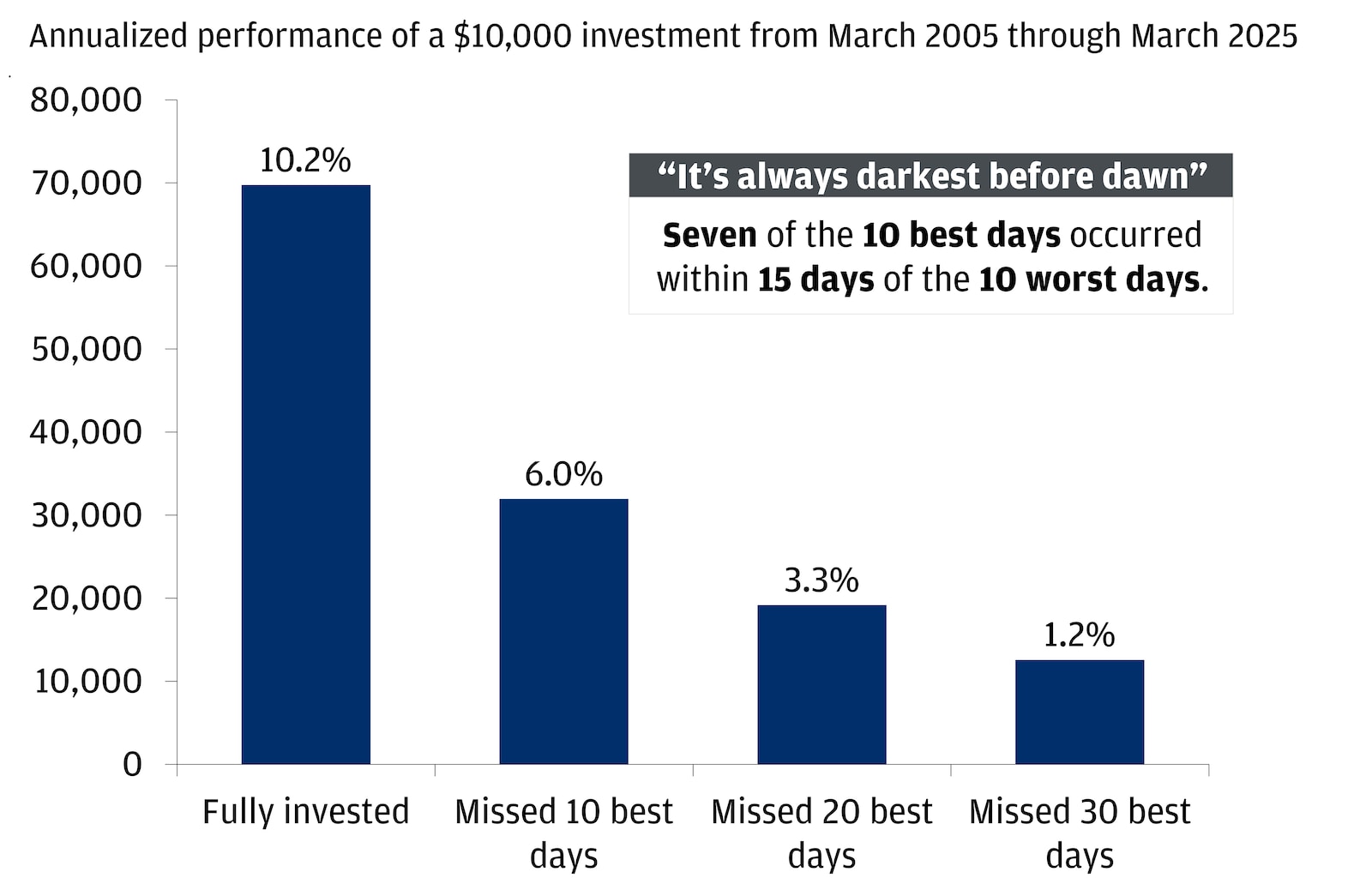
Such volatility underscores the importance of maintaining a long-term investment strategy. Attempting to time the market can be risky, as herd behavior during downturns or bubbles often leads to losses. Missing just a few of the market's best days can significantly impact portfolio growth and impede investors from reaching their long-term goals.
In the past 20 years, seven of the 10 best market days occurred within 15 days of the 10 worst days. This highlights the risk of exiting the market during volatility, potentially causing investors to miss rebounds and derail long-term goals. Instead, investors should reassess their financial objectives and consider rebalancing portfolios. While the current environment is challenging, it also offers opportunities for vigilant investors.
We recommend ensuring portfolios are diversified and resilient, considering assets like gold and bonds, which have historically typically helped to buffer against equity volatility. This approach may help navigate current market conditions and position investors for future growth.
Timing the market can be costly
All market and economic data as of 04/09/25 are sourced from Bloomberg Finance L.P. and FactSet unless otherwise stated.
Explore ways to invest
Take control of your finances with $0 commission online trades, intuitive investing tools and a range of advisor services.