Investing amid the widening Israel-Iran conflict

Global Investment Strategist

As we reach the midpoint of 2025, recent events in the Middle East have stirred investor memories of the low growth and high inflation environment that marked the 1970s when energy prices soared. While there is risk that the Israel-Iran conflict widens, so far, oil prices (the main transmission mechanism of a conflict in the Middle East) have risen 10% over the past week, but remain near the levels seen at the beginning of the year. At current prices, we do not expect a meaningful uptick in inflation. To the extent that supply out of Iran is disrupted, the global energy supply chain is better equipped to handle potential shocks with OPEC+ having spare capacity and U.S. production being more flexible thanks to the shale fracking boom.
Work with an advisor
Our advisors can provide ongoing financial advice on how your portfolio can adapt to the changes in the market, your life and your goals.
From a growth perspective, the U.S. economy is also more insulated from energy price spikes than it was back in the 1970s. For one, the economy is less energy intensive as fuel-efficiency standards for vehicles were only put in place in the early 1970s. Furthermore, heavy manufacturing is a smaller share of economic output and technological advances have increased industrial energy efficiency. Consumers also spend a smaller wallet share on gasoline and other energy goods relative to their overall spending today (around 2%) than they did in the 1970s (around 6%), making households less exposed to rising oil prices.
When it comes to the market impact of recent tensions, history offers a helpful guide. Geopolitical events typically have a limited impact on broad markets. The S&P 500 Index, for example, has continued to rise over time despite short-term volatility (chart below). One key theme from our 2025 Mid-Year Outlook was to enhance portfolio resilience and recent events underscore the importance of building that resilience in portfolios through geographic and asset class diversification and with uncorrelated assets like gold. We encourage investors to stay focused on their long-term goals and control what they can, ensuring their portfolios are prepared for the challenges ahead.
Geopolitics’ impact on markets tends to be short-lived
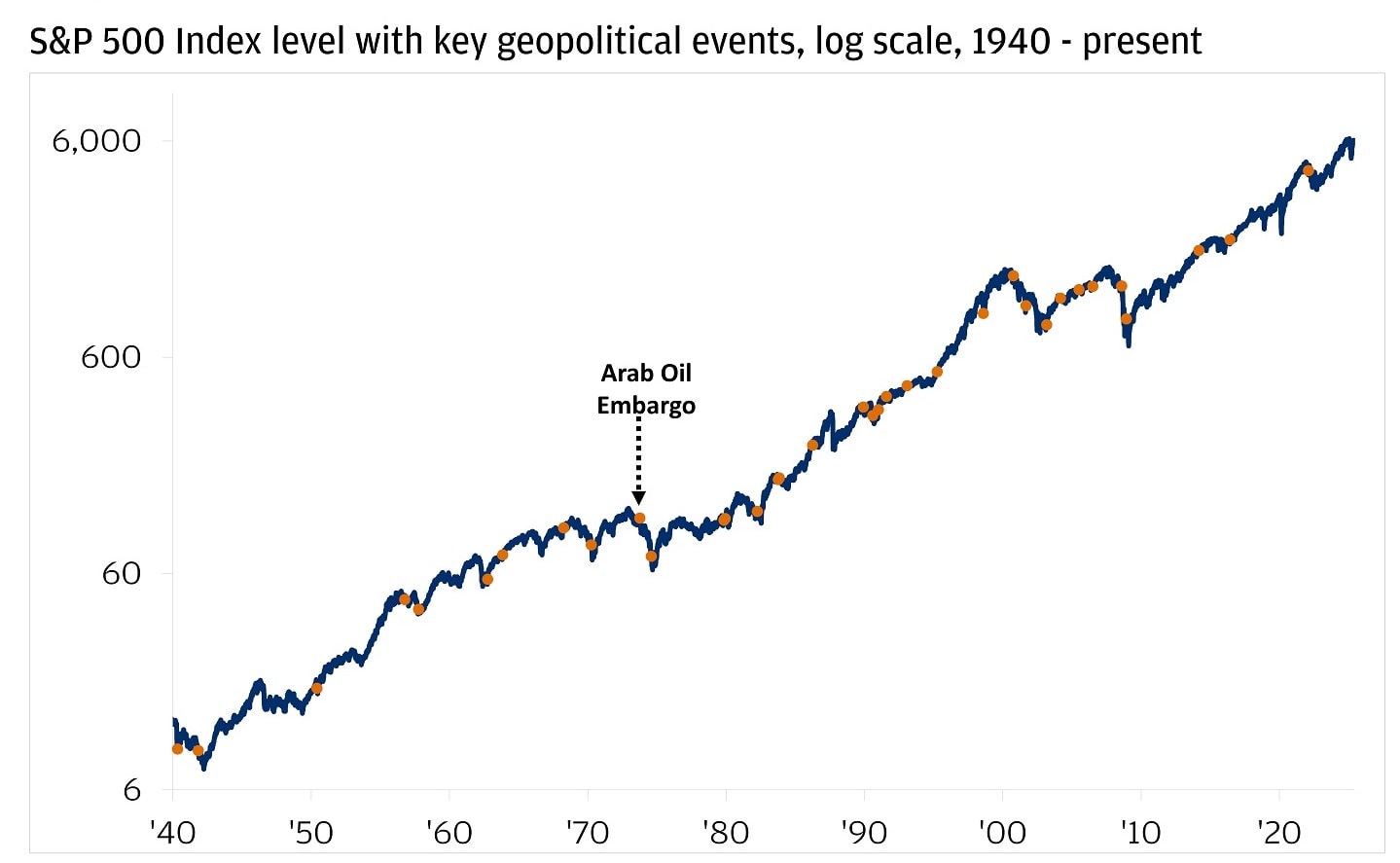
Past performance is no guarantee of future results. It is not possible to invest directly in an index.
All market and economic data as of 06/17/25 are sourced from Bloomberg Finance L.P. and FactSet unless otherwise stated.
Explore ways to invest
Take control of your finances with $0 commission online trades, intuitive investing tools and a range of advisor services.