January inflation rate higher than expected: What this means for the markets
- The January 2025 Consumer Price Index (CPI) report surprised to the upside, as the headline figure rose by 0.5% month-over-month (MoM) and core CPI (excluding food and energy) rose by 0.4% MoM.
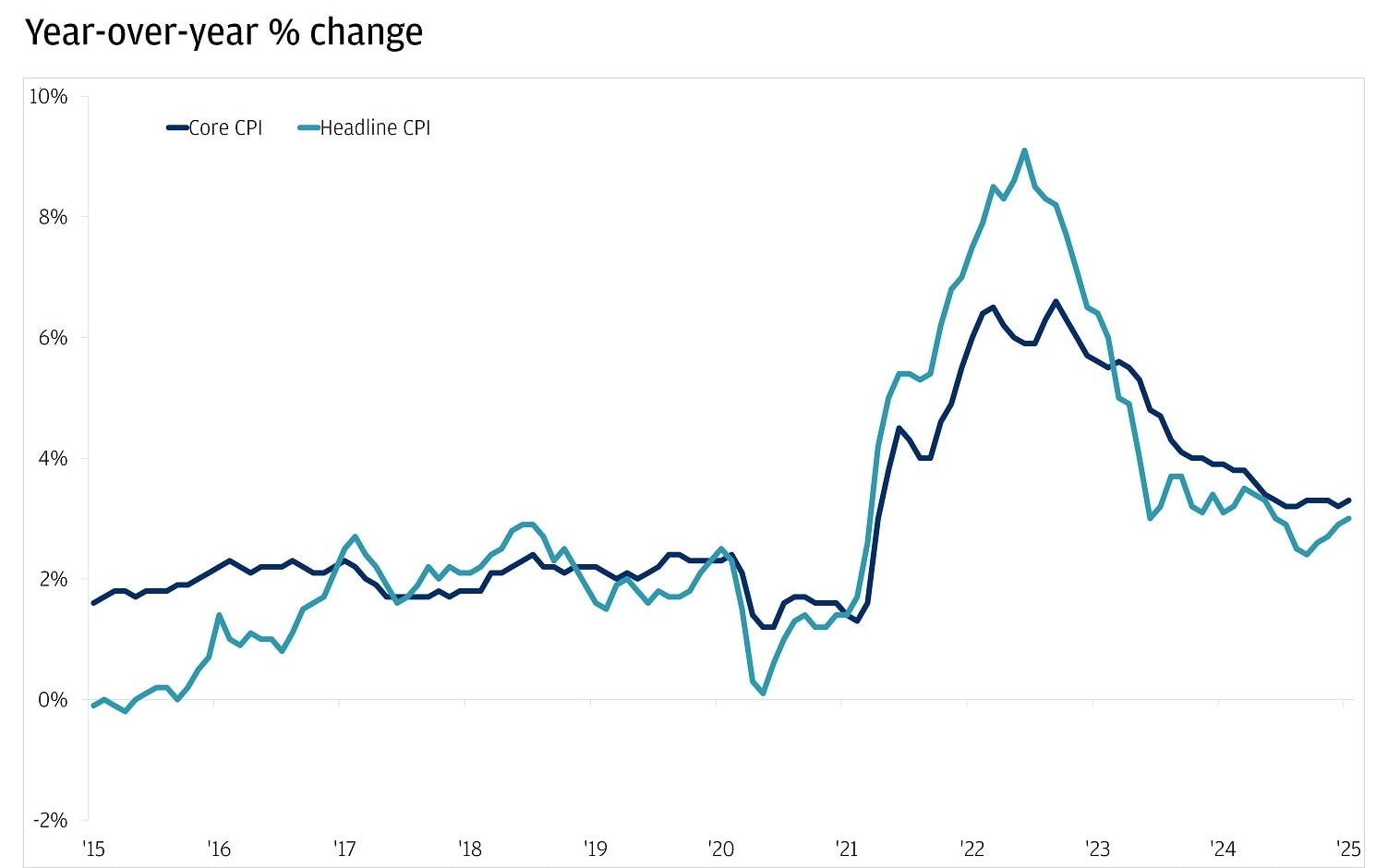
- These monthly gains have led to a modest firming in the year-over-year (YoY) rates, bringing the headline CPI to 3% YoY and core CPI to 3.3% YoY.
- The latest report does not change our strategists’ expectation that the Federal Reserve will cut interest rates, but it does suggest that these cuts may be delayed to the latter half of the year.

The January 2025 Consumer Price Index (CPI) report surprised to the upside, with the headline figure rising by 0.5% month-over-month (MoM) following a 0.4% rise in December 2024. Core CPI (excluding food and energy) rose by 0.4% after rising by 0.2% MoM in December 2024.
This has led to a modest increase in the year-over-year (YoY) rates, with the headline CPI now at 3%, up from the 2.9% rise in December, and the core CPI at 3.3%, up from the 3.2% rise in December.
Immediately following the January CPI release, stock futures fell and both the dollar and Treasury yields rose.
Ajene Oden, Global Investment Strategist at J.P. Morgan Wealth Management, believes the immediate reaction “reflects concerns about inflationary pressures and the potential implications for monetary policy.”
Headline and Core (ex-food and energy) U.S. consumer price inflation
Energy and food prices increase in CPI report
The difference between the January headline CPI and the core CPI was driven primarily by higher energy and food prices.
Energy prices rose by 1.1% MoM, driven by a 1.8% MoM rise in gasoline prices.
The food index increased by 0.4% MoM, the sharpest pace in two years. A large component of that rise was driven by a 15.2% MoM increase in egg prices. This marked the largest jump since 2015, in part due to the ongoing Avian flu.
Work with an advisor
Our advisors can provide ongoing financial advice on how your portfolio can adapt to the changes in the market, your life and your goals.
January 2025 core inflation numbers also topped forecasts
Core inflation paints a clearer picture of the trajectory of inflation since it excludes the volatile food and energy categories. Therefore, it is closely watched by investors and members of the Federal Reserve (Fed).
Core services increased by 0.5% MoM, following a 0.2% MoM rise in December 2024.
Shelter CPI basket
Shelter inflation, which comprises roughly 40% of the core CPI basket, increased by 0.4% MoM in January and drove nearly 30% of the headline increase. However, on a YoY basis, the shelter index rose by a milder 4.4%, the smallest yearly increase since January 2022. This is a welcome sign that past price pressures are returning to more normalized, pre-pandemic levels.
Within the shelter component, both the owners’ equivalent rent and rent of primary residence indexes rose by 0.3% MoM, the same pace as December 2024. Notably, lodging away from home prices increased by 1.4% MoM, following a 1% MoM increase in December 2024.
Other core services CPI categories
There were also price increases in several other core services categories. Medical care services prices rose by 0.2% MoM in January, with rises in prescription drugs, hospital services and physicians’ services prices. Auto insurance prices jumped higher in January after showing signs of disinflation in past months. Prices also rose in communication services, recreation services and airfares. Personal care prices declined.
Core goods (excluding food and energy) rose by 0.3% MoM in January, the firmest reading in nearly two years. Part of the increase could be related to consumers front-loading goods purchases ahead of any potential tariffs.
Used vehicle prices increased in January after cooling down in prior months. Elsewhere, new vehicle prices were unchanged and there were declines in apparel, household furnishings and operations prices, among other indexes.
What the January 2025 CPI report could mean for the Fed and investors
Our strategists still expect that the inflation data will moderate enough for the Fed to cut interest rates this year, but the recent strength of the labor market and higher-than-expected inflation may delay these cuts to the latter half of the year.
Importantly, this report does not alter our strategists’ belief that the economic expansion can continue, albeit with increased volatility. Ensuring that portfolios are well-prepared to handle potential market fluctuations remains crucial.
For more information on how this economic data may impact your investment strategy, consult a J.P. Morgan advisor.
Explore ways to invest
Take control of your finances with $0 commission online trades, intuitive investing tools and a range of advisor services.