Reflections from the Road: The AI investment case and the potential impacts on the economy

Global Investment Strategist

Recently, I traveled to Texas to discuss our economic and market outlook. The topic of artificial intelligence (AI) came up both in terms of how we are thinking about the space from an investment perspective but also how we’re interpreting AI’s near-term impact on the labor market and the economy.
The AI Investment Case
The development of the AI ecosystem is one of the key investment themes we've been emphasizing this year. This includes major players like Hyperscalers, power generators, semiconductor manufacturers and software companies integrating AI into their applications. Earlier in the year, there was some concern among investors when Chinese startup DeepSeek announced they had developed a large language model that was reportedly much more efficient than those from leading AI companies in the U.S. However, this hasn't slowed down capital expenditures by the Hyperscalers; in fact, they've continued to ramp up their investments – competition is a powerful motivator.
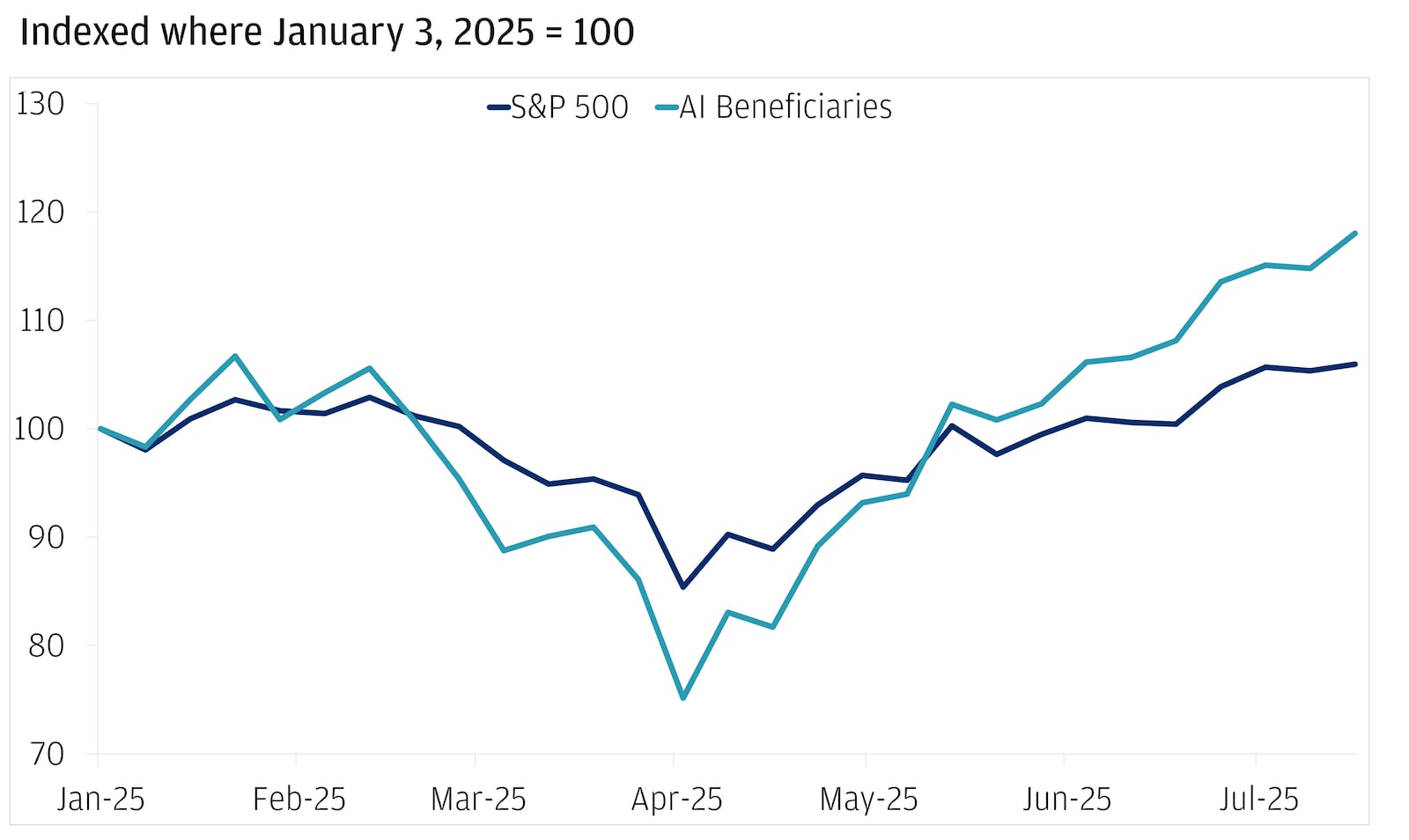
The market returns from AI-related companies have outpaced the S&P 500 year-to-date, partly due to the doubling of AI adoption by businesses over the past year from 4.5% to roughly 9%, which enhances the revenue-generating potential of these AI beneficiaries. Looking ahead, we think the AI ecosystem could also benefit from the One Big Beautiful Bill Act’s reinstatement of 100% bonus depreciation for qualified property and the introduction of qualified production property, encouraging construction and equipment investment.
AI beneficiaries outpacing the broader U.S. equity market year-to-date
Past performance is not indicative of future results. It is not possible to invest directly in an index.
Work with an advisor
Our advisors can provide ongoing financial advice on how your portfolio can adapt to the changes in the market, your life and your goals.
AI’s near-term impacts on the labor market and economy
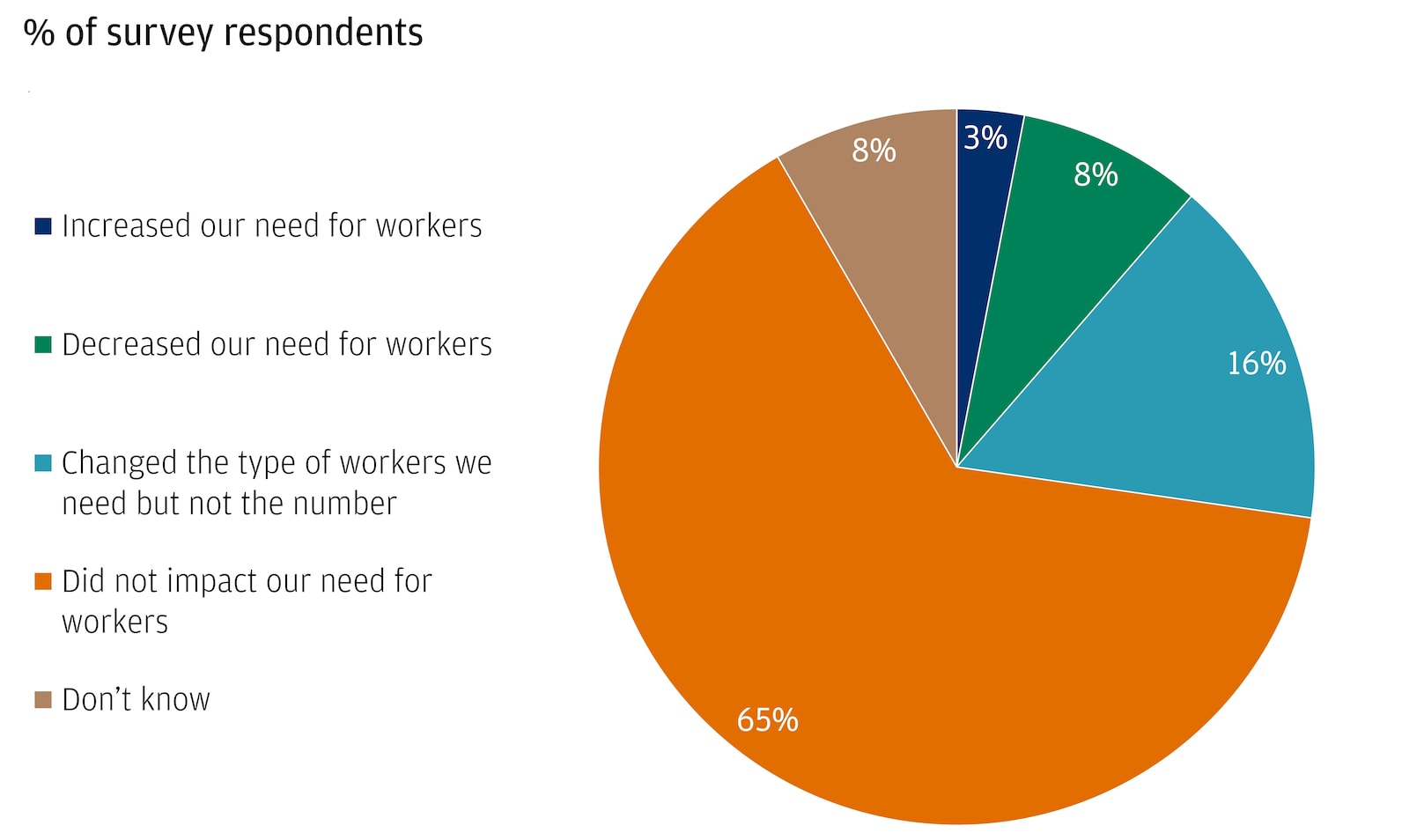
While many investors that I spoke with recognized the potential investment opportunities in AI, they also raised questions about its impact on the labor market. It's challenging to draw definitive conclusions at this early stage of AI adoption, but it's clear that the labor market will evolve. Some jobs may be replaced or reduced in number (like the impact on travel agents during the internet boom), while new jobs will emerge that we haven't yet imagined (such as social media managers, which didn't exist 20 years ago). A recent survey by the Dallas Federal Reserve found that among Texas firms using generative AI, 8% reported a reduced need for workers, 3% required more workers, 16% indicated a change in the type of worker needed, 65% did not see an impact on their need for workers and 8% didn’t know the labor market impact.
Although it's still early days in the adoption of generative AI, the data suggests that AI is being used more to complement and augment existing workers.
Most Texas firms using generative AI report muted labor market impact so far
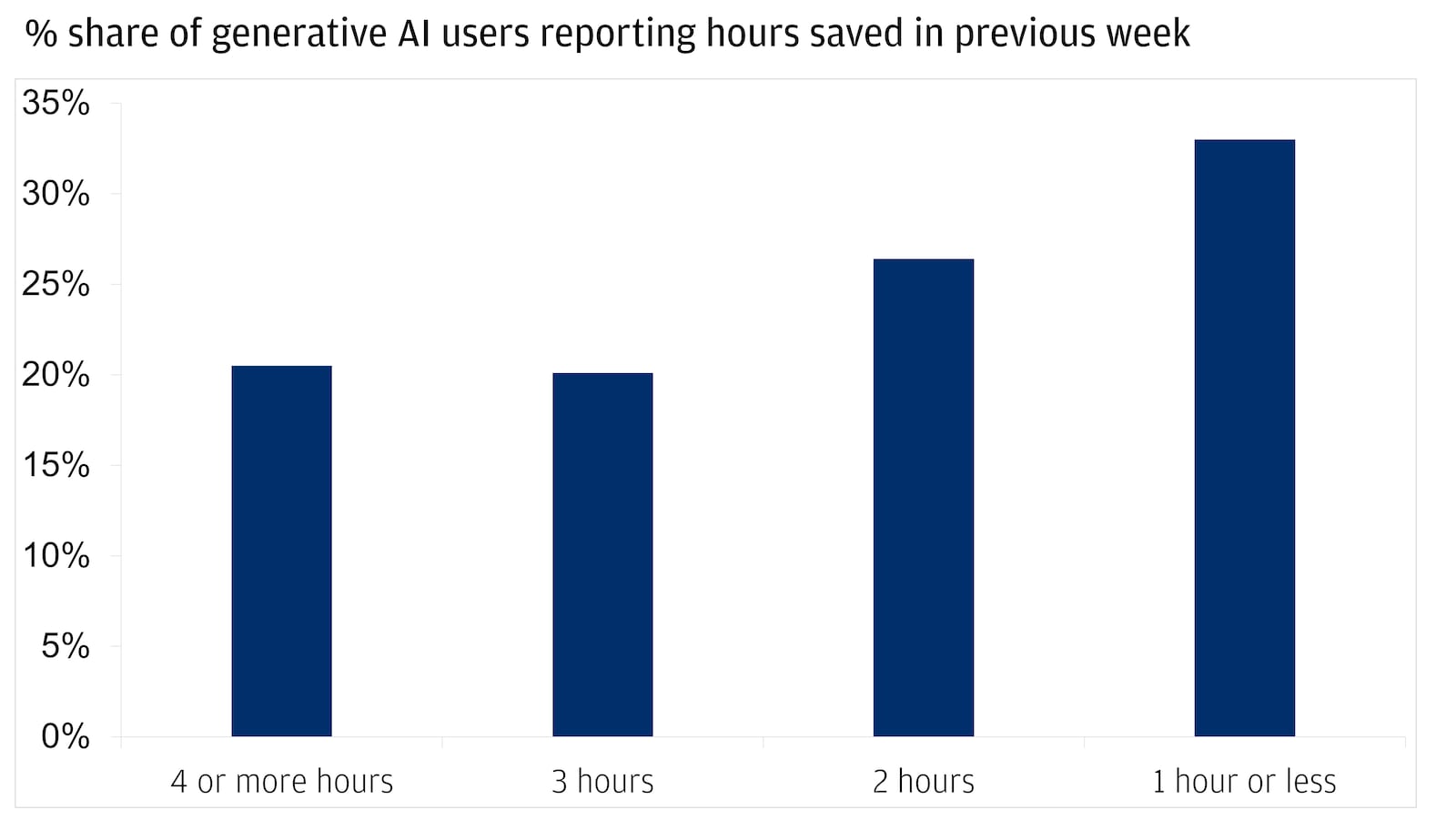
When it comes to the impact on the economy, generative AI is often touted for its potential productivity gains, allowing tasks that once took hours to be completed in minutes, thereby freeing employees to focus on higher value-add tasks and increasing output per hour worked. Increased output can lead to higher company revenues, potentially boosting wage growth and driving economic progress. While official productivity statistics haven't yet shown a significant increase attributable to AI adoption, a survey by the St. Louis Federal Reserve indicates that these time-saving benefits are gradually being realized. Over 20% of workers using generative AI reported saving four or more hours of work in a week, equivalent to 10% of a 40-hour work week.
Generative AI users in the St. Louis region are reporting hours of worked saved
Closing thoughts
We still see investment opportunities across the AI ecosystem as adoption rates increase and expand to different sectors. When it comes to the labor market, initial signs suggest that AI is being integrated in a manner that enhances rather than replaces significant segments of human labor and could lead to productivity gains in the years ahead. However, it is still early days in the adoption of AI and how this dynamic unfolds in the coming years will be an important question to monitor.
All market and economic data as of 07/30/2025 are sourced from Bloomberg Finance L.P. and FactSet unless otherwise stated.
Explore ways to invest
Take control of your finances with $0 commission online trades, intuitive investing tools and a range of advisor services.