Q1 2025 US GDP report: Why it was negative

Global Investment Strategist

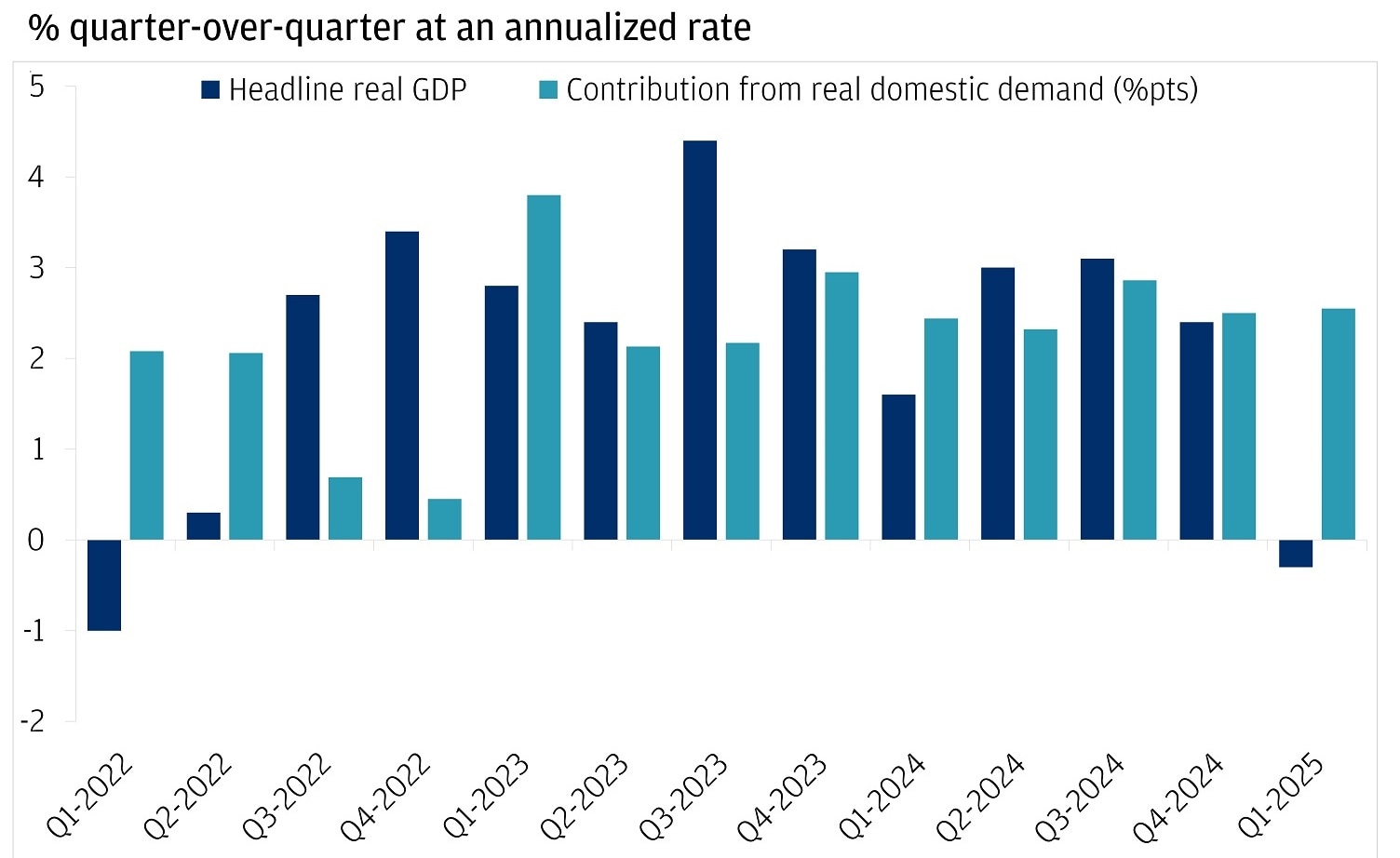
As was widely expected, the Q1 2025 real (inflation-adjusted) U.S. gross domestic product (GDP) showed a contraction of -0.3% at an annualized rate, marking the first negative quarterly GDP reading since Q1 2022. The GDP report is a helpful gauge of the overall amount of economic activity and can be broadly broken down into four categories: consumption, investment, net exports (exports minus imports) and government spending. The recent data indicate a large surge in imports – likely the result of businesses trying to stockpile inventory and front-load purchases ahead of potential tariffs. Indeed, when we look at the contribution to real GDP from net exports, it contributed an outsized -4.8 percentage points to the overall GDP growth rate (well outside of normal quarters).
Work with an advisor
Our advisors can provide ongoing financial advice on how your portfolio can adapt to the changes in the market, your life and your goals.
To get another measure of the health of the domestic economy during the quarter, we can look at the contribution coming from consumption and investment (aggregated together in the chart below). On that measure, the domestic economy was growing at a similar pace during the first quarter of 2025 as it was at the end of 2024. While we expect that general business uncertainty and recently enacted tariffs to weigh on economic growth (particularly on consumption and investment), both are likely to be more impactful in the coming quarters than in the Q1 data.
In between quarterly GDP releases, we’ll be looking closely at how the health of the labor market evolves and Friday’s employment report will provide the latest insights since the April tariffs were announced and enacted. Our U.S. economic outlook remains cautiously optimistic (low, but positive growth in 2025), but the coming months will be crucial in assessing the effects of the tariffs and the overall trajectory of the economy. Investors could consider geographic diversification to potentially mitigate risks associated with fluctuations in U.S. economic conditions. By spreading investments across regions and countries, investors could reduce direct exposure to local disruptions, potentially benefit from growth in other markets and enhance portfolio resilience.
U.S. headline real GDP declined in Q1, but domestic demand was steady
All market and economic data as of 04/30/25 are sourced from Bloomberg Finance L.P. and FactSet unless otherwise stated.
Invest your way
Not working with us yet? Find a J.P. Morgan Advisor or explore ways to invest online.