Overtrading: Definition, examples and how to make sure you don't do it

Editorial staff, J.P. Morgan Wealth Management
- Overtrading – also known as excessive trading – can eat away at your returns through higher fees, tax bills and risk.
- Frequent in-and-out trades, pattern day trading flags and emotional decision-making are common signs of overtrading.
- Brokerage firms often have excessive trading policies and tools that can help monitor and manage account activity.
- Following a trading plan, diversifying and regularly reviewing your account can help you avoid compulsive or impulsive trading behavior.

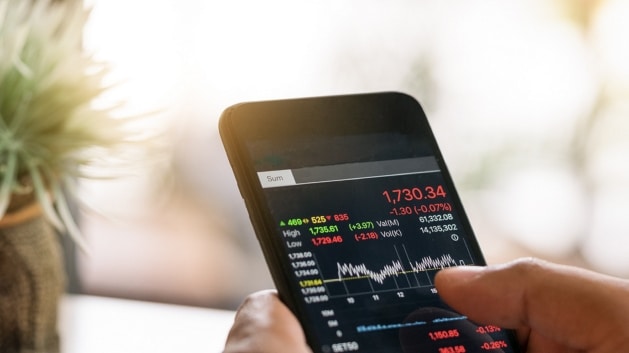
When managing your own investments, it can be tempting to stay active – especially with real-time data, commission-free trades and nonstop market headlines. But more trading doesn’t always translate to better results. In fact, overtrading is one of the easiest ways to undermine your long-term investment plan without even realizing it.
Definition of overtrading
Overtrading happens when you buy and sell investments more often than your finances – or your stress levels – can support. It’s not about the specific number of trades; it’s about whether the activity makes sense for your financial situation.
If you find yourself trading in and out of positions without a clear reason, reacting to headlines or placing trades out of boredom, that might be a sign that you’re overtrading. Selling a stock one day and buying something else the next, repeatedly, might feel exciting, but it doesn’t always move you closer to your financial goals. In fact, it often does the opposite.
The line between being engaged and being overactive can be a thin one, especially now that trading is so accessible. Overtrading usually becomes a problem when it starts costing you more in fees, taxes or missed opportunities than in gains.
Get up to $1,000
When you open a J.P. Morgan Self-Directed Investing account, you get a trading experience that puts you in control and up to $1,000 in cash bonus.
Examples of overtrading
Overtrading can look like the following:
- In-and-out trading: Repeatedly buying a security and selling it shortly after.
- High-volume trades with little strategic value: Frequently shifting between positions without a fundamental or technical reason behind it.
- Frequent day trading: Frequently buying and selling securities on the same day to capitalize on short-term price fluctuations. Placing four or more day trades in a rolling five-business-day window in a margin account is categorized as pattern day trading and can trigger regulatory requirements, including a $25,000 minimum account balance.
These behaviors may not be illegal, but they can raise red flags for compliance departments – and for your bottom line.
Do brokerage firms have an overtrading policy?
Broker-dealers typically maintain some form of excessive or overtrading policy and use automated systems to monitor customer activity. These systems will flag unusual patterns and may prompt a review of your account. If your account exhibits any of these kinds of patterns, you might receive a letter from the broker asking you to confirm whether you initiated the trades and understand what you’re doing. If you're using a financial professional, these policies also serve as safeguards to prevent misconduct on your account.
Investing should not be like gambling
Risks of overtrading
More activity doesn’t necessarily generate better returns. Trading too frequently can reduce your returns in ways that are easy to overlook. This might include costs related to commissions, account fees, bid-ask spreads and tax liabilities, even if the platform advertises "zero commission" trading. Over time, these costs can compound.
Then there are the taxes. Short-term trading is far less tax-efficient than holding investments for the long run. If you sell a stock you’ve owned for less than a year, profits are taxed as ordinary income, which often means a much higher rate than the long-term capital gains tax rate applied to investments held for over a year. That means taxes take a bigger bite out of your short-term trading profits than for your long-term investments. When tax time rolls around, you might be surprised to find that you’re keeping less of your trading profits than you originally expected.
In addition, overtrading can increase your portfolio volatility and disrupt your diversification. The more you chase short-term gains, the harder it is to maintain a consistent strategy.
Importance of financial health
Short-term trading can be exciting, but it’s also unpredictable. Even experienced traders don’t win every time. That’s why it’s important to make sure your broader financial picture isn’t riding on how well your trades perform on any given day.
Before diving deep into active trading, ask yourself: Do I have emergency savings set aside in cash? Am I regularly putting money away for retirement in a diversified portfolio? Have I planned for future expenses like a home, a child’s education or family care needs? A healthy financial foundation is critical before chasing short-term trading profits. The foundation is built on steady habits, diversified investments and a long-term outlook.
Importance of avoiding bad trading behavior
Some of the most common trading mistakes – chasing hype, reacting emotionally, or trying to time the market – can quietly drag down long-term performance. The research backs it up: One of the main reasons investors underperform the market is because they panic and pull money out during market downturns, often missing the recovery. Over time, that behavior can matter more than the specific investments they choose.
These emotional challenges are what make day trading so difficult. Academic research has shown that fewer than one out of100 day traders outperform the market regularly. That’s not to say it’s impossible to find success, but consistent success with day trading is rare. Developing a steady, research-driven approach and resisting the urge to act on emotion can help keep your portfolio on firmer ground.
If you’re starting to feel like luck is an important part of your investing strategy, it could be time to take a step back.
Why is there a rise in overtrading?
Individual investors are trading more than they used to, particularly during volatile periods, a potential sign of more frequent overtrading. The monthly share of investors under age 40 transferring money to brokerage accounts more than tripled between 2009 and 2019.
Younger investors have ramped up their trading activity during periods of extreme volatility. During the highly volatile days around the April 2025 tariff announcements, when the S&P 500 index swung by 5%–10% on multiple days, individual investors poured record funds into the market. Retail investor flows surged 2.5 times higher than the average week over the prior year, according to research from JPMorganChase.
Why do some people participate in overtrading activities? There are several things that can contribute to this behavior:
Trading addiction
The ease of trading today is a double-edged sword. Mobile platforms, gamified user experiences and real-time notifications can make trading feel like a game. For some, it becomes compulsive. Over time, this can lead to impulsive trades, disregard for risk and detachment from long-term financial goals.
Pressure from social media
The years following the pandemic saw a surge in retail trading, fueled by stimulus payments, remote work and access to commission-free platforms. Combined with viral stock stories on social media and online forums, the period amplified short-term trading behavior. Meme stocks became cultural events, but the phenomenon also increased the risk of significant losses for retail investors.
Vulnerable to scams
Online investor communities focused on active trading can be a powerful force for promoting investing and financial independence, but they're easy for bad actors to infiltrate. Overtrading can make investors more susceptible to these scams. The pressure to act quickly on "hot tips" or trending stocks can lead to impulsive decisions without proper due diligence.
One typical example is a pump-and-dump scam, where fraudsters artificially inflate a stock's price through misleading information and then sell their shares at the peak, leaving others with losses. In 2022, eight social media influencers were charged in a $114 million securities fraud scheme. They portrayed themselves as successful traders, flaunting luxury cars and promoting stocks they owned on social media platforms. They encouraged their followers to buy in, promising to hold their stock with "diamond hands" while secretly selling their shares at inflated prices and leaving their followers with the losses.
To protect yourself, recognize the warning signs, such as unsolicited stock recommendations, promises of guaranteed returns and pressure to invest quickly. By staying informed and cautious, you can mitigate the risks associated with overtrading and protect your investments from fraudulent schemes.
How to stop overtrading
Luckily, there are several things you can do to safeguard yourself from excessive trading.
Have a trading plan
The best way to avoid going off-course is to have a written plan for yourself as a buffer against impulsive decisions. Define your goals, risk tolerance, time horizon and the specific criteria for entering and exiting positions. Having a disciplined investment process can provide some speedbumps to slow those impulsive trades when the social media chatter picks up.
Stay educated and aware
Knowledge is the key to successful investing, especially if you’re trying to take a more active approach. Understanding what drives the market can make your actions less reactionary. Learn the difference between short-term trading strategies and long-term investing approaches like fundamental analysis. Track your own habits: Do you check your account every hour? Do you feel anxious when you’re not making a trade? Being aware of these patterns is the first step toward managing them.
Implement safeguards
Self-directed accounts give you full control over your investments, but that also means keeping yourself in check. Many brokerage platforms offer tools to help flag risky behavior, track your trading habits and keep your strategy aligned with your original goals.
Here are a few guardrails that can help:
- Use your brokerage’s risk tolerance tools to match your account strategy with your comfort level.
- Add a trusted contact to your account who can be reached if the activity looks unusual.
- Review your trading activity regularly, including costs, volume and performance trends.
- Check your account documents, if available through your online investing account, to ensure your stated objectives and risk tolerance are accurate. If they’re not, notify your brokerage firm promptly.
Seek diversification
If you’re passionate about active investing, it’s crucial to find ways to reduce the risk any single bad trade can have on your overall wealth picture. Diversification – investing across a variety of positions and asset classes – can help reduce the volatility of your portfolio. A well-balanced portfolio aligned with your long-term goals typically doesn’t require daily updates.
The bottom line
Excessive trading may be easy to fall into, especially for self-directed investors with 24/7 access to markets and real-time data. But high-frequency trades can drain returns through fees, poor timing and increased risk. A strong defense can include a clear strategy, regular self-checks and tools that help keep your investing on track.
If you're unsure whether your trading volume is appropriate for your goals, take a moment to review your account activity, and don't hesitate to contact your brokerage firm with questions.
Frequently asked questions about overtrading
Excessive trading is when the volume or frequency of trades in a brokerage account exceeds what would be expected based on the investor’s goals and risk tolerance. It can reduce returns through costs and taxes.
Not necessarily. But if a broker is overtrading to generate commissions without regard for the investor’s interest, it may be considered churning, which is a regulatory violation.
Signs include frequent in-and-out trades, checking your account constantly and trading based on emotion or headlines rather than a plan.
Yes, the Trump Accounts: Official App launched on May 28, 2026, and is available in app stores. You can also download the app from TrumpAccounts.gov. You must complete Form 4547 before you can sign up for the app. Once the form is complete, you can sign up with the email address you used to sign up for a Trump Account. Once you sign up with your email, a password and your phone number, you can sign up for notifications to get updates on your child’s Trump Account once it’s active (expected in July 2026). The Treasury Department also said that parents who signed up for a Trump Account for their children will receive emails with steps for setting up the app. The agency said it will send emails to activate accounts in phases between now and July 4. Keep an eye out for emails from this address: no-reply@TrumpAccounts.Treasury.gov.
Yes. If you place four or more day trades in a five-day period in a margin account, you may be classified as a pattern day trader, which requires a minimum account equity of $25,000.
Invest your way
Not working with us yet? Find a J.P. Morgan Advisor or explore ways to invest online.