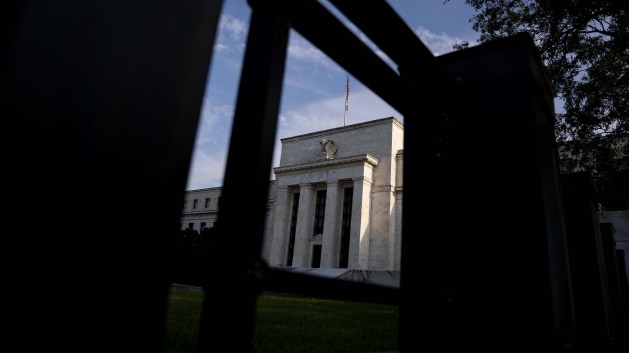
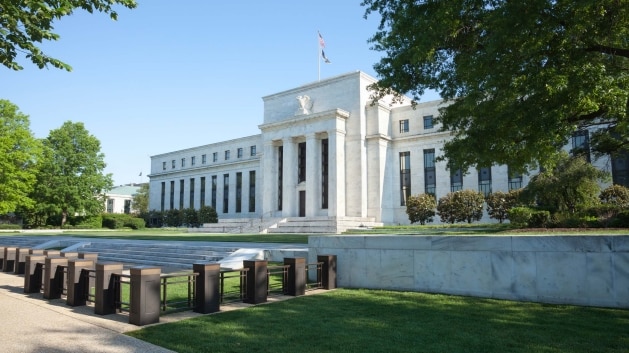
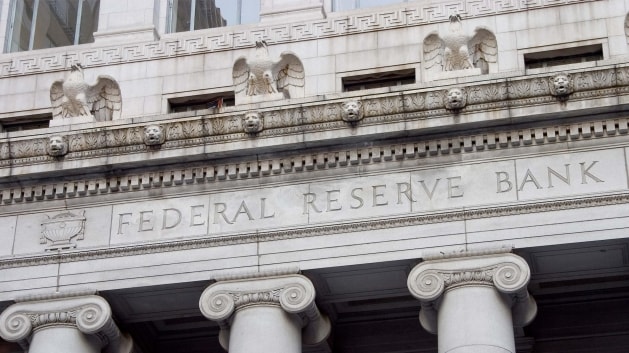
What is the Federal Reserve? Structure, functions, meeting schedule and why it matters

Editorial staff, J.P. Morgan Wealth Management
- The Federal Reserve (Fed) is the U.S. central bank. It sets monetary policy, supervises other banks, helps maintain the country’s payment system and promotes financial stability.
- The Fed directly influences borrowing costs and savings rates by adjusting the federal funds rate.
- The Federal Open Market Committee (FOMC), the Fed’s policymaking arm, meets eight times per year to evaluate economic conditions and to decide whether to raise, lower or maintain the federal funds rate.

The Federal Reserve is one of the most talked-about institutions in the world, but it may not always be clear what the central bank actually does or why its decisions matter for you.
Understanding how the Fed works can give you a better sense of what’s happening in the economy and how those dynamics may affect your finances. To help you get there, this guide explains what the Fed is, how it’s structured, how it functions, when the FOMC meets and what its policy decisions might mean for you.
What is the Fed?
As the U.S. central bank, the Federal Reserve is responsible for managing monetary policy. The decisions it makes are meant to help maintain price stability and maximize employment. In addition to setting monetary policy, the Fed supervises other banks, helps maintain the country’s payment system and promotes financial stability.
Congress created the Fed in 1913 to stabilize the U.S. banking system. It works to achieve that stability by carrying out its dual mandate in support of maximum employment and stable prices.
How the Federal Reserve is structured
The Federal Reserve has three main parts that work together:
- Board of Governors: This governing body, technically a federal agency headquartered in Washington, D.C., comprises seven members. Each member, or governor, is nominated by the president and confirmed by the Senate. The board oversees the Federal Reserve and the operations of each of the 12 Reserve Banks.
- Regional Federal Reserve Banks: The 12 Reserve Banks are located across the country and help carry out the Fed’s policies in their regions (called “districts”). Each Reserve Bank gathers data about business and community needs within its district. This information is factored into the monetary decisions made at FOMC meetings.
- Federal Open Market Committee: The FOMC is the policymaking body of the Federal Reserve, and it meets eight times per year to decide whether to raise, lower or maintain the federal funds rate. The 12-person committee includes the seven members of the Board of Governors; the president of the Federal Reserve Bank of New York; and four of the remaining 11 Reserve Bank presidents, who serve rotating one-year terms.
When does the FOMC meet?
The FOMC meets eight times per year to discuss monetary policy and hike, cut or maintain the federal funds rate. Meetings take place during the following months:
- January
- March
- April
- June
- July
- September
- October
- December
Why the Fed operates independently
Although Congress established the Fed and its dual mandate, the central bank is designed to operate independently from political influence. That way, policymakers can make decisions based on economic data instead of short-term political priorities.
The president nominates members of the Board of Governors, including the Fed chair, and the Senate confirms those appointments. Fed chairs serve four-year terms, while other members of the board serve staggered 14-year terms.
In May 2026, Kevin Warsh was sworn in as Fed chair, succeeding former Chair Jerome Powell. Regardless of who serves as chair, the Fed’s structure is intended to provide continuity and to ensure monetary policy remains focused on the economy’s long-term health.
Get up to $1,000
When you open a J.P. Morgan Self-Directed Investing account, you get a trading experience that puts you in control and up to $1,000 in cash bonus.
The Fed’s goals: The dual mandate and why it matters
The Fed has two main goals, which are often referred to as its dual mandate. These goals guide the central bank’s monetary policy and shape how it responds to economic conditions:
- Maximum employment: The Fed works to promote maximum employment, which is the highest level of employment the economy can sustain without fueling inflation. The Fed looks at indicators like job growth, unemployment, labor force participation and wage trends to assess the overall health of the labor market.
- Stable prices: The Fed also aims to keep inflation low and prices stable over time. Some inflation is normal in a growing economy, but prices that rise too quickly can make everyday expenses less affordable for consumers. The Fed targets an annual inflation rate of 2%.
What makes the Fed’s dual mandate tricky is the fact that its two objectives sometimes contradict each other. For example, lowering interest rates may encourage businesses to hire and consumers to spend, and that may push up the rate of inflation. That’s why the Fed is always weighing data and trying to strike a balance between these two goals.
Why the Fed matters for you
The Fed’s decisions can affect many parts of your financial life, including the job market, the prices of goods and services, and the cost of borrowing. Changes in monetary policy typically don’t show up immediately but rather can ripple through the economy over time.
What the Fed controls and what it doesn’t
The Fed has significant influence over the U.S. economy, but it doesn’t control every aspect.
The Fed doesn’t directly set the prices consumers pay for everyday goods and services. It can’t determine the price of gas, groceries or housing, and it doesn’t set mortgage rates.
Rather, the Fed is responsible for monetary policy, which focuses on managing financial conditions to support a stable economy. In comparison, fiscal policy is set by Congress and the president, and it involves decisions about government spending, taxes and federal borrowing.
The Fed’s main tools
The Fed relies on several tools to help it carry out monetary policy and affect broader financial conditions. Here are the main tools the Fed uses and how they influence things like borrowing costs and consumer sentiment:
- Federal funds rate: The Fed’s primary tool is the federal funds rate, the overnight interest rate banks charge one another to borrow reserves. The Fed sets a target range for this rate. While consumers don’t borrow at this rate, changes to it often influence interest rates across the economy.
- Open market operations: These involve buying or selling U.S. Treasury securities in financial markets to influence the amount of reserves available in the banking system.
- Balance sheet policy: Every week, the central bank publishes its balance sheet, which outlines its vast assets and liabilities. During economic downturns, the Fed may purchase Treasury securities and mortgage-backed securities to help lower long-term interest rates. When the economy is strong, the Fed might reduce its holdings by selling securities.
- Forward guidance: Historically, the Fed has used forward guidance to communicate its thoughts on the economy. This has helped consumers, businesses and financial markets understand how policymakers view current economic conditions. It’s also why markets have often reacted to new information from the Fed, even when interest rates haven’t changed. Fed Chair Warsh has been vocal about limiting forward guidance, however. Such reduced communication – and subsequent uncertainty regarding future Fed moves – could also affect markets.
How Fed decisions can affect consumers, investors and markets
It may be hard to understand how the Fed’s decisions trickle down to your everyday life, but they can influence many aspects of your finances over time. The effects aren’t always immediate, but understanding how they show up can help you make more informed financial decisions.
First, when the Fed makes interest rate decisions, you may end up seeing those effects trickle down to borrowing costs like for loans or in savings rates such as through a higher or lower annual percentage yield (APY).
Next, if the Fed makes a decision to increase rates to tame inflation, you could end up seeing a lower annual rate of inflation over time. However, it can take months for these changes to fully show up.
And when it comes to investments, the Fed’s decisions may not directly impact anything, but they can influence moves. For example, bond prices and yields, particularly long-term bonds, may be more sensitive to interest rate changes than short-term bonds. Companies and sectors may also be impacted more or less by interest rate policies, which could trickle down to stock prices and earnings. And cash and cash-equivalent investments may earn more than they do in lower interest rate environments. Fed announcements tend to generate headlines and can trigger short-term market volatility, but it’s wise to stick to your investment plan and work with a professional if you have any questions.
The bottom line
The Federal Reserve is the U.S. central bank, responsible for managing monetary policy to help maintain price stability and maximize employment, while also supervising other banks, helping maintain the country’s payment system and promoting financial stability. The FOMC is the Fed’s policymaking arm, and it meets eight times per year to evaluate economic conditions and decide whether to raise, lower or maintain the federal funds rate, a move that can influence borrowing costs and savings rates across the economy.
The Fed is structured around the Board of Governors, the 12 regional Federal Reserve Banks and the FOMC, and it is designed to operate independently from political influence so decisions can be based on economic data. Using tools like the federal funds rate, open market operations, balance sheet policy and forward guidance, the Fed works to balance its dual mandate, and its policy decisions can ripple through the economy over time, affecting the job market, inflation, and what consumers, investors and markets experience in everyday finances.
Frequently asked questions about the Federal Reserve
The Federal Open Market Committee (FOMC) is the Fed’s monetary policymaking body. It meets eight times per year to review economic data and discuss whether to change the target range for the federal funds rate. After each meeting, the FOMC releases a statement explaining its decisions.
The federal funds rate is the interest rate that banks charge one another for overnight loans of reserve balances. The Fed sets a target range for this rate as its primary monetary policy tool. Changes to the federal funds rate can affect rates on lending and savings products.
Monetary policy is managed by the Federal Reserve and focuses on interest rates and financial conditions. Fiscal policy is set by Congress and the president, and it involves decisions about government spending, taxes and borrowing. Both monetary and fiscal policy can influence economic growth and inflation, but they serve different purposes.
Invest your way
Not working with us yet? Find a J.P. Morgan Advisor or explore ways to invest online.