July 2025 Fed meeting: Rates hold steady once again, potentially setting up fall intrigue

Editorial staff, J.P. Morgan Wealth Management
- The Federal Reserve (Fed) kept its benchmark interest rate unchanged in July, holding steady at 4.25% to 4.5%.
- Notably, two members of the Federal Open Market Committee (FOMC) voted against the majority, a rare occurrence for the board.
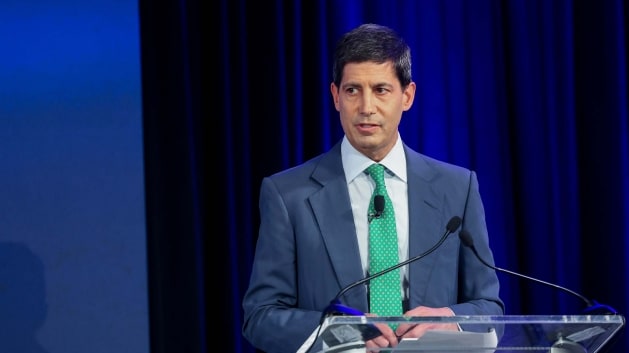
- Chairman Jerome Powell believes the economy “remains in a solid position” and wants to wait and see the impact of tariffs before making a policy change.
- Our strategists believe rate cuts are forthcoming, with the first one potentially happening in September.

The Federal Reserve (Fed) kept its benchmark interest rate unchanged in July, holding the federal funds rate steady at a range of 4.25% to 4.5%, much like it did at its June meeting. That rate has prevailed since December 2024.
However, as the Fed begins to learn more about the impact of various tariff policies on key economic indicators such as inflation and the labor market, the rhetoric on interest rates could begin to change.
What did our strategists learn from the July FOMC announcement?
The July meeting provided some intrigue, as two members of the FOMC, Governors Michelle Bowman and Christopher Wallen, voted to dissent on maintaining interest rates at their current levels. Dissent is rare in this context: The last time at least two FOMC board members disagreed with the rate-setting committee’s decision was over three decades ago.
Elyse Ausenbaugh, Head of Investment Strategy for J.P. Morgan Wealth Management, doesn’t think the mindset of the committee at large has changed amid the dissent. “Despite the hawkish tinge to some of Powell’s comments, I don’t think the mindset of most committee members has changed,” Ausenbaugh said. This is still a data-dependent Fed, and we expect the data to tell them to deliver a cut later this year as unemployment rises modestly and services inflation continues to cool.”
Powell reiterated that “despite elevated uncertainty, the economy remains in a solid position,” justifying the board’s decision to hold interest rates at current levels. That said, Powell was also keen to mention that “growth of economic activity has moderated” and that inflation remains slightly above the Fed’s 2% target. One of the important drivers of moderating growth and the expectation of higher prices has been the tariff policy of the current presidential administration.
Work with an advisor
Our advisors can provide ongoing financial advice on how your portfolio can adapt to the changes in the market, your life and your goals.
How did markets react to the July FOMC announcement?
Markets did not expect a rate cut in July, but the Federal Reserve’s lack of strong indications about a possible rate cut at the September meeting weighed on sentiment. Powell noted, “In [the] coming months, we will receive a good amount of data that will help inform our assessment of the balance of risks and the appropriate setting of the federal funds rate.”
In response, the Dow Jones Industrial Average (DJIA), fell 0.67%, while the S&P 500 fell 0.35% immediately following Powell’s press conference.
Conversely, U.S. Treasury yields continued to climb on the heels of the FOMC meeting, with 2-year yields rising by nearly six basis points and 10-year yields rising about four basis points.
What does the Fed’s announcement mean for investors?
The Fed’s message in regard to future rate cuts was unclear, but our strategists nonetheless still expect the Fed to be in a position to cut interest rates in the fall, even if there’s still a lot to learn over the coming months.
According to Ausenbaugh, “The expectation for this [July] meeting wasn’t a rate cut, and I don’t think there would have been much upside to Powell signaling that one was imminent. The data, as it stands today, isn’t yet calling for one, and a lot could change between now and the FOMC’s next decision point in September.”
Investors can prepare for that next decision by:
- Making sure you know your risk tolerance: Until the effects of tariff policy become more clear, market volatility will likely persist. Make sure your investment portfolio is aligned with your longer-term goals and risk tolerance.
- Watching economic data closely: How the labor market and inflation respond to existing tariff policy will be crucial. Investors could benefit from monitoring the upcoming release of the monthly jobs report on August 1 and the next Consumer Price Index data release on August 12 for further context on how the Fed may proceed with interest rates.
- Staying diversified: Diversification is a fundamental tenet of any investing portfolio. Having a strong mix of different asset classes and holdings across geographic regions can set up your portfolio to better handle the risk of tariff-related market volatility, though nothing is guaranteed.
As always, consult a J.P. Morgan advisor to learn how these developments could affect your investing portfolio.
For important disclosures, see below.
Explore ways to invest
Take control of your finances with $0 commission online trades, intuitive investing tools and a range of advisor services.