Navigating market highs

Global Investment Strategist

Summer sales are on for many U.S. retailers, who are offering steep discounts for consumers. With the S&P 500 once again reaching new highs after touching bear market territory in early April, investors aren’t finding “discounts” on U.S. equities compared to the prices they experienced in early spring, leaving markets in a strange place right now.
Work with an advisor
Our advisors can provide ongoing financial advice on how your portfolio can adapt to the changes in the market, your life and your goals.
Should investors worry about all-time highs?
Buying anything at a certain price and then subsequently seeing that same item go on sale can be frustrating. While investors may be skeptical to put cash to work when stocks are at highs due to fears of a pullback, history shows that trying to time the market can be a dangerous habit. As missing just some of the highest days can have a dramatic negative impact on overall returns, we encourage investors to focus on time in the market, not timing the market.
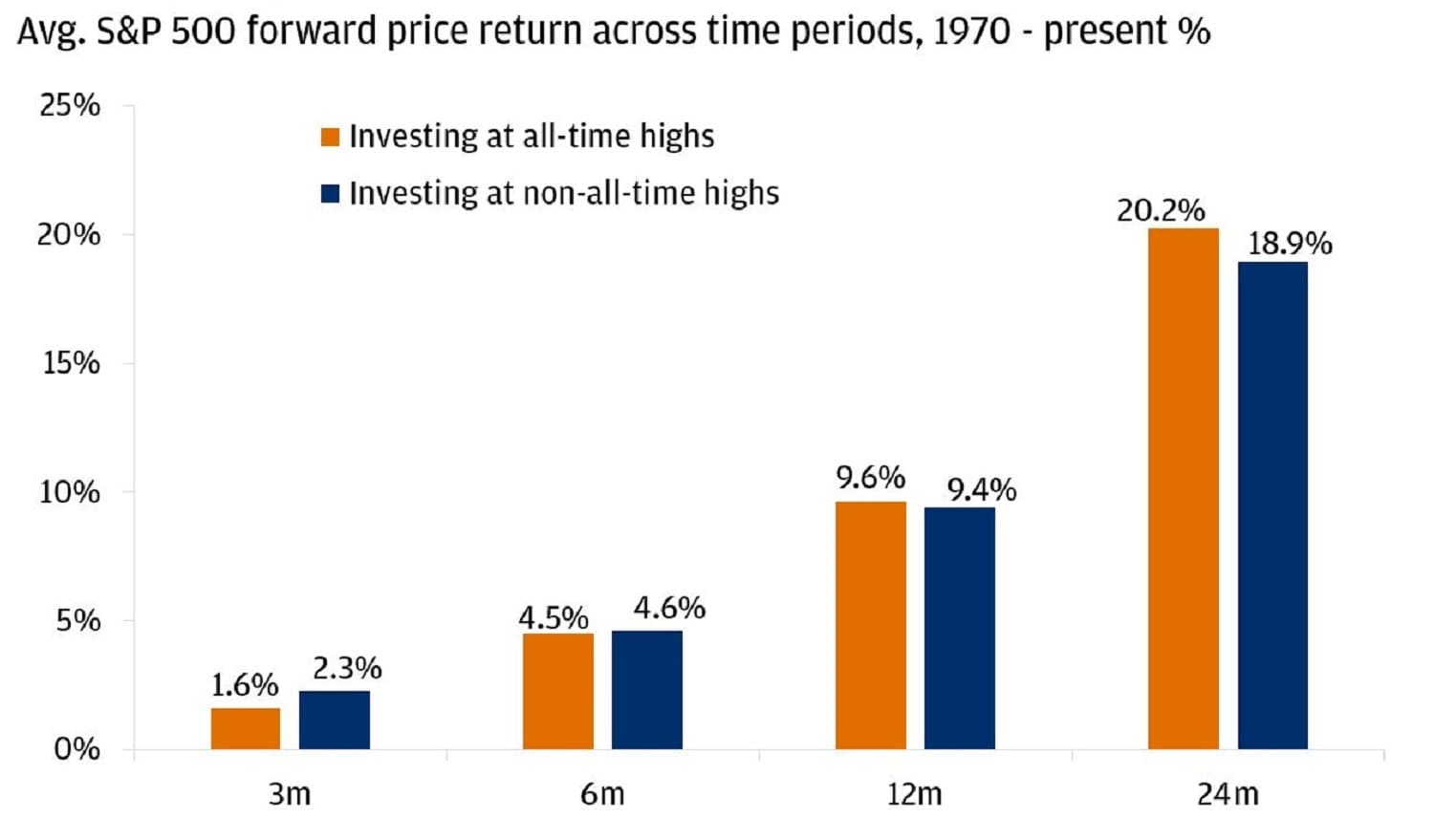
So, is now a good time to invest? We believe so – the chart below shows that investing at all-time highs can actually be a beneficial strategy. Since the 1970s, investing in the S&P 500 at highs did not yield materially different returns in the short term compared to investing at non-all-time highs. Stretching that to looking one and two years out, investing in the S&P 500 at highs has actually led to slightly better forward returns compared to investing at non-all-time highs.
Investing at highs has not notably impacted returns
With geopolitics, U.S. debt ceiling conversations and trade developments, markets have certainly experienced an uphill battle for most of the year so far. We think that the rally likely has steam left in the tank with the continued increasing investment and adoption of artificial intelligence (AI) along with impending bank deregulation that may potentially push markets higher.
AI adoption and investment is increasing
With some of the aforementioned uncertainties behind us, AI is back in the limelight for investors. Recently, AI in connection to labor has been a hot topic. Notably, Microsoft cut almost 3% of its workforce in May as they continue to shift more resources to AI development, while Meta has been offering NFL-like contracts to hire the best-of-the-best researchers, reportedly to prevent top talent from going elsewhere. However, the investment in AI goes beyond headcount. The five leading hyperscalers (i.e., Google, Oracle, Microsoft, Meta and Amazon) are investing substantial capital in AI. These companies are now expected to make up over a quarter of the S&P 500’s overall capital expenditure and spend north of $350 billion over the next two years, supporting the expansion and scalability of AI technologies.
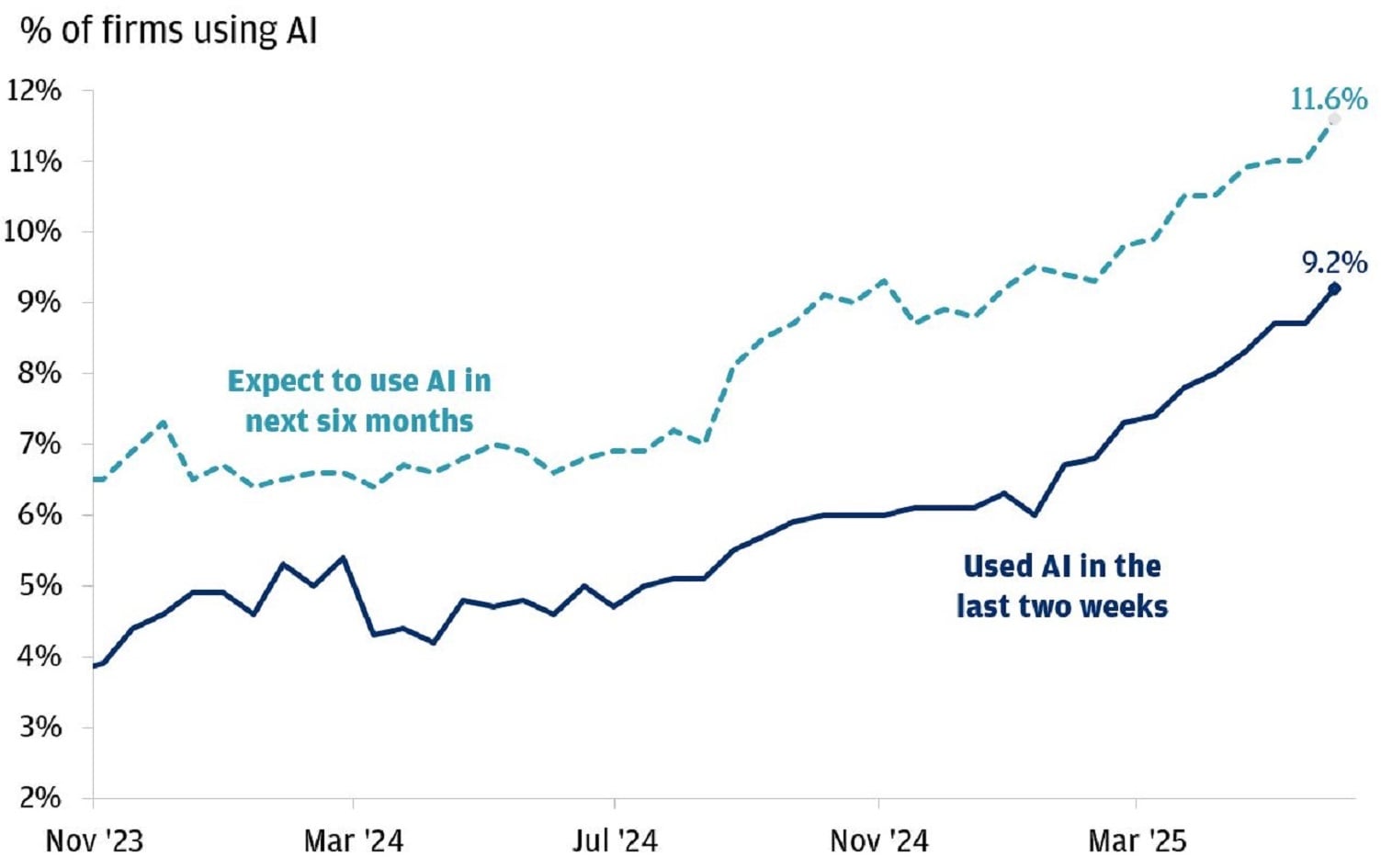
Along with major capital investments, the rapid adoption of AI is transforming industries across sectors. The share of U.S. companies using AI has doubled over the past 12 months and year-to-date is growing at 4.5 times the rate it did in 2024, helping businesses operate more efficiently and innovate faster. We expect this trend to continue, helping to make AI a key driver of growth more broadly.
AI adoption has doubled over the last year
Bank deregulation
The financial sector also stands to benefit significantly from AI, which is automating routine tasks, improving risk assessment and refining customer service. In other words, the integration of AI is expected to drive productivity and innovation within the sector.
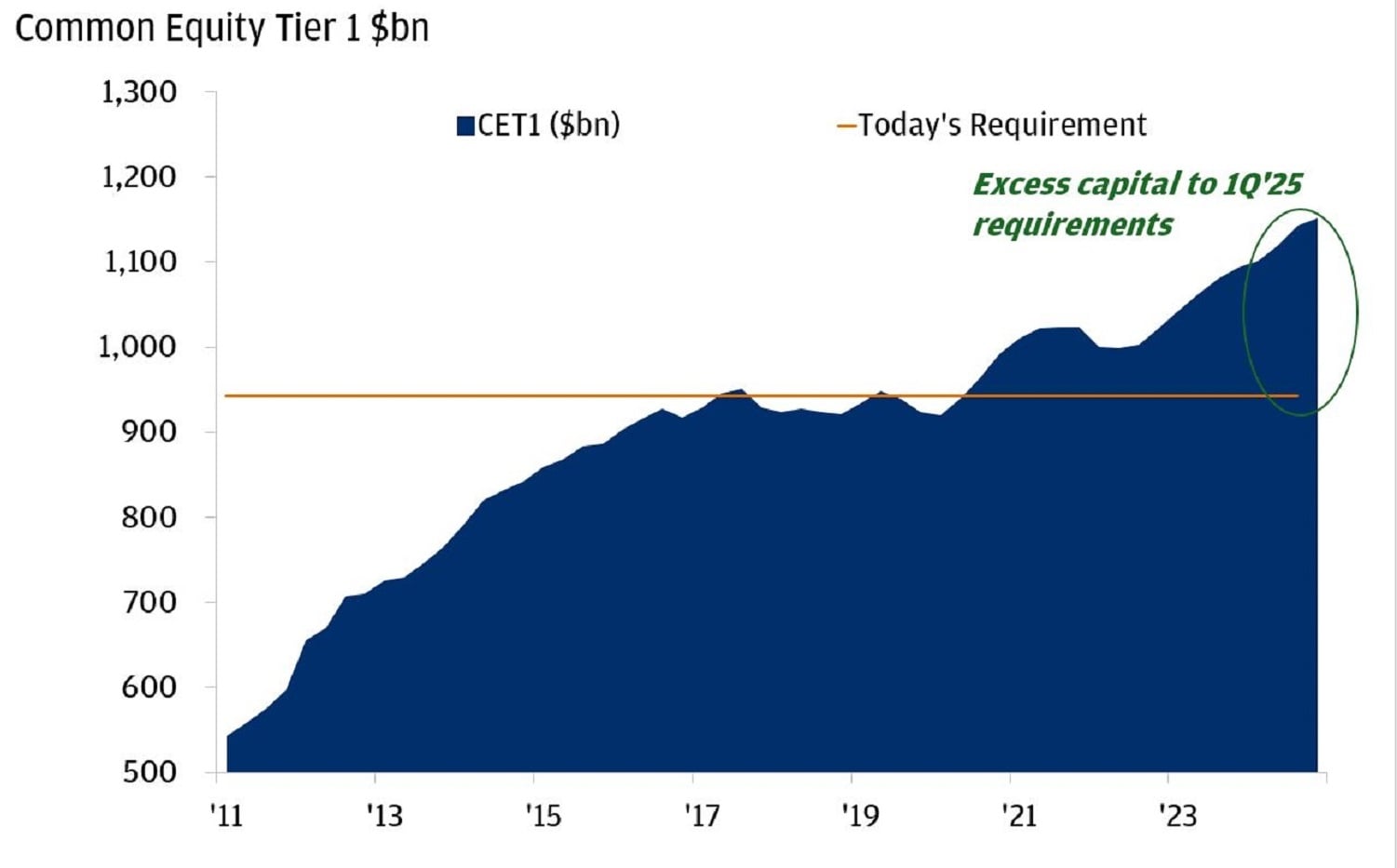
Beyond AI, the White House is considering easing capital requirements for banks, including potentially relaxing a rule that essentially requires banks to have a certain amount of cash available to cover their risks. As illustrated in the chart below, the top 20 U.S. banks currently hold approximately $200 billion in excess capital relative to the existing regulatory requirements. Easing these requirements could improve profitability and drive growth by allowing banks to deploy their excess capital towards loan origination, mergers and acquisitions and stock buybacks, making the financial sector a potentially attractive investment opportunity.
Banks have $200bn of excess capital after a change in requirements
While the S&P 500 has experienced a rally and is trading at all-time highs, we don’t think you’ve “missed it,” as history shows that it can be beneficial to invest at all-time highs. We believe continued investment in AI and bank deregulation are tailwinds that could push markets higher.
All market and economic data as of 07/09/2025 are sourced from Bloomberg Finance L.P. and FactSet unless otherwise stated.
Explore ways to invest
Take control of your finances with $0 commission online trades, intuitive investing tools and a range of advisor services.