Fed holds rates steady in March 2026: What investors can watch for next

Editorial staff, J.P. Morgan Wealth Management
- The Federal Reserve (Fed) held its benchmark interest rate steady at 3.50% to 3.75% at its March 2026 meeting.
- The Fed has seemingly entered wait-and-see mode as it pauses to assess the impact of the ongoing conflict in Iran.
- Our strategists continue to expect one 0.25 percentage point rate cut before the end of the year.

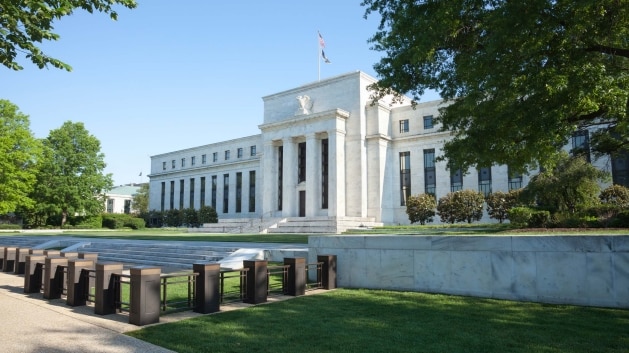
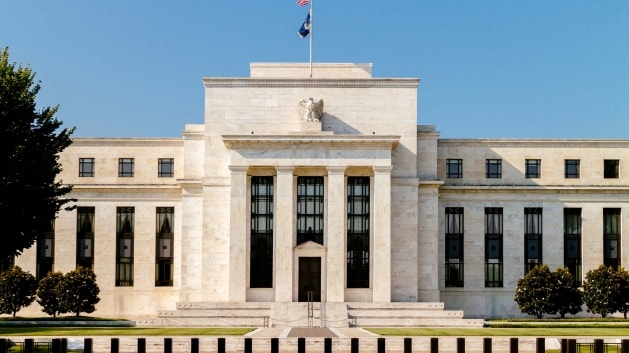
The Federal Reserve (Fed) held interest rates steady at its March 17–18 meeting, leaving the benchmark federal funds rate at 3.50% to 3.75%, in line with market expectations. Fed Chair Jerome Powell reinforced in the March 18 press conference that the “economy is doing pretty well,” even with elevated inflation, low job gains and an unemployment rate that has been little changed in recent months. Our strategists continue to expect one 0.25 percentage point cut by year-end.
The pressing questions now are whether the Fed will lower borrowing costs at all before the end of the year, and how the conflict in the Middle East might affect that calculation. With so much uncertainty, investors and borrowers may want to focus on being prepared, according to George Epstein, J.P. Morgan Wealth Management’s Head of Lending Solutions.
“With rate cuts on pause, prices still sticky and an evolving geopolitical landscape, it’s less about calling the next move and more about being prepared,” Epstein said. “For investors and borrowers alike, this is a good moment to revisit the basics: Know your near‑term cash needs, line up reliable liquidity backstops and make sure your plan connects both sides of the balance sheet, assets and liabilities. Stay diversified, avoid timing bets and use volatility to rebalance rather than react. In a tug‑of‑war environment for the Fed’s dual mandate, coordinating assets and liabilities matters more than calling the next cut.”
Ready to take the next step in investing?
We offer $0 commission online trades, intuitive investing tools and a range of advisor services, so you can take control of your financial future.
Factors impacting the Fed’s March policy decision
The Fed has a dual mandate: price stability and maximum employment. Striking the ideal balance of these goals is challenging enough, but oil shocks brought on by the Iran conflict have clouded the path forward even more. Let’s consider how these elements – existing concerns about both inflation and the labor market as well as newly rising oil prices – played into the Federal Open Market Committee’s (FOMC) decision to hold rates steady in March.
Inflation and the labor market
On prices, the Consumer Price Index (CPI), which measures the cost of everyday goods and services, rose 2.4% over the 12 months ending in February, matching the January reading exactly. The good news is that the pace of inflation has moderated since the September 2025 peak, but it still remains above the Fed’s 2% target.
Strip out more volatile food and energy costs, and the picture is nearly identical: Core CPI also held at 2.5% year over year in February. Grocery prices are up 2.4% over the past year, housing costs are up 3.0% and restaurant meals have climbed 3.9%.
On the labor market, employers shed 92,000 jobs in February, a notable reversal after adding 126,000 the previous month. The unemployment rate held at a relatively low 4.4%, which is encouraging. Plus, the fall in headline job numbers warrants some context, as most of February’s decline was concentrated in specific areas. A health care workers’ strike led to a drop of 28,000 jobs in that sector, while federal government employment fell another 10,000, extending a decline that has now erased 330,000 federal jobs since October 2024. Workers who still have jobs are seeing their wages increase, with average hourly earnings up 3.8% over the past year. That’s positive for spending, but it’s another growing expense for businesses.
The labor market has been in a low-hire, low-fire environment for months now. Companies aren’t adding many workers, but they aren’t cutting them in large numbers, either. February’s data reminds us how fragile that balance is. A few concentrated disruptions were enough to push the monthly number into the negative. If layoffs pick up, firms may not hire fast enough to prevent a spike in unemployment.
Policymakers are seemingly leaning into a wait-and-see mentality when it comes to interest rates as they pause to assess how inflation and the labor market will evolve.
Rising oil prices
The conflict in the Middle East is adding even more uncertainty to the mix.
Oil prices climbed above $100 per barrel in March, and average gas prices jumped to $3.88 a gallon, up from $2.93 a month ago. That kind of move hits consumers and businesses directly and quickly feeds into broader price data. The Fed’s own inflation model estimates that a $10 increase in oil prices pushes inflation up by roughly 0.35%, meaning a run above $100 per barrel sustained for three to six months could add more than a full percentage point to inflation.
The United States is better positioned today than it has been during past oil shocks. The country now sources most of its oil from Canada and Mexico, not the Middle East, and has even become the world’s largest net exporter of oil. That doesn’t insulate Americans from higher prices at the pump, since global oil markets set the price, but it does create a lag before the shock hits. This lag can make weathering price hikes more manageable than in prior decades, at least in the short term.
For now, the longer-term picture seems steadier. Oil futures are already factoring in lower crude prices for late 2026, suggesting that markets expect some form of eventual stabilization in the Middle East. And long-term inflation expectations – the indicator the Fed typically leans on most when making rate decisions – haven’t moved meaningfully higher. The near-term energy spike is real, but it’s not yet changing the Fed’s overall outlook.
Will the Fed cut interest rates in 2026?
Three questions can help shape the Fed’s interest rate policy decisions this year. Let’s consider them.
- What happens with inflation? February’s 2.4% year-over-year inflation is encouraging for stability but still above the Fed’s 2% target. If oil prices retreat by summer as futures markets suggest, nonenergy inflation could moderate by year-end. We could see inflation fall lower later this year, potentially below what the Fed projected in December 2025, though the summer months may see a bump.
- How will the job market hold up? February’s loss of 92,000 jobs was largely driven by a health care strike and continued federal government downsizing, not broad-based layoffs. The trend is worth monitoring, though. Hiring has been slow for months. Meanwhile, strong wage growth – while healthy for workers – creates an incentive for businesses to raise prices. Any further unemployment shocks could put pressure on the Fed to cut rates sooner.
- How will a new Fed chair affect policy decisions? Kevin Warsh is set to replace Powell as Fed chair in May. Warsh, a former Fed governor, has publicly argued both for tighter inflation control and for lower interest rates. The chair can’t move rates alone, as any decision requires a vote from the full 12-member FOMC. Nonetheless, Warsh’s policy priorities and communication style will shape how the committee discusses and frames its rate decisions.
On March 19, markets were pricing in no more than one rate cut this year as they have grown more cautious since the Iran conflict began. The next FOMC meeting is in late April, and the data published over the next few weeks on inflation and jobs could play a role in whether a rate cut happens sooner or later in the year. To echo Jerome Powell’s sentiment from his March 18 press conference, we just don’t know the impact the ongoing conflict may have.
The bottom line
The Fed held interest rates steady in March as policymakers attempted to balance stubborn inflation; a low-hire, low-fire labor market; and a recent shock in oil prices. A new Fed chair in May and an evolving situation in the Middle East make the second half of 2026 worth watching closely. Our strategists continue to expect one 0.25 percentage point cut by year-end. Consider talking to a J.P. Morgan financial professional to learn how you can be prepared and manage your portfolio in this environment.
You're invited to subscribe to our newsletters
We'll send you the latest market news, investing insights and more when you subscribe to our newsletters.