
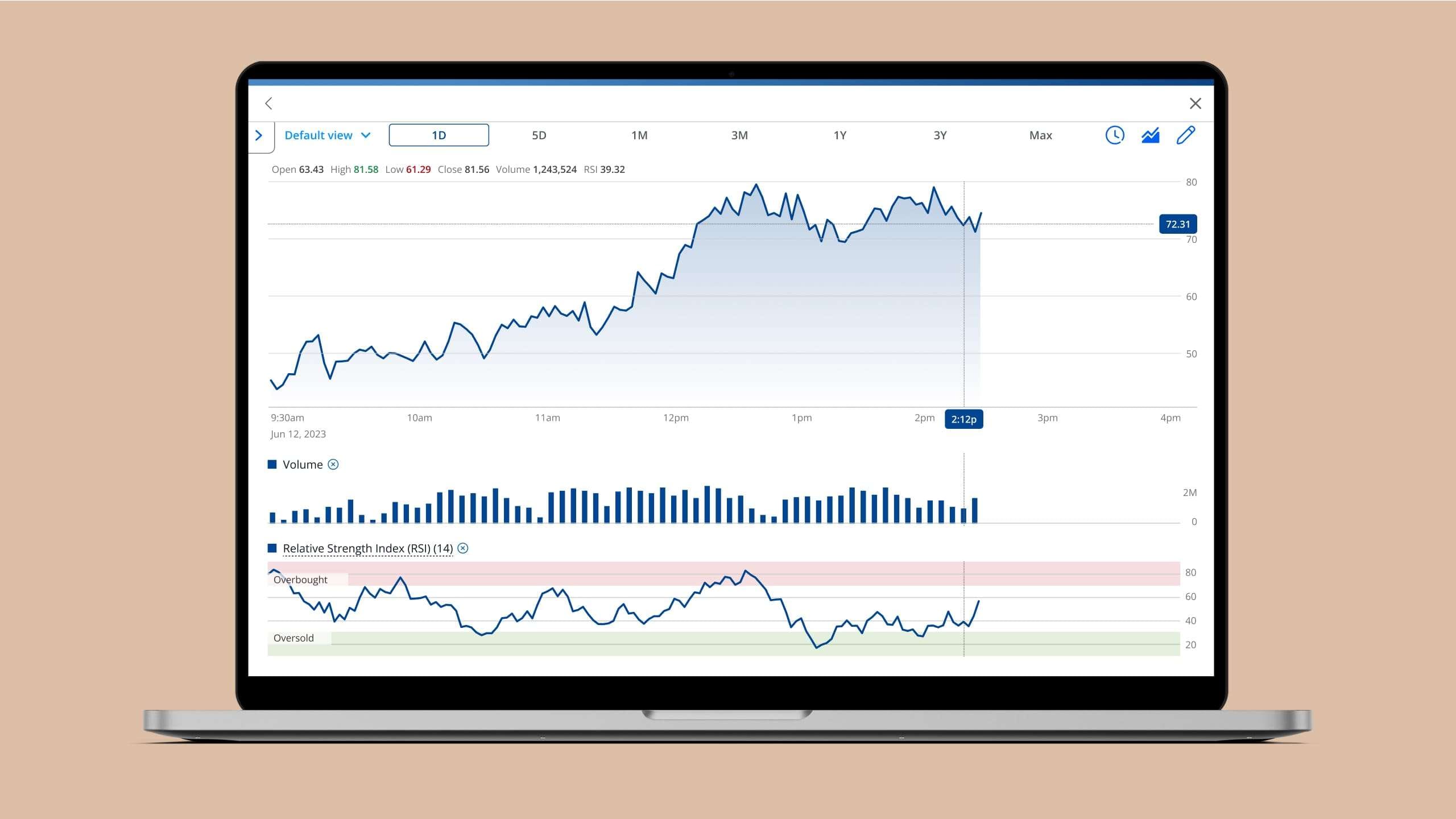
Learn more about margin trading
What is margin trading?
Margin trading allows you to borrow money from J.P. Morgan Securities LLC (JPMS) to purchase more securities than you could using your own cash. Margin may not be available in all account types.
What are the risks of margin?
There are risks to using margin:
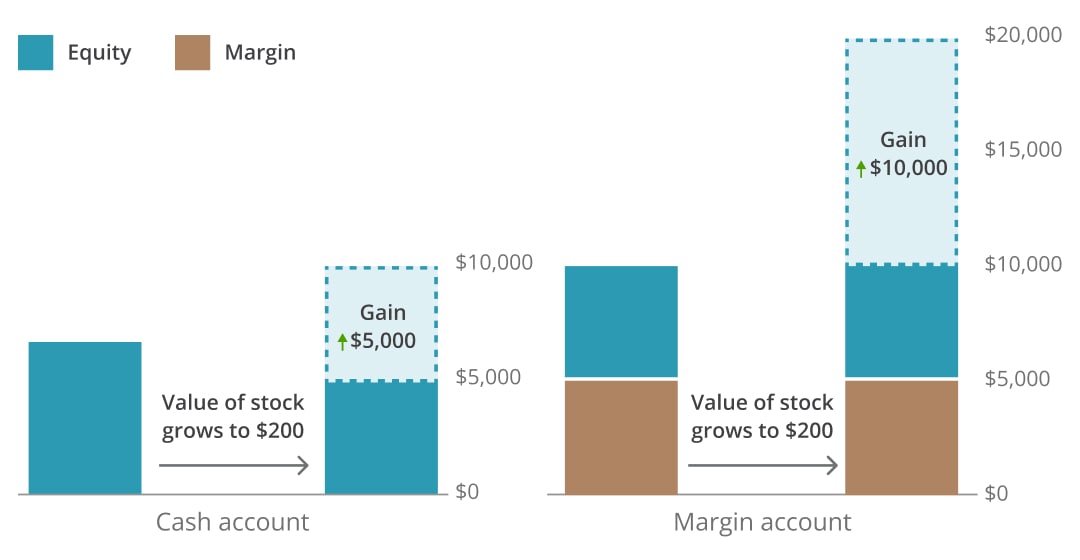
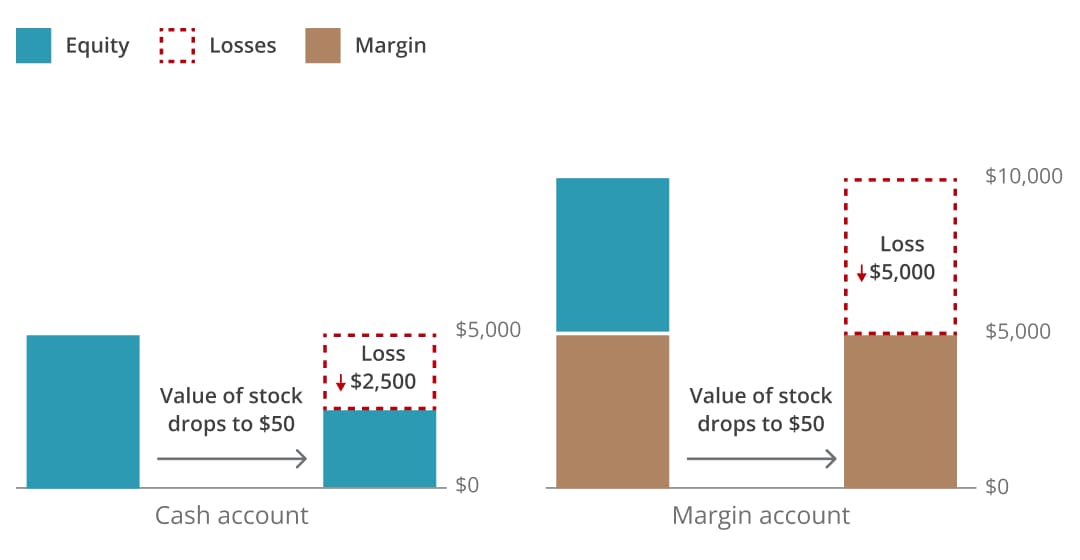
- While margin can amplify gains, it can also lead to quicker losses, which at times, can exceed your initial investment.
- J.P. Morgan Securities LLC can liquidate your securities, and/or increase house maintenance margin requirements without advance notice.
- Margin calls have a defined due date, however, we may liquidate your securities sooner depending on market conditions. Margin call extensions are not available.
- Interest on margin debt is charged regardless of investment performance, impacting overall returns.
See Margin risk disclosure for more details.
What else can you do with margin?
A margin loan could also be a convenient line of credit for non-investing short term financial needs without having to sell securities, such as real estate, home renovations or other large purchases, however this could create a margin call.
Margin trading with J.P. Morgan Self-Directed Investing
- Enjoy competitive margin interest rates and commission-free online trades.
- Use margin to trade and hold stocks, ETFs and options. A J.P. Morgan Self-Directed Investing margin account is not permitted to sell puts as a cash secured strategy.
- Conveniently transfer money between your Chase bank account and Self-Directed Investing account.
- Customer support with answers to your margin questions.

Margin trading rates and examples
It's important to understand fees, margin calls and potential risks before you begin.
The current prime rate can be found on the Federal Reserve website.
| DEBIT BALANCE | MARGIN RATE |
|---|---|
| $0 to $25,000 | PRIME + 4.75% |
| $25,001 to $50,000 | PRIME + 4.50% |
| $50,001 to $100,000 | PRIME + 4.00% |
| $100,001 to $500,000 | PRIME + 3.75% |
| $500,001 to $1,000,000 | PRIME + 3.00% |
| $1,000,001 to $3,000,000 | PRIME + 2.50% |
| $3,000,001 to $10,000,000 | SOFR + 2.35% |
| $10,000,001 and above | SOFR + 1.85% |
Frequently asked questions
Margin trading lets you borrow funds from J.P. Morgan Securities LLC to buy more securities than you could with your cash alone. The investments you hold are used as collateral for the loan, and we charge interest on the funds you borrow.
In a cash account, you can only buy investments with your own money. With a margin account, you can borrow funds from J.P. Morgan Securities LLC to increase your buying power.
While margin trading can lead to greater profits, it also comes with the risk of increased losses. There is a risk of losing more than your initial investment if your account value declines, and you’re still responsible for repaying the borrowed amount plus any accrued interest.
To learn more about the risks associated with margin, see the Margin Risk Disclosure.
With a J.P. Morgan Self-Directed Investing margin account, you can trade and hold stocks, ETFs, mutual funds, options and fixed income products.
Most equities, ETFs, mutual funds and fixed-income products are eligible for margin lending. However, eligibility and lending values for securities are determined by J.P. Morgan Securities LLC’s house requirements.
In addition, some securities or asset types may carry additional restrictions or higher maintenance requirements, which may change at any time at the firm’s sole discretion without notice.
There are significant risks associated with trading on margin. For example, you can lose more than initially invested since borrowed money magnifies losses, rapid price fluctuations brought on by market volatility might result in large losses and interest rates on margin loans are variable and may increase.
It is important that you fully understand the risks before adding margin to your account.
- You can lose more funds than you deposit in the margin account. A decline in the value of securities that are purchased on margin may require you to provide additional funds to J.P. Morgan Securities LLC (JPMS) to avoid the forced sale of those securities or other securities or assets in your account(s).
- JPMS can force the sale of securities or other assets in your account(s). If the equity in your account falls below the maintenance requirements or the firm's higher "house" requirements, JPMS can sell the securities or other assets in any of your accounts held at the firm to cover the margin deficiency. You also will be responsible for any shortfall in the account after such a sale.
- JPMS can sell your securities or other assets without contacting you. Some investors mistakenly believe that a firm must contact them for a margin call to be valid, and that the firm cannot liquidate securities or other assets in their accounts to meet the call unless the firm has contacted them first. This is not the case. Most firms will attempt to notify their customers of margin calls, but they are not required to do so. However, even if a firm has contacted a customer and provided a specific date by which the customer may meet a margin call, the firm can still take necessary steps to protect its financial interests, including immediately selling the securities without notice to the customer.
- You are not entitled to choose which securities or other assets in your account(s) are liquidated or sold to meet a margin call. Because the securities are collateral for the margin loan, JPMS has the right to decide which securities to sell in order to protect its financial interests.
- JPMS can increase its "house" maintenance margin requirements at any time and is not required to provide advance written notice. These changes often take effect immediately and may result in the issuance of a maintenance margin call. Your failure to satisfy the call may cause JPMS to liquidate or sell securities in your account(s).
- You are not entitled to an extension of time on a margin call. While an extension of time to meet margin requirements may be available to customers under certain conditions, a customer does not have a right to the extension.
To learn more about the risks associated with margin, see the Margin Risk Disclosure.
There are two primary categories of margin requirements:
Initial Reg T: The amount of funds required to purchase a security in a margin account at the time of the trade. The requirement is currently 50% of the purchase price for listed equity securities. Additionally, margin regulations require you to have a minimum margin account equity of $2,000 when placing orders on margin. If you do not have $2,000 of account equity, you must pay for the purchase in full.
Maintenance margin: The minimum amount of equity you need to maintain after margin borrowing is established. If your account's equity drops below this threshold, you must deposit cash or transfer securities with sufficient maintenance lending value, or sell assets. J.P. Morgan Securities LLC may otherwise liquidate your securities to meet the requirement.
Margin requirements are determined by various entities, including the Federal Reserve, FINRA and J.P. Morgan Securities LLC. To buy or hold securities on margin, you must maintain sufficient equity to meet those requirements.
A margin call occurs when you fail to maintain the minimum account equity, known as the maintenance margin, in your margin account. For example, account equity can fall when one or more of your positions has lost value. To restore your equity to the required level, J.P. Morgan Securities LLC will require you to deposit additional funds, transfer cash or marginable securities into the account or sell eligible securities to pay down your loan.
Although less common, a margin call can occur when you do not have enough lending value in your account to meet the initial margin requirement for a new trade.
Buying power is the amount of funds available to purchase securities, including your cash balance and funds borrowed on margin.
By default, the buying power calculation for equity securities assumes the security being purchased is marginable, with a 30% maintenance requirement and a 50% Reg T requirement.
J.P. Morgan Securities LLC may also reduce your buying power for any amount of uncleared funds, pending outgoing money movements, open orders and other events at our discretion.
A concentration is when you invest a significant portion of your portfolio in a single asset or group of common assets. When a single security or group of assets represents a large share of your account holdings—based on factors such as market value, liquidity, industry, or outstanding shares—certain risk factors may be magnified.
To help mitigate this risk, J.P. Morgan Securities LLC applies certain concentration guidelines in a margin account, which may limit the amount you can borrow on a security or on your portfolio. In addition, J.P. Morgan Securities LLC may apply an add-on to the standard margin requirement for positions in your account to help offset some of the increased risks associated with these holdings.
When you purchase securities on margin, you must repay the borrowed amount along with any accrued interest. Interest is charged monthly and collected on the first of each month.
You can see your margin account’s interest rate details on Positions, which shows the pending interest accrued for the month based on how much you’ve borrowed and displays the rate as an annualized amount.
Review the terms and conditions of the J.P. Morgan Self-Directed Investing Margin Agreement (PDF) for more information about how interest is calculated by J.P. Morgan Securities LLC.
Sharpen your knowledge
Break it down: Margin and margin call

Margin is the money borrowed from a brokerage firm to purchase an investment. The existing securities in your account are used as collateral for the loan, but unlike a typical loan which has a set limit, this value can fluctuate as the value of your account changes.
Margin account rules for day traders

Investors should ensure that they have enough equity in their margin account to stay at or above exchange and regulatory minimums, with a cushion to accommodate adverse market movements so as to avoid a Reg T or exchange call as well as trading violations.
Margin requirement: What you need to know

Investors interested in trading on margin, or trading larger sums using funds borrowed from their broker, must be aware of margin requirements and balances. Learn more about them.