Navigating uncertainty: A path for business owners

J.P. Morgan Wealth Management
- 2024 brought the start of rate cuts by the Fed, continued AI expansion, upticks in consumer and corporate trends, a presidential election and more.
- In 2025, business owners should keep an eye on how things evolve on several fronts, including economic and political changes, technological developments and geopolitical shifts.
- It’s important to not make any rash decisions based on new developments in these areas, but rather continue to approach your portfolio and business planning thoughtfully.

It’s been an eventful year for the markets and economy. From the start of the Fed’s rate-cutting cycle to the continued rise of AI, increasing geopolitical tensions and the U.S. presidential election, there are many factors for business owners to consider as they plan for the year ahead.
Inflation is taking a breather
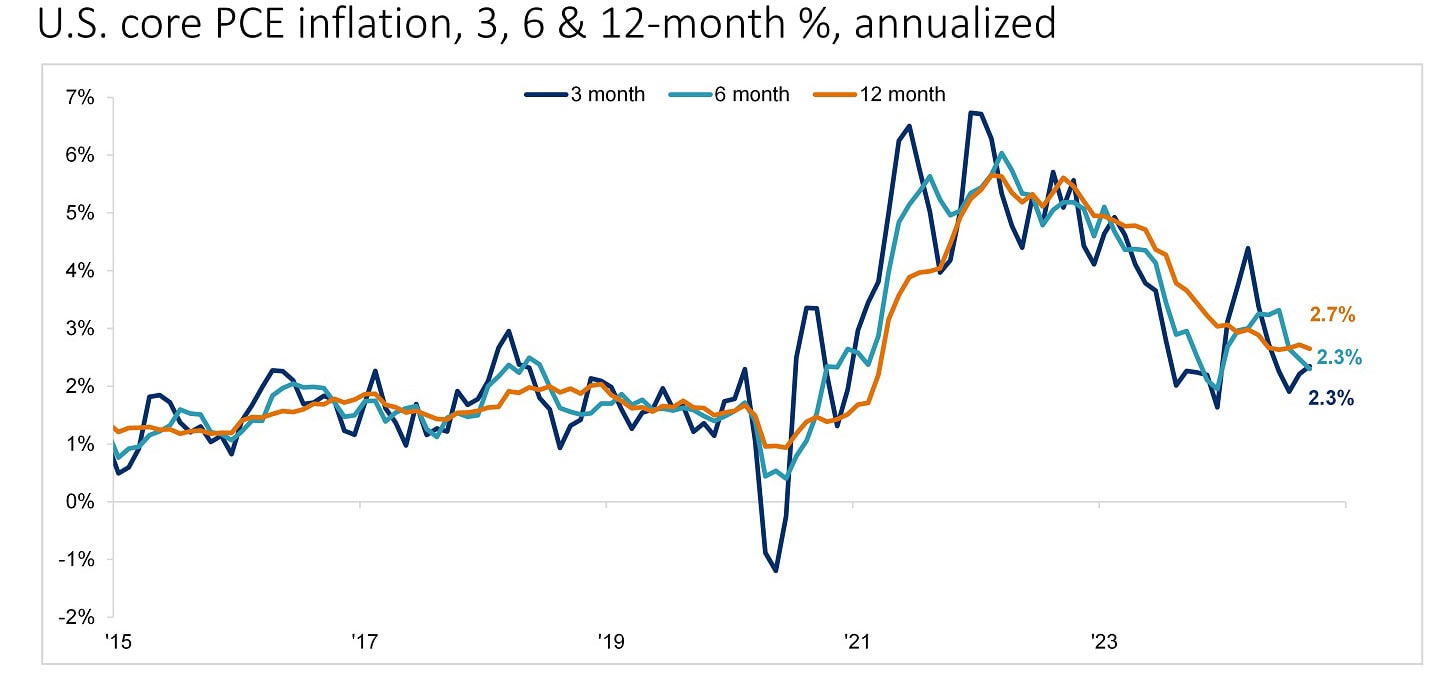
Down from a peak in June 2022, the year-over-year core U.S. inflation rate is now hovering around 2.7%, with recent data pointing to a further cooldown in price pressures. Paired with the start of the Fed’s rate cutting cycle, optimism has been priced into market returns.
Inflation is moving back to the Fed’s target level
Why has the Fed started cutting? Slowing job growth and a slight move higher in the unemployment rate are contributing to the Fed’s decision to normalize its policy rate. Our strategists view this move as the Fed’s commitment to support the labor market and expect more cuts to come in the year ahead.
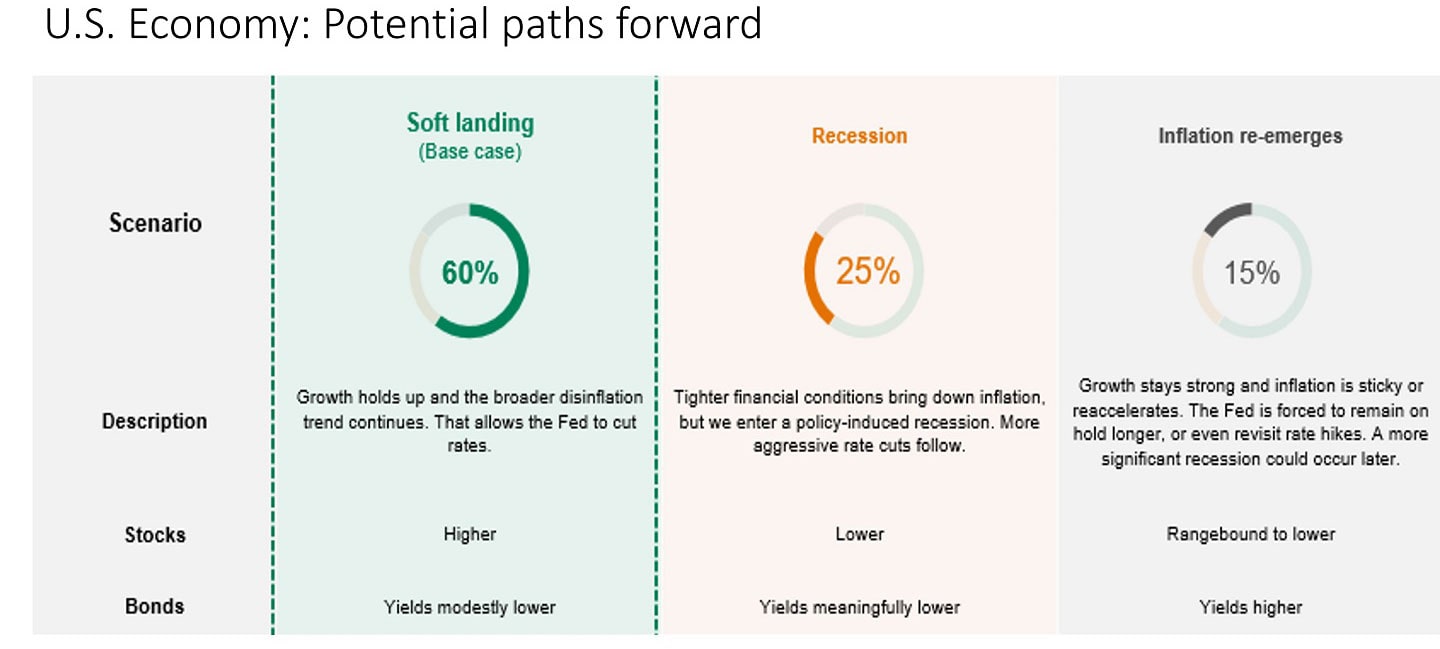
All of this indicates that an economic soft landing may be coming to fruition. That means that economic growth will stay resilient as the disinflation trend continues – giving the Fed the green light to gradually ease policy. Stocks will likely rally as market sentiment remains high, with bond yields likely to occupy a range similar to current levels.
Positioning for the potential paths forward
Interested in working with an advisor?
Work 1:1 with our advisors to help build a personalized financial strategy that’s built around you.
Things seem to be looking up for consumers and corporations
Ajene Oden, Global Investment Strategist for J.P. Morgan’s Global Investment Strategy team, notes, “Consumers and corporations are both in strong positions at present. For consumers, wage growth remains strong even as inflation declines.” Additionally, amongst Americans with mortgages, 74% have a rate of 5% or lower – indicating that mortgage payments may not be eating into incomes as much as was perceived. Consumers are therefore finding themselves straddling an environment characterized by higher economy-wide prices, sure, but also strength from asset value appreciation, real wage growth and income-generating opportunities.
Corporations are similarly well-positioned. Corporate profit margins are trending up, which is staving off the need for significant layoffs. The unemployment rate is expected to remain relatively stable as a result.
Corporate profit margins are wide & stable
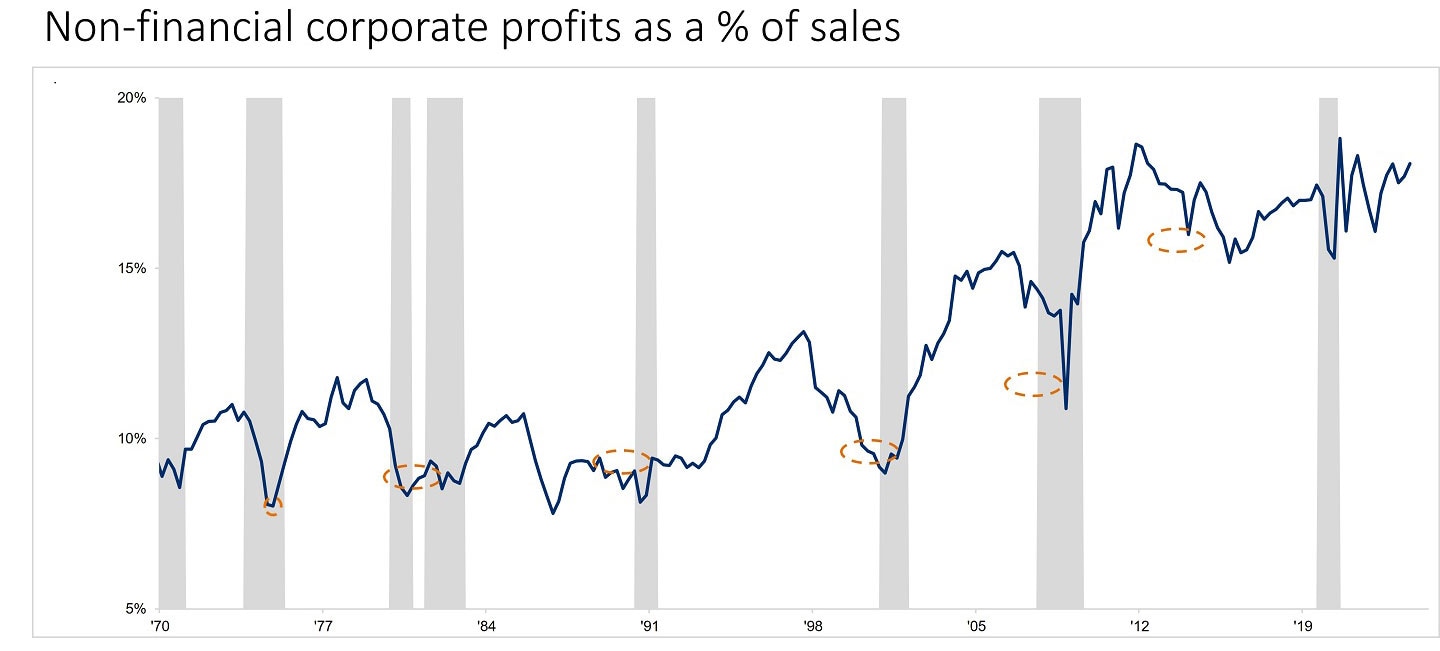
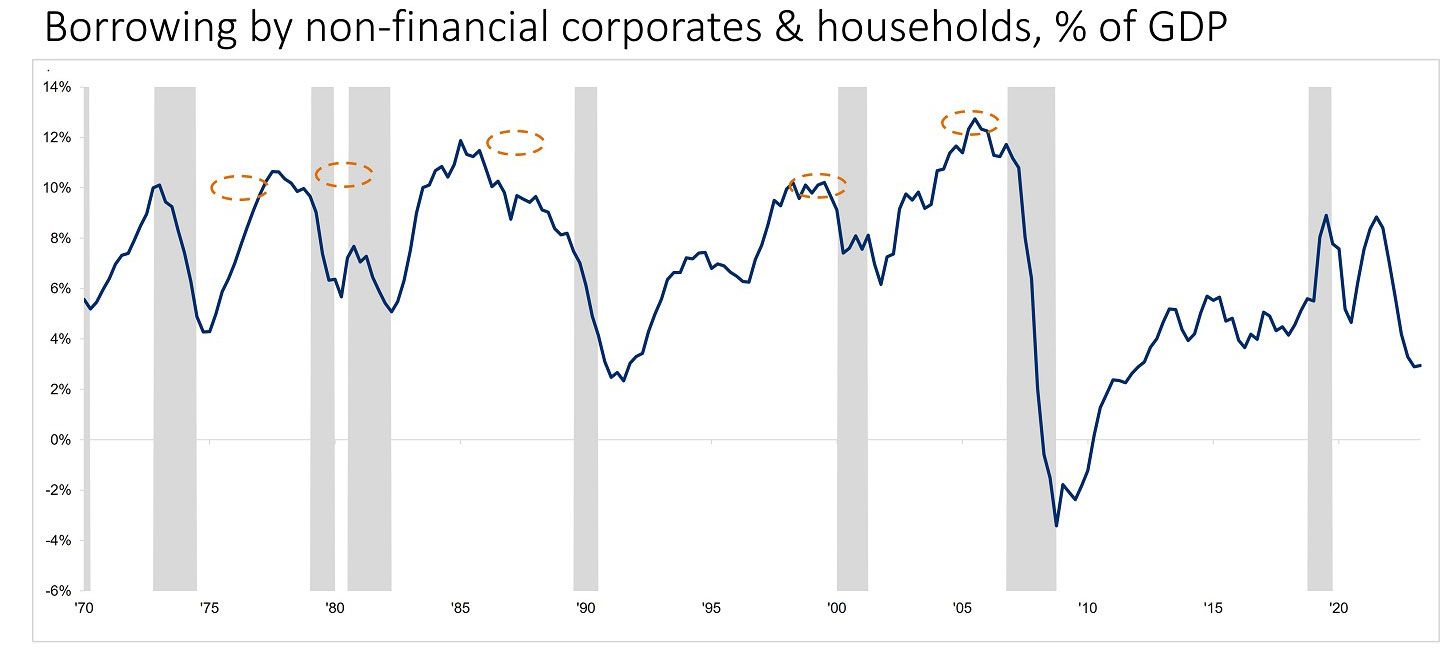
Another indicator that corporations are sitting comfortably: They are not relying on leverage to generate profits. These trends further underscore the unlikeliness of a recession.
Credit growth has been subdued
Geopolitical tensions and elections and AI … oh my!
There’s no shortage of global and domestic happenings to keep an eye on as the year comes to a close.
Geopolitical tensions
International conflict is on the rise, which means security takes on even greater importance. Geopolitical tensions and sanctions can contribute to upticks in cybercrime, meaning that individuals and businesses should prioritize protecting their data, accounts and systems – and take a look at how companies that offer cybersecurity services or technology are represented in their investment portfolios.
The U.S. presidential election
On the topic of the election, Oden asserts, “We know that, based on past election cycles, the outcome does not tend to have a lasting impact on market performance.” But over the long term, what should businesses account for under a new administration? Oden advises keeping an eye on two things: taxes and tariffs.
Much of current tax policy is set to expire next year, but the Republican sweep election outcome makes an extension of current tax cuts seem like the most likely scenario. On the other hand, some tariffs can be imposed via Executive Order, while others will require Congressional approval. Business owners and consumers should be aware that increased tariffs could result in higher input costs for their businesses.
AI
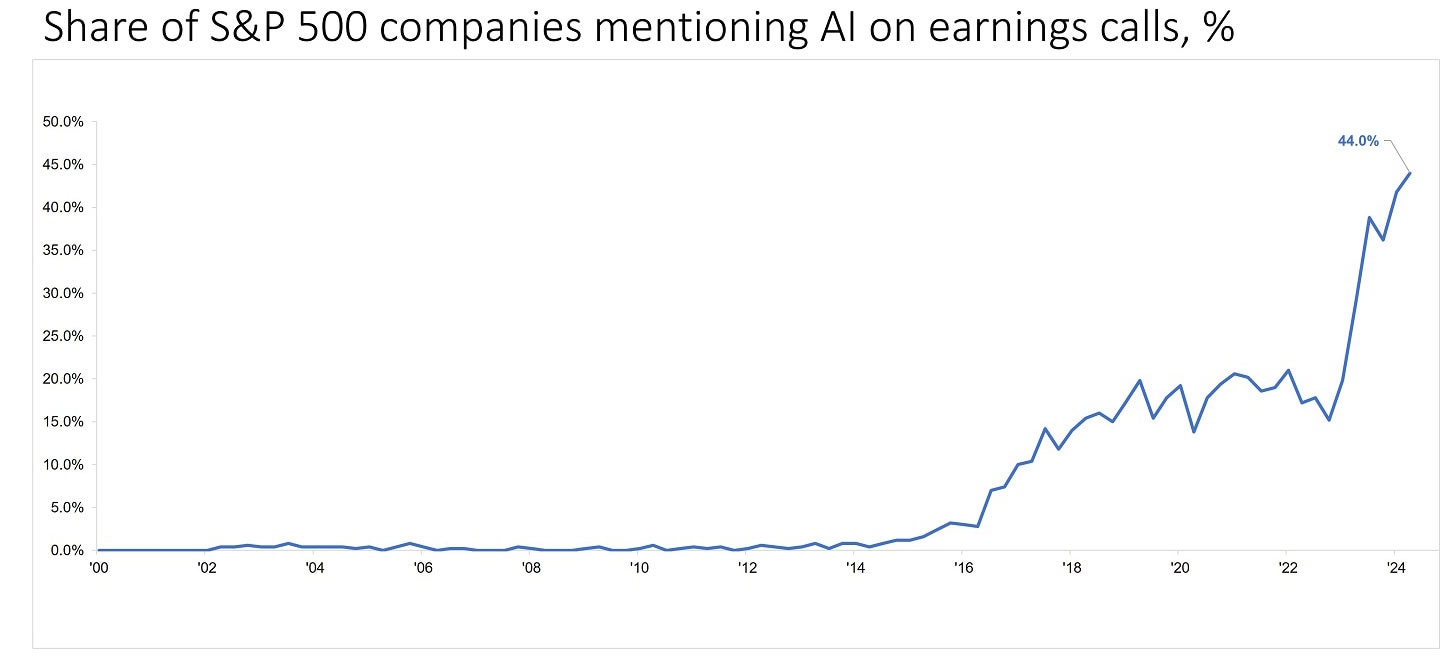
AI seems to be the buzzword of the year, with no signs of fading in 2025. Proof in point: 44% of S&P 500 companies have mentioned AI during earnings calls this year. With AI usage continuing to rise, the way we live and work could very well be on the brink of change. Oden holds that change is imminent – currently, AI operates in a kind of “co-pilot” capacity, to assist human-led work. But a shift to “auto-pilot” is on the horizon, where AI can work and produce autonomously. Investment in AI and integration of AI-powered tools will likely become a prerequisite for businesses to stay competitive.
AI is already here for companies
A path for business owners
There’s a lot that can’t be controlled in the current economic, political and technological landscapes. One thing business owners can do to weather any volatility is to be thoughtful of both personal and company portfolios:
- Don’t let election results drive investment decisions
- With cash yields expected to fall, look to longer-term vehicles to lock in still-elevated rates for excess cash positions
- Consider investing in bonds, which may help to reduce risk in the event of a recession or high volatility
- Diversification can prepare your portfolio for a range of scenarios
AI – and cybersecurity – are here to stay. Business owners should consider allocating funds and resources to investing in robust data security and AI tools that can keep them competitive and help to safeguard in this evolving environment.
The bottom line
Economic and market data are moving in the right direction, and the potential for a soft landing is very much in sight. But current trends in geopolitical tensions, the upcoming changing of guard in the Oval Office and market uncertainty could lead to volatility in the months ahead. Business owners need not make any rash decisions, and remember that volatility is a feature and not a bug. With this in mind, business owners should continue to approach their investment portfolios and business decisions thoughtfully.
Invest your way
Not working with us yet? Find a J.P. Morgan Advisor or explore ways to invest online.