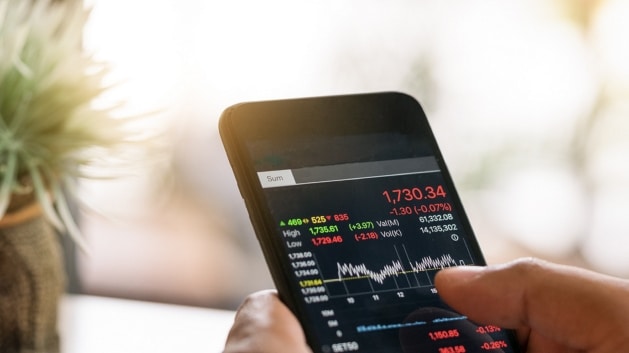
Social media’s influence on the investing community
- Social media platforms have created a digitalized investing environment that provides investors with a more efficient way to access a variety of online information.
- Despite the benefits, social media makes it easy for influencers with limited investment knowledge to share their trading and personal finance opinions.
- Regardless of where you receive information, you should do your own research about potential investments by examining companies and their financials before investing in their stock.

The increased use of social media and shift toward a digital lifestyle have played a key role in facilitating the flow of information influencing investor decisions.
Social media platforms like X (formerly Twitter), LinkedIn, Reddit and Instagram, among others, have created a digitalized investing environment that provides investors with a quicker, more efficient way to access a variety of online information sources. In fact, 60% of investors under 35 use social media as an information source, according to data from the Financial Industry Regulatory Authority (FINRA).
Social media’s impact on investing is not new, although it has been amplified in recent years with the meme stock frenzy. The Securities and Exchange Commission (SEC) began allowing publicly traded companies to report news and earnings via social media platforms in 2013, resulting in an increased flow of information to investors.
In addition to expediting the information exchange between peers, social media has increased financial literacy. More than three-quarters of Gen Z and 65% of millennials intentionally seek out financial advice through social media.
What are the platforms these investors are turning to? The most popular among all age groups is YouTube, followed by Facebook, Instagram, TikTok and Reddit.
Get up to $1,000
When you open a J.P. Morgan Self-Directed Investing account, you get a trading experience that puts you in control and up to $1,000 in cash bonus.
Beware of following the herd
Despite the benefits, social media poses some risks and challenges to investors. Specifically, social media makes it easy for influencers with limited investment knowledge to share their trading and personal finance opinions. The risk is that other investors blindly follow that advice without doing their own research – an act called herding.
“Herding or ‘social proof’ is when we behave as we believe others like us are behaving. Instead of finding out what’s really happening in the market or what the value, risk or opportunity of an investment is, we take the easy choice of doing what it seems like everyone else is doing,” said Jeff Kreisler, Head of Behavioral Science at J.P. Morgan Private Bank.
That is exactly what happened during the recent trading surges of meme stocks and cryptocurrency. For example, a Reddit thread with more than 3.1 million subscribers spurred a trading frenzy for GameStop’s stock in January 2021, prompting the stock price to leap to unprecedented heights. Social media management company Sprout Social tracked mentions of GameStop on social media during that time and found that nearly 1.6 million tweets, 82,000 Reddit mentions and 1,465 YouTube videos about the video game retailer were posted between January 20 and January 27.
Interestingly, heavy social media users – those who visit the platforms for two or more hours a day – are more likely than light social media users to trust and follow what other investors are recommending and doing, according to research from Cal State Fullerton.
“Herding has been a common investment trap forever. Social media just makes it worse because it provides an even more distorted perception of reality,” Kreisler said. “We only see what our limited network is talking about or promoting, or what news is ‘trending’ – a status that has nothing to do with value and everything to do with hype, publicity, coolness, selective presentation and other things that should have nothing to do with our investment decisions.”
How to avoid the herding trap
Regardless of where you receive information, investors should also do their own research about potential investments by examining companies and their financials before investing in their stock.
In addition to looking at the company’s earnings report and website, you can turn to LinkedIn as a place to carry out due diligence, learning information about industries and individuals like a company’s CEO.
Also, social media often promotes day trading, but investing for the long term is often a better way to gain returns. Index funds like mutual funds and exchange-traded funds (ETFs) are safer investment options for people looking to invest for the long haul.
Most importantly, instead of taking investment advice from anonymous handles or influencers with limited credentials, follow recognized financial institutions and advisors that you trust who can properly educate you about the markets and personal finance.
Invest your way
Not working with us yet? Find a J.P. Morgan Advisor or explore ways to invest online.